
The Laser Centre is available for testing ideas and for carrying out welding tasks without investing in large, expensive laser welding equipment. The service supports prototyping and pilot production, including small (single) and large production runs.
Welding technologies
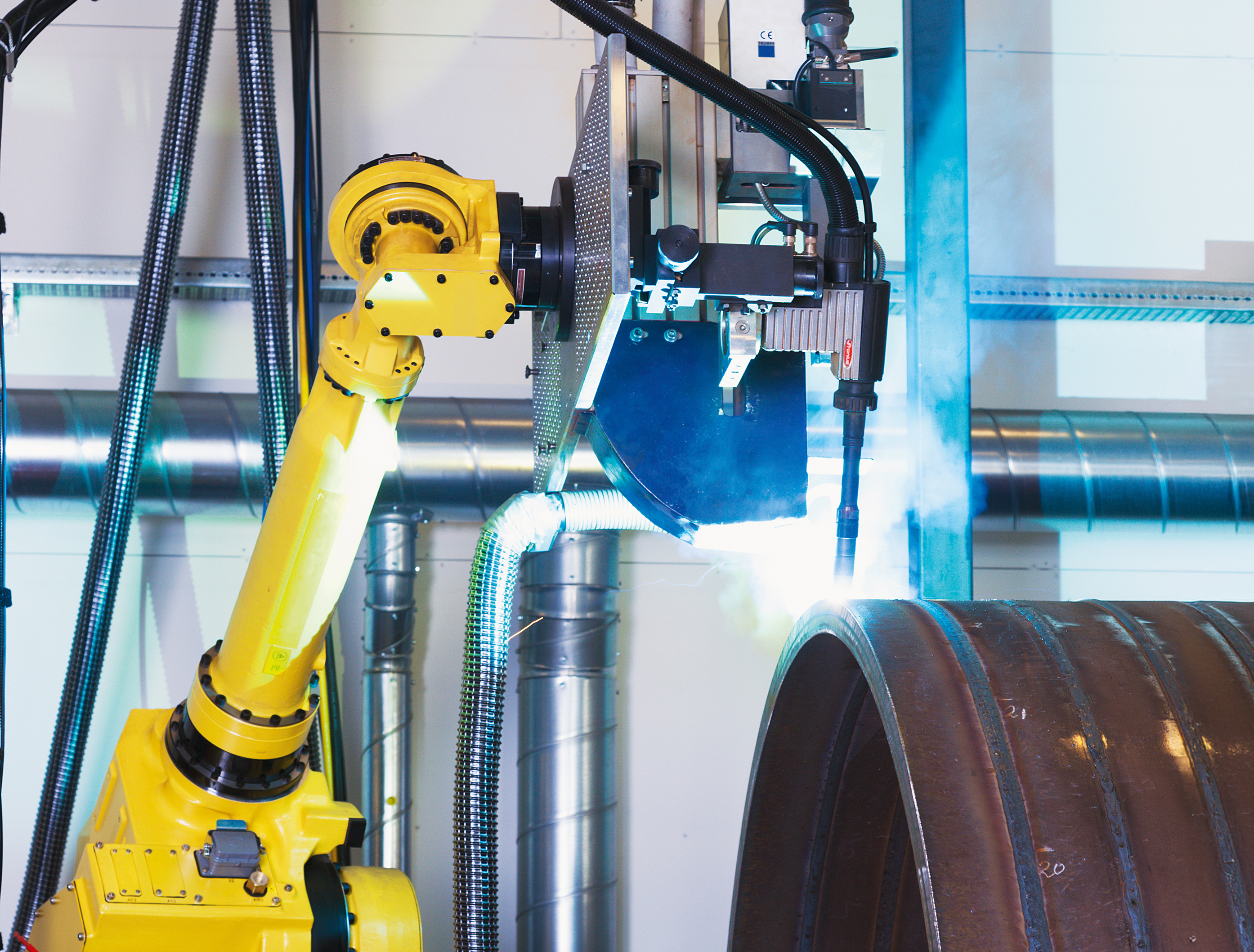
Laser welding for production and prototyping
Explore laser welding services that offer consistent quality, high speed and reduced rework to support efficient manufacturing across materials and thicknesses.
Laser welding supports blacksmiths, machine shops, manufacturing companies and entrepreneurs when traditional welding methods create limitations in quality, speed, deformation or repeatability. Laser welding can improve both quality and productivity, enabling faster production and better products. The process supports automated welding, high precision and consistent quality.
Early use in product development
The benefits are greatest when laser welding is considered early in product development. If welding requirements, material combinations, tolerances and geometries are not clarified in time, this can lead to redesign, production delays and unnecessary costs later in the process.
The service is part of our expertise area Welding technologies, where we also offer laser safety risk assessment.
Challenges
When welding creates inconsistent quality, production costs increase, and product performance suffers.
Inconsistent weld quality
If welding results vary, the need for rework can increase, while it becomes harder to maintain low error rates and stable production output.
Excessive heat input causes deformation
When heat input is too high, components can deform, requiring additional post-processing before they are ready for use.
Complex material and geometry
Very thin foils, very large and thick components, complex geometries, electronics, magnets and temperature-sensitive components can place high demands on the welding process, making it difficult to find suitable welding conditions.
Limited access to laser welding capacity
If laser welding needs to be tested before production starts, or if only a few components are needed, investment in large, expensive equipment can be difficult to justify.
Benefits
Get laser welding that supports faster production, better products and more stable manufacturing processes
Increase production speed and flexibility
Laser welding enables faster welding speeds than many traditional methods and supports flexible production across different materials, thicknesses and component types. This makes it easier to adapt production to changing requirements and tight schedules.
Reduce rework and scrap
Precise control of the laser beam produces narrow, deep penetration welds with limited heat input. This reduces deformation, lowers scrap rates and improves first-pass quality.
Support automated and consistent production
Laser welding supports automated welding processes with high precision, low error rates and consistent quality. This helps maintain stable output and reduces variation across production batches.
