
The work begins with clarification of the sample type and the analysis's purpose. This may concern water quality, inorganic substances, technical water, fuels, raw materials, solids or chemical products.
Chemical analysis
Analysis of water, materials and inorganic parameters
Analyse water, materials, and inorganic compounds using laboratory methods and obtain advice on relevant analyses.
Companies can get documented insight into the composition of water samples, solids, materials and chemical products. The need typically arises during routine quality control, investigation of unwanted substances or when analytical results are required to interpret findings in relation to authority requirements. Without clear analytical data, organisations face uncertainty in how to assess material quality or handle deviations linked to inorganic content.
Analysis of inorganic composition in industrial contexts
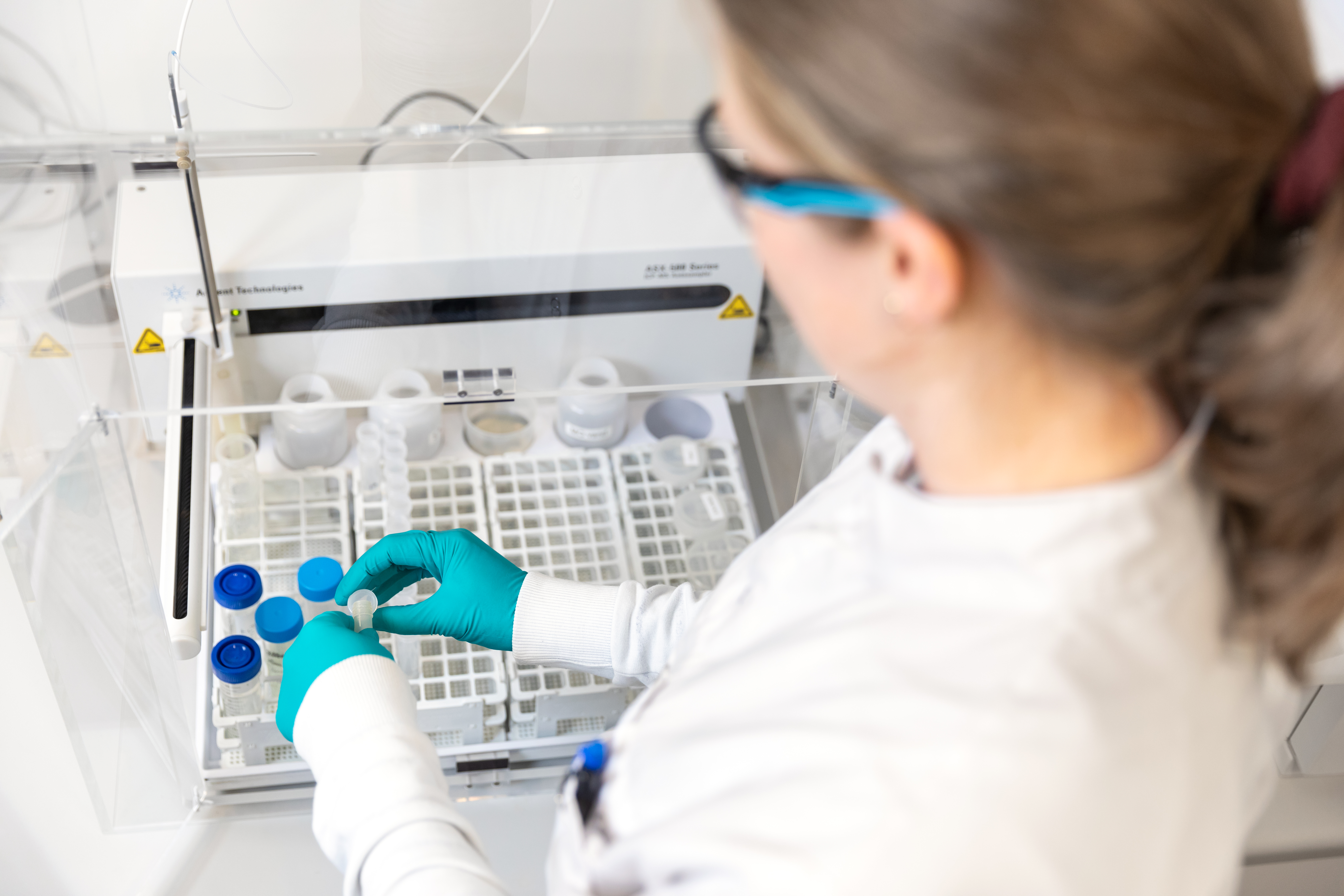
The analyses cover metals, salts and inorganic compounds such as nitrate, chloride, sulphate, phosphate, silica and residues including ash and minerals. The work includes evaluating unwanted substances and providing guidance on selecting relevant chemical analyses and interpreting results. Laboratory activities are performed under accredited conditions, providing a documented basis for internal assessments and external reporting.
Challenges
When inorganic content in water and materials is unclear, documentation of substances, quality and contamination becomes difficult.
Unknown content makes sample documentation difficult
Water, materials, solids and chemical products may contain metals, salts and other inorganic compounds that need to be identified or quantified. When the content is unknown, it becomes difficult to document the sample's contents.
Unclear levels make contamination difficult to document
Samples may contain heavy metals, trace elements, or other unwanted substances that must be measured in accordance with documentation, quality control, or authority requirements. Without analysis, it becomes difficult to determine whether such substances are present and at what level.
Missing data makes product and process control difficult
Companies may need analytical data for technical water, fuels, raw materials and other process-related materials. When the relevant parameters are not measured, it becomes difficult to document these materials and use the results for quality control and authority-related purposes.
Benefits
Get documented analysis results for water, materials and inorganic substances with methods matched to the sample type.
Determine metal, salts and inorganic compound levels
The work can document the content of metals, salts and other inorganic compounds in water, solids, materials and chemical products. This provides a basis for understanding sample composition and relevant contamination parameters.
Combine lab analysis with advice
Customers can receive both analytical results and guidance on which analyses are needed and how to interpret the results.
