
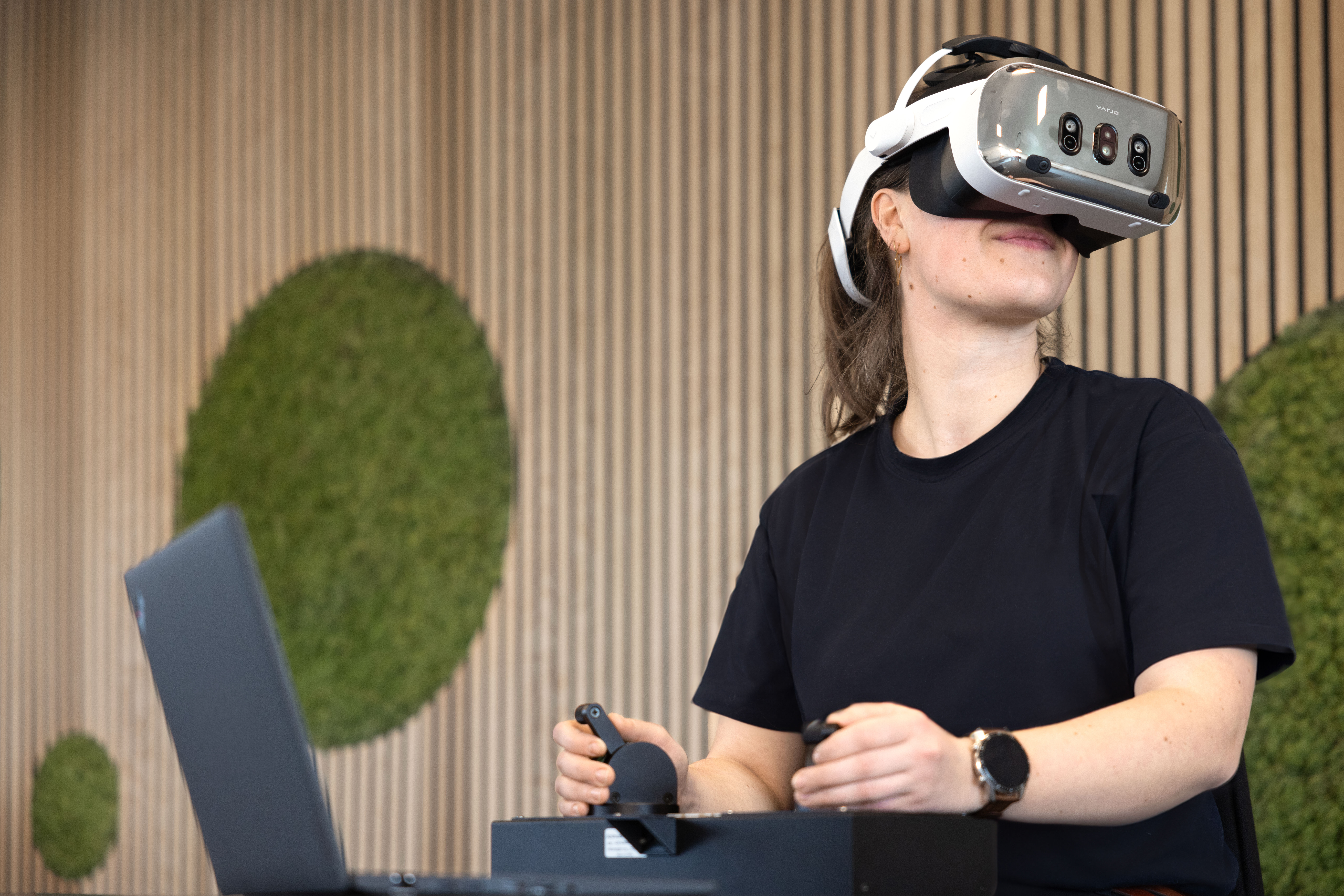
SimFlex XR remote simulator is based on a cloud-based solution that can be accessed whenever convenient. This allows simulations to be carried out without requiring a local simulator installation and provides a setup that can be used from different locations.
Maritime simulators
SimFlex XR remote simulator for maritime training
Train maritime crews remotely with simulator sessions that support practice, planning and response in realistic operational situations.
Maritime remote training becomes relevant when access to vessels, simulator centres, equipment and instructors makes regular physical practice difficult to plan and carry out. For shipping companies and crews, this can reduce training continuity, limit preparation for demanding or infrequent operational situations, and make it harder to maintain a similar level across roles and locations.
Training from land and sea
SimFlex XR remote simulator supports maritime training, practice and planning from anywhere, including onboard a vessel. The solution provides realistic simulator scenarios and flexible learning formats, enabling training without the same reliance on travel and physical facilities. This provides crews with a practical environment to build experience in ship handling and decision-making in situations that require preparation, repetition and structured learning. The service is part of our expertise area Maritime simulators.
Challenges
When maritime crews depend on physical facilities and vessel access for training, preparation becomes costly, infrequent and difficult to scale.
Limited access interrupts training continuity
When training depends on vessel availability, simulator centres and instructor schedules, organisations cannot always train when crews need it. This can reduce repetition and make it harder to maintain readiness across teams and locations.
Complex operations are difficult to rehearse
Crews need to prepare for situations such as docking, collision avoidance, adverse weather and emergencies, but these are not easy to practise repeatedly in live operations. Without regular rehearsal, practical decision-making may be less tested before similar situations occur at sea.
Vessel-specific familiarisation can be delayed
When training needs to reflect the ship’s own controls and manoeuvring conditions, practical familiarisation can be difficult to organise. This may leave less time for crews to build routine in the operational setting they will actually work in.
Live exercises place demands on time and operation
Real-world training exercises require planning, coordination and operational capacity. When training competes with daily operations, it can be harder to prioritise the time needed for structured practice.
See how SimFlex XR remote simulator works
Book a demo to explore how SimFlex XR remote simulator can support maritime training, practice and planning for your crews, whether sessions are carried out on land or onboard a vessel.
