
Receive measured data on environmentally induced motions, velocities and accelerations of the floating elements supporting the fish farm cages. Receive response data used to review how the support structure moves and behaves under offshore conditions. This part of the scope focuses on the structural response of the floaters.
Maritime and offshore engineering
Model testing of offshore fish farms
Assess hydrodynamic and aerodynamic forces, motions, loads and mooring behaviour in offshore fish farms.
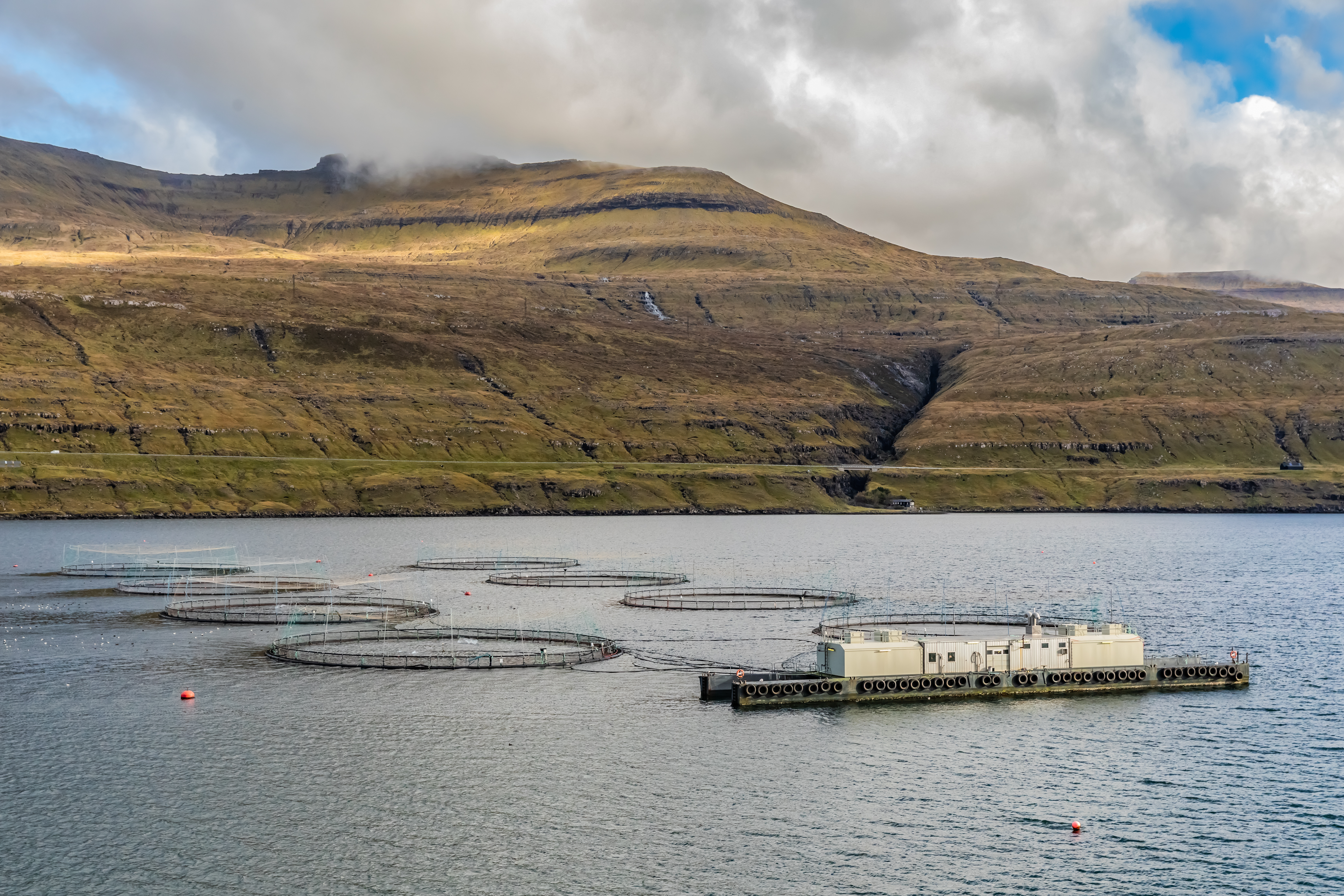
Model testing of offshore fish farms becomes relevant when a facility is being developed for sea conditions where site location, structural behaviour and mooring performance must be assessed. In the right location, water can pass through the cage and wash away lice and other pollutants, helping create conditions close to a natural habitat.
Combined testing basis
Hydrodynamic and aerodynamic model testing, together with mooring analysis, clarifies how the offshore structure, supporting floaters and cage system respond to forces, motions, loads and vibration effects at sea. The service includes measured data, load assessment and experimental verification, which can be used to optimise operations and lower maintenance costs. The service is part of our expertise area Maritime and offshore engineering.
Challenges
When offshore fish farms are exposed to weather conditions uncertainty, response and placement increases operational risk
Structural uncertainty makes design decisions unreliable
Without validated data on structural response and loads, it is difficult to define design parameters and verify whether the cage system can withstand offshore conditions.
Uncertain site placement reduces environmental performance
If the offshore fish farm is not placed under suitable flow conditions, water exchange through the cages may be insufficient. This can affect how effectively lice and pollutants are carried away, making it harder to maintain stable operating conditions.
Mooring uncertainty increases risk of fish escape
Fish escape can occur due to failures in mooring lines or structural design. Without verified mooring performance, it is unclear whether the system can withstand site-specific loads.
Benefits
Get measured and verified results that support optimisation of fish farm operation and lower maintenance costs
Use response data to review structural behaviour
Measured motions, velocities and loads provide a basis for reviewing how the floating support system behaves and identifying critical response patterns.
Evaluate load interaction across the system
Test results on hydrodynamic and aerodynamic forces enable assessment of how different load effects interact with the structure and influence overall performance.
Check mooring performance against real conditions
Analysis and verification results can be used to assess whether the mooring system and cage structure can withstand relevant loads.
