
The service includes a report prepared by a fisheries expert on fishing activity in the area and identification of the fishing gear most commonly used there. The expert also helps select the fishing gear for the model tests, provides scale models of the equipment and participates in the tests to ensure the fishing gear is used in a representative manner.
Maritime and offshore engineering
Overtrawlability testing of subsea structures
Identify critical overtrawlability areas on subsea structures before interaction with fishing gear may damage equipment or create snag situations.
Overtrawlability testing is relevant when subsea structures must be overtrawlable because they are not marked with a buoy or a vessel. The need arises when trawl doors, trawl boards or clump weights may strike the structure, damage technical equipment or create dangerous situations if gear snags on the structure.
Critical areas and full-scale uncertainty
The testing indicates where critical areas are located and, if necessary, suggests modifications. It can also cover structures with large openings where fishing gear may partially penetrate the structure and hit equipment to be protected. The service is part of our expertise area Maritime and offshore engineering.
Challenges
When subsea structures may be exposed to fishing gear, uncertainty about snag points and impact areas can leave damage risks unresolved.
Unclear snag areas leave local risks unresolved
Without testing, it can be difficult to identify where fishing gear may catch on the structure. This leaves uncertainty about local geometries or exposed areas that may create critical interaction with fishing gear.
Impact from fishing gear may damage equipment
An unfortunate hit from a trawl door may damage the structure and technical equipment. When these areas are not identified, it is harder to judge where the structure may be vulnerable during fishing activity.
Large openings may expose protected equipment
Structures with large openings may allow trawl boards or clump weights to partially penetrate the structure. If these scenarios are not assessed, equipment intended to be protected may still be hit.
Unrepresentative gear can weaken the assessment
The fishing gear used in the test affects the representativeness of the assessment. Without input on fishing activity in the area and the gear most commonly used, the test setup may not reflect the local fishing conditions.
Benefits
Get test results that show critical areas, support suggested modifications and reflect representative fishing gear and towing conditions
Identify critical areas in model scale
The testing indicates where critical areas of overtrawlability are located. This gives a clearer basis for reviewing where fishing gear may catch on the structure or strike exposed parts in model scale.
Test changes easily in in-air setup
In-air tests are a cost-effective way to quickly identify potential snag areas. They also make it easier to test changes on the scale model when critical points are identified during the assessment.
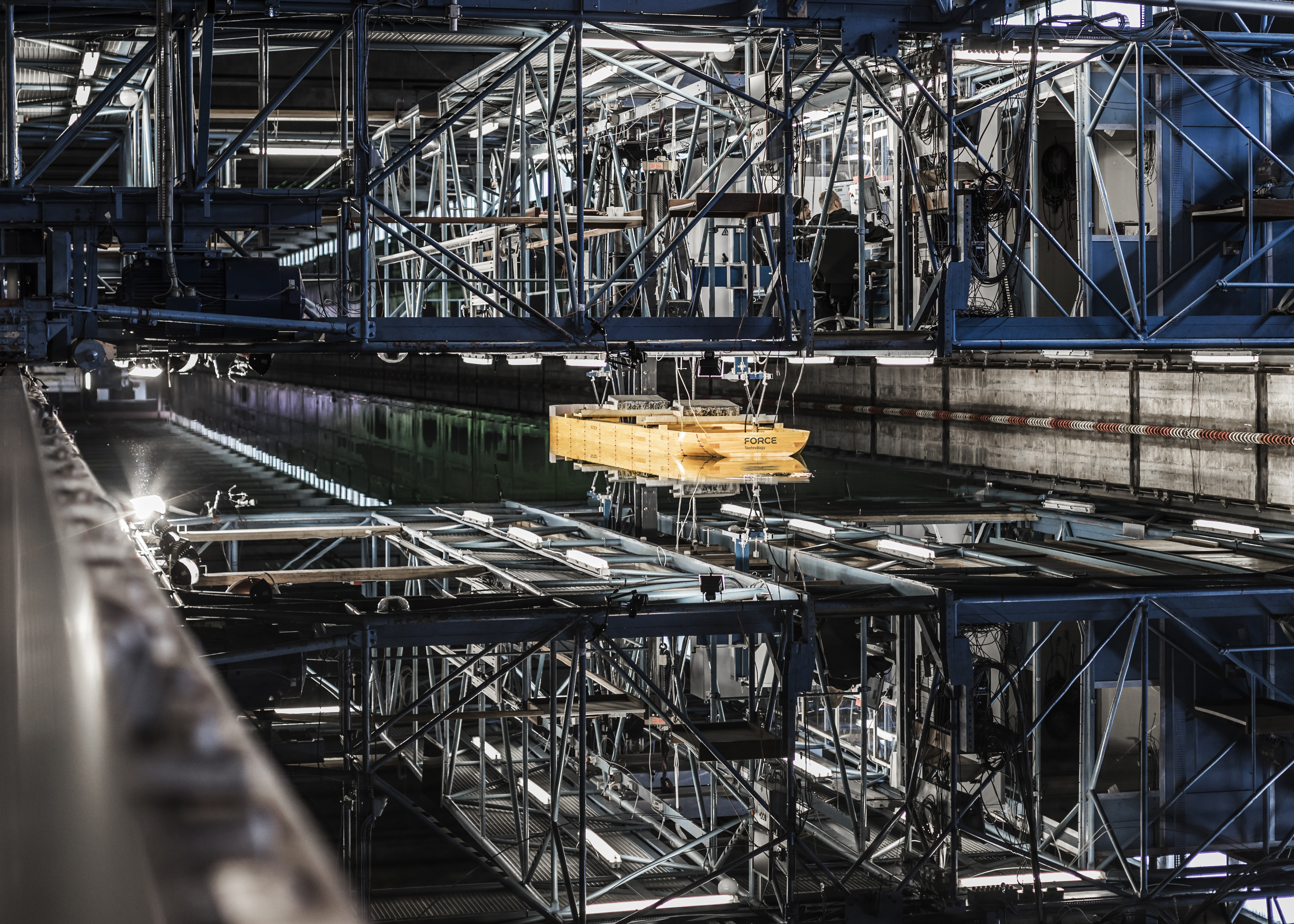
Measure gear interaction in tank tests
Tank tests provide information on how the fishing gear functions and interacts with the structure, with emphasis on critical areas and approach lanes. The tests also include measurements of trawl-wire forces.
