
We prepare measurement programmes in accordance with environmental approvals, legislation and operating conditions. We always prepare a proposal that specifies task scope and price so there is agreement on the extent of the work and misunderstandings are avoided. Careful planning helps ensure valid measurements, efficient execution and on-time delivery.
Air, odour and emissions
Measurement of airborne emissions, including odour and micropollutants
Obtain documented airborne emission measurements that support regulatory reporting, environmental approvals and understanding of industrial emissions.
Industrial companies need documented airborne emission measurements to demonstrate compliance with environmental requirements and to understand how emissions arise from their processes. The need typically occurs in connection with environmental approvals, reporting or process changes. Without reliable data, it is difficult to assess emissions against permit conditions, limit values and environmental impact, and to support decisions on emission factors, abatement measures or stack design.
From measurement to documented results
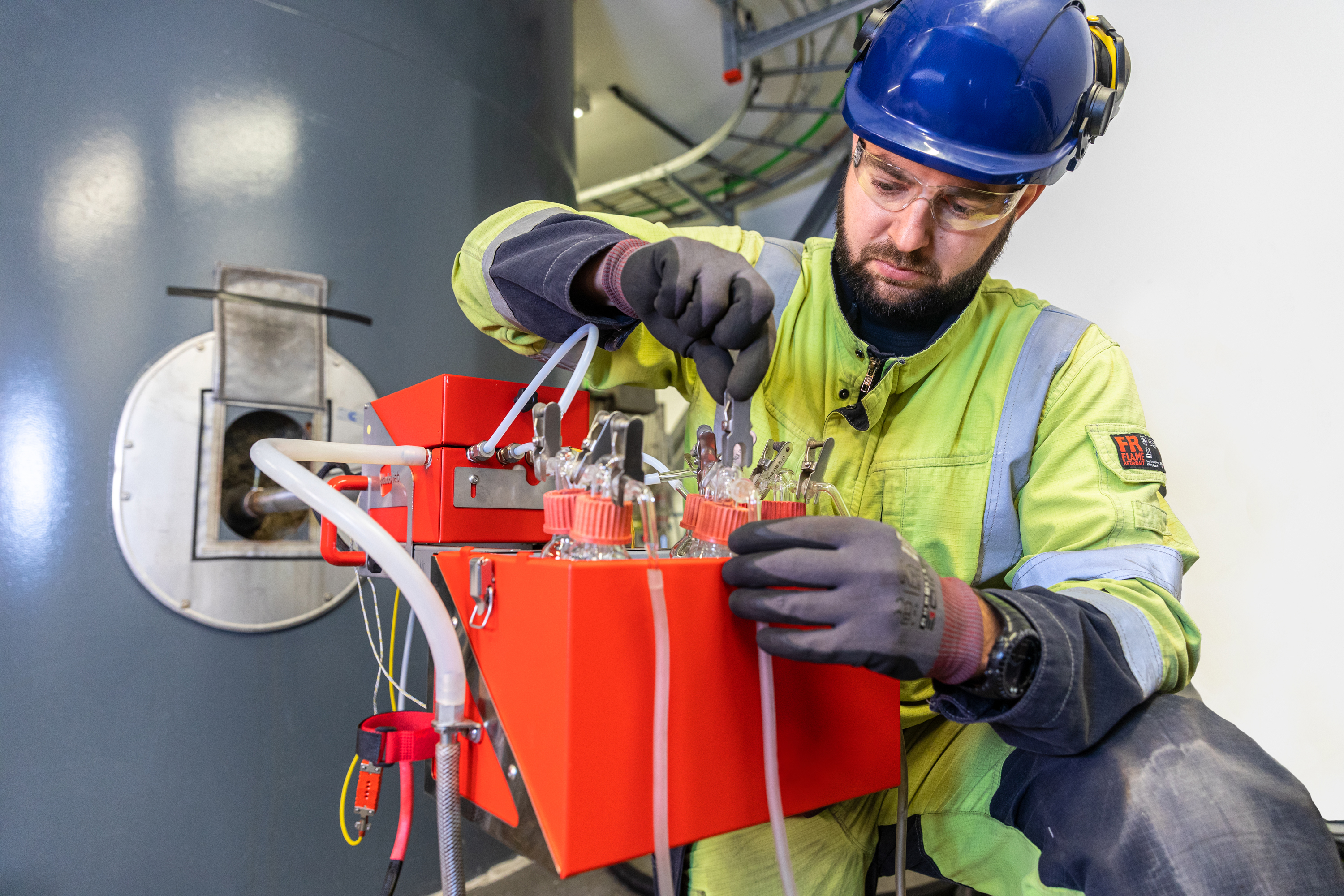
Force Technology performs measurement, evaluation and documentation of airborne emissions, including odour and micropollutants. Measurements are planned based on environmental approvals, legislation and operating conditions, and results are documented in reports for regulatory use and internal assessments. Where relevant, the work is supported by laboratory analysis, specialist input and quality assurance of automated measuring systems (QAL2, AST, QAL3).
Challenges
Without measurements of airborne emissions, it is difficult for companies to provide documented evidence of their emissions.
Environmental requirements create obligations
Industrial installations are regulated through environmental permits and legislation that define conditions for emissions. Without reliable measurements, companies may lack the documentation required to demonstrate that these conditions are fulfilled.
Odour emissions may lead to complaints
Odours are often detected quickly and may result in complaints from surrounding areas. Without documented measurements, it can be difficult to assess the magnitude of odour emissions or respond to regulatory enquiries.
Process changes can alter emission characteristics
Changes in production conditions, raw materials or abatement systems may affect emission levels and composition. Without measurements under actual operating conditions, companies lack the data needed to evaluate these changes.
Lack of data limits operational decisions
Without documented emission data, companies may lack input for environmental approvals, emission factors, process optimisation and NOx and CO2 charge calculations, leading to uncertainty and delayed decisions.
Benefits
Get documented emission data that supports reporting, approvals and operational decisions.
Use measurements for technical decisions
Emission measurements can be used as input for decisions related to abatement measures, stack design, process adjustments and evaluation of system performance under real operating conditions.
