
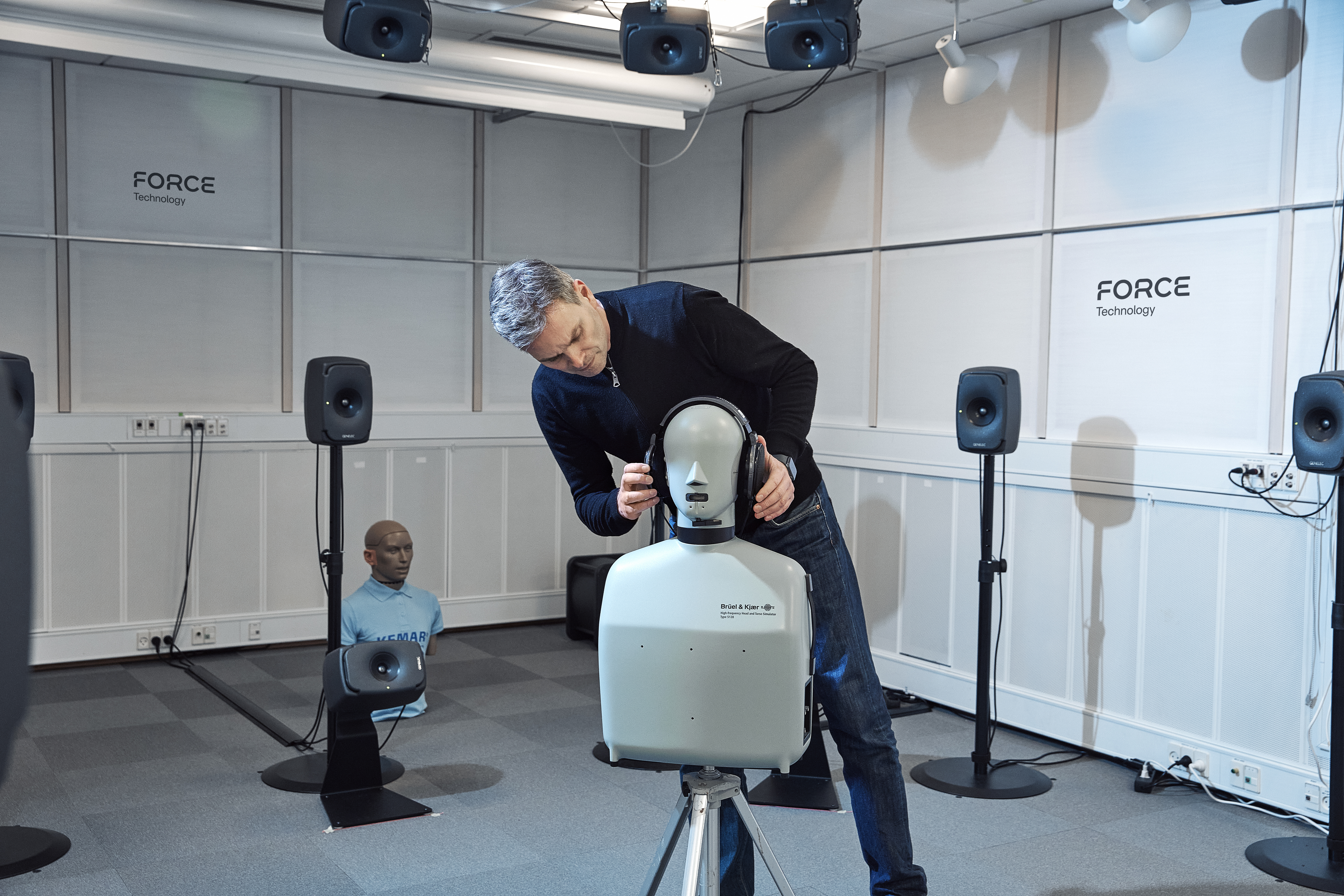
SenseLab benchmarks sound quality through customised ITU listening tests using two panel types: an expert panel and a consumer panel. The expert panel consists of trained, carefully selected, highly skilled ISO 8586-2-categorised assessors working in panel-based sensory evaluation of hearing and vision. Together, the panels function as SenseLab’s sound quality measuring tools and provide reliable data on perceived sound quality and preference that goes beyond physical measurements.
Sound quality
Benchmark the sound quality of audio products
Benchmark sound quality with ITU listening tests and trained listener panels for product development and comparison with competitors.
Benchmarking sound quality becomes relevant when companies need to compare their audio products with competitors through independent listening tests. It also becomes relevant when in-house sound quality targets need to be aligned with consumer expectations. The service supports product development and internal R&D work by providing independent listening data on how users perceive products.
People are the best listening tools
SenseLab offer several services within sound quality. It complies with standardised ITU listening tests using trained expert listeners and recruited consumer groups because people are central to its panel-based sensory evaluation method. These insights support product development and provide an independent basis for comparison with competitor solutions and independent verification in marketing communications.
Challenges
Knowing how your product performs compared to closest competitors
Missing independent comparison
Without an independent benchmark, it is harder to see how a product performs compared with competitor solutions and to document that comparison on a reliable basis.
Perceived sound quality is harder to interpret
When evaluation relies only on physical measurements, it becomes harder to understand how users perceive sound quality and which perceptual characteristics influence preference.
Relevant listener representation is missing
If testing does not include relevant listener profiles, the results may not reflect how different users experience the product.
Inconsistent assessor performance affects reliability
If assessor performance is not evaluated continuously, data quality may become less consistent and the reliability of the testing service may be affected.
Benefits
Get independent comparison data on perceived sound quality for product development and marketing communications
Compare products with competitor solutions
Independent benchmark results provide unbiased, independent validation of how a product performs compared with competitor solutions. This gives teams a documented basis for comparison with competitor solutions. We also offer benchmark reports.
Identify what influences listener preference
Expert listeners and recruited consumer groups uncover the perceptual characteristics behind preferences. This helps product development and internal R&D understand which aspects of sound quality matter.
Include relevant listener profiles in evaluation
The service can include people with different hearing abilities in evaluation. This supports assessment of products where listener profile is important, including hearing aids and accessories.
