
Use X-ray measuring systems for in-line production and quality control in industrial applications.

The service covers development, installation and configuration of X-ray measuring systems for industrial production. The systems are used for in-line control of pipes, welds, materials on conveyor systems and polymer-based foam, among other applications, where production and quality teams need continuous measurement data and documentation. 


Reliable measurements reduce errors 

The need typically arises when companies must follow product or process requirements, reduce waste, increase yield or document quality directly in production. Without reliable measurements, errors can continue through the production line and make it more difficult to maintain stable operation, consistent quality and efficient use of raw materials. The data can support broader Asset integrity and asset lifecycle management. We also perform high energy X-ray CT scanning when documented insight is needed into conditions that cannot be assessed from the outside. 

X-ray measuring system installed in an industrial production line for in-line production and quality control.
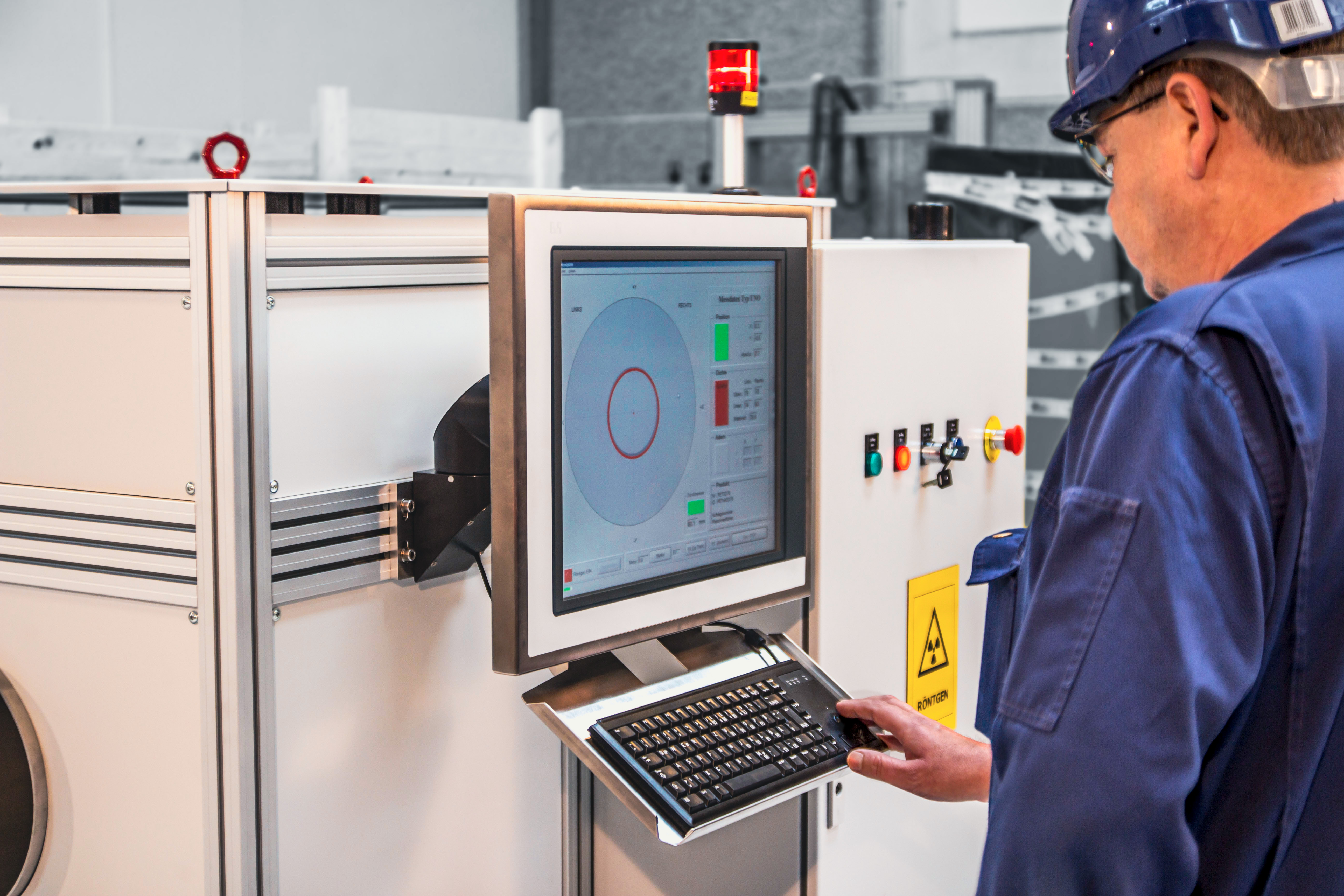
Operator controls an X-ray measuring system for in-line control in industrial production.

Challenges

Without reliable X-ray measurement or CT inspection, production and quality teams have less insight into defects, deviations and internal structures.

Variation in production leads to waste and rejects

When product or process variation is not detected during operation, errors can continue through the production line and increase waste, rejected production and unnecessary use of raw materials. 


Unclear weld quality increases interruption risk

When coils are joined in continuous production, non-conforming weld quality can increase the risk of strip breakage and unplanned stoppages. 


Limited process visibility weakens process control

When dimensions, shape, area weight, density, quantity, or invisible objects cannot be identified reliably in moving products, production teams have a weaker basis for process follow-up and production decisions. 


Complex samples can hide internal defects

When large, dense or complex samples cannot be inspected internally without destructive cutting, defects such as voids, inclusions or geometric deviations may remain unclear and delay failure analysis.

Benefits

Get measurement and inspection results that support production control, product quality, analysis and documentation

Reduce waste and raw material use

When variation and defects are detected directly in the line, waste, rejected production, and unnecessary raw material consumption can be reduced. This supports better use of available resources in production.

Support yield and stable production

Measurement data from the production line provides a stronger basis for monitoring output and process conditions. This supports work to maintain stable production and maximise production yield in relevant applications.