
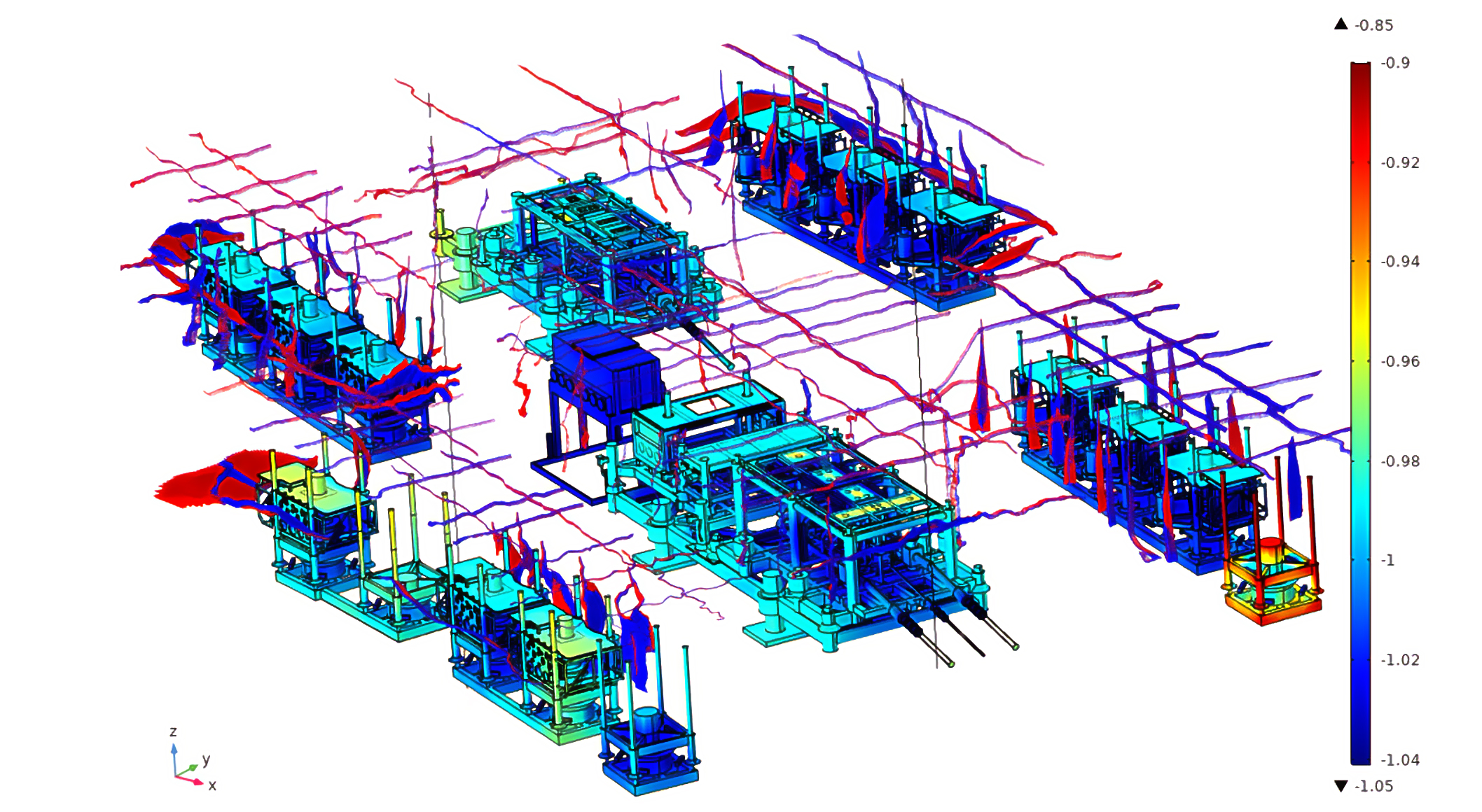
- Uses finite element and boundary element methods to simulate current distribution, anode efficiency and protection potential across complex subsea and topside structures.
- Demonstrates expected cathodic protection performance throughout asset life, identifying under- or over-protected areas before installation.
- Integrates real inspection data to validate model accuracy and refine predictions over time.
Corrosion protection and cathodic systems
Cathodic protection modelling & management
Get a verified, up-to-date view of cathodic protection performance that supports corrosion control decisions and life-extension planning for subsea and offshore assets.
Integrity engineers and corrosion specialists managing subsea and offshore assets rely on cathodic protection designs that remain valid long after installation. Over time, changes in anode output, coating condition and operating environment can make original design assumptions unreliable, increasing uncertainty around protection levels and remaining service life. Without a clear link between modelling and inspection data, teams risk over-design, local under-protection or delayed intervention decisions.
Connect modelling with field data
Cathodic protection modelling and management connects performance modelling with verified field data to establish a current, asset-specific picture of protection coverage and anode utilisation. This allows engineers to validate protection levels, document compliance, prioritize optimisation or retrofit actions and plan maintenance based on predictable corrosion control rather than assumptions. The service is part of our expertise area Corrosion protection and cathodic systems.
Challenges
When cathodic protection models fall out of step with field data, protection drifts and risk accumulates
Models lose accuracy as assets change
As anodes deplete, coatings degrade and operating conditions shift, static models no longer reflect real protection levels, undermining confidence in decisions.
Unverified protection masks emerging corrosion risk
Without continuous validation against field data, areas of under- or over-protection remain undetected until damage or non-compliance occurs.
Disconnected data delays optimisation and response
When inspection results, surveys and models are not integrated, teams struggle to act on changes and prioritise corrective actions in time.
Manual updates increase uncertainty and workload
Recalculating protection scenarios without integrated tools is time-consuming and error-prone, slowing decisions and increasing operational risk.
Make sure your cathodic protection performs as intended
Get a quote based on your asset, available data and modelling needs. We define scope, verify assumptions and estimate the effort required to manage cathodic protection performance over time.
Standards
