
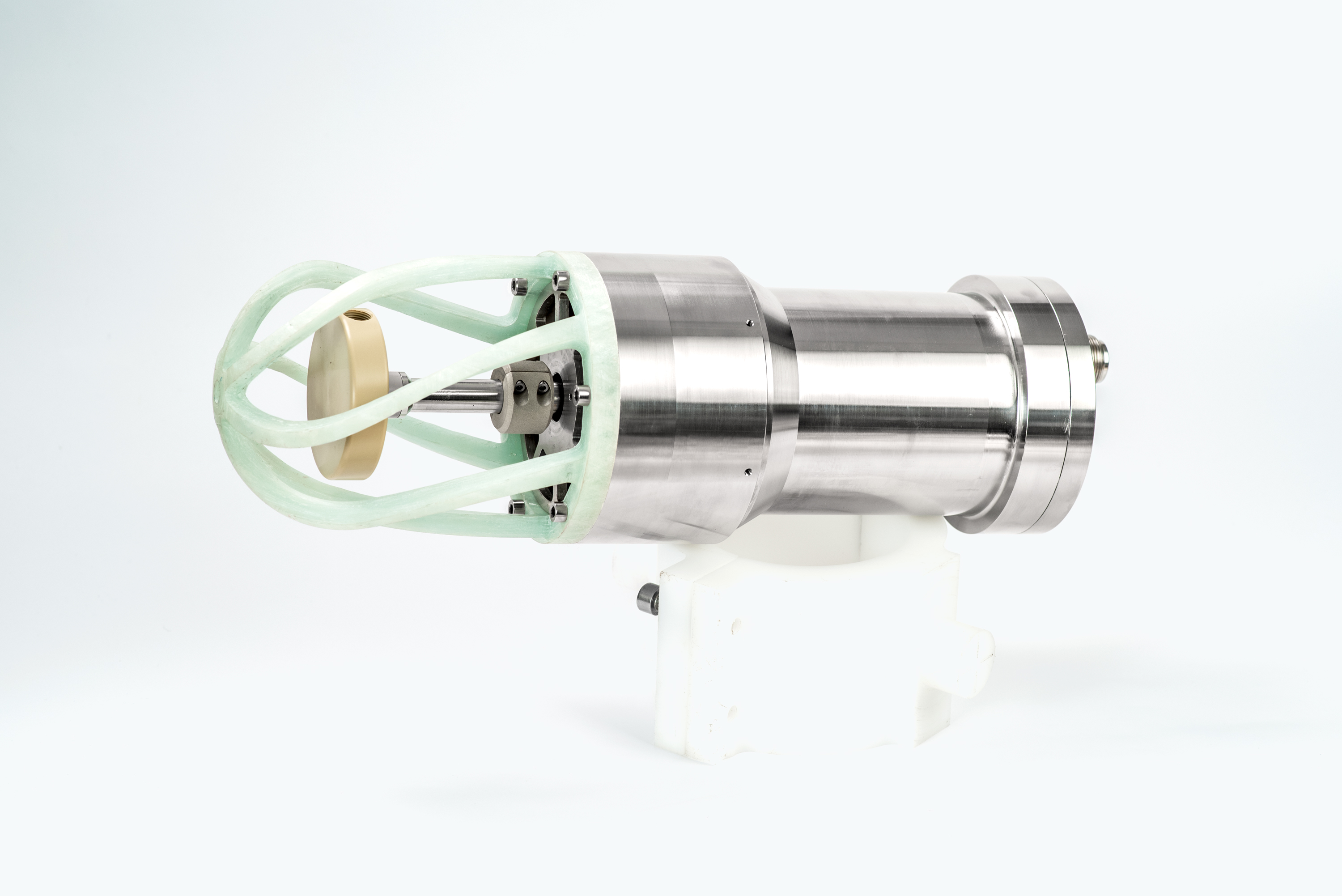
- FiGS® (Field Gradient Sensor) measures the electric field generated by cathodic protection systems to allow accurate calculations of potential distribution, steel current density and anode current output.
- Dual rotating electrode cells measure field gradients and generate field gradient maps maps of CP effectiveness and interaction between connected structures.
- Outputs field-gradient raw data, which alongside navigation data from ROVs and AUVs that provides accurate input for advanced CP modelling and service-life prediction.
Corrosion protection and cathodic systems
FiGS® cathodic protection survey
Get fast, highly sensitive cathodic protection survey data that informs subsea integrity decisions and maintenance planning.
Integrity and inspection teams use the Field Gradient Sensor (FiGS®) to verify cathodic protection performance on subsea structures and pipelines where traditional contact-based surveys fall short. Ageing assets, buried sections and interaction between structures make it difficult to assess anode output, coating condition and current distribution with confidence. This lack of reliable data increases the risk of undetected under-protection and leads to conservative maintenance or unnecessary retrofit decisions.
Basis for planning and life extension
FiGS® captures high-resolution field-gradient data without physical contact, delivering continuous coverage across exposed and buried assets. The resulting data enables teams to confirm protection status, assess remaining anode life and plan inspection, maintenance and life-extension activities with confidence. The service is part of our expertise area Corrosion protection and cathodic systems.
Challenges
When cathodic protection surveys lack full coverage and stable data, corrosion spreads unnoticed and costs escalate.
Limited access hides corrosion activity
Buried, rock-dumped or heavily coated pipelines restrict contact-based measurements, leaving corrosion activity undetected in critical areas.
Unstable measurements undermine confidence
Noise, drift and contamination in conventional probes reduce data reliability, making survey results difficult to trust or compare over time.
Electrical interference distorts protection levels
Interaction between connected structures may mask under-protection and accelerates anode depletion without clear warning.
Slow surveys increase cost and blind spots
Point-by-point measurements extend vessel time while still leaving gaps in coverage across subsea fields, driving uncertainty in integrity planning.
Benefits
Get complete cathodic protection insight without contact or disruption
Faster surveys, smaller footprint
ROVs or AUVs deploy FiGS® quickly and safely, reducing vessel time, fuel use and offshore exposure. Fewer vessel days and no diver operations result in lower operational risk and environmental impact.
