
The service can include numerical seakeeping predictions based on the S-Omega 3D linear radiation-diffraction panel code. The deliverable is a calculation basis covering vessel motions, wave forces, added mass and damping for defined sea states, speeds and headings. The scope can also include operability analysis for a given sea state and mission with its specific restrictions.
Maritime and offshore engineering
Seakeeping evaluation for vessel safety and comfort
Assess seakeeping to support design choices that affect vessel safety, comfort and performance in hard weather conditions.
Seakeeping evaluation is relevant when waves and harsh weather can affect vessel safety, onboard comfort or cause cargo damage during operation. It is especially important in early design, when hull geometry and other main parameters can still be adjusted.
Why early evaluation matters
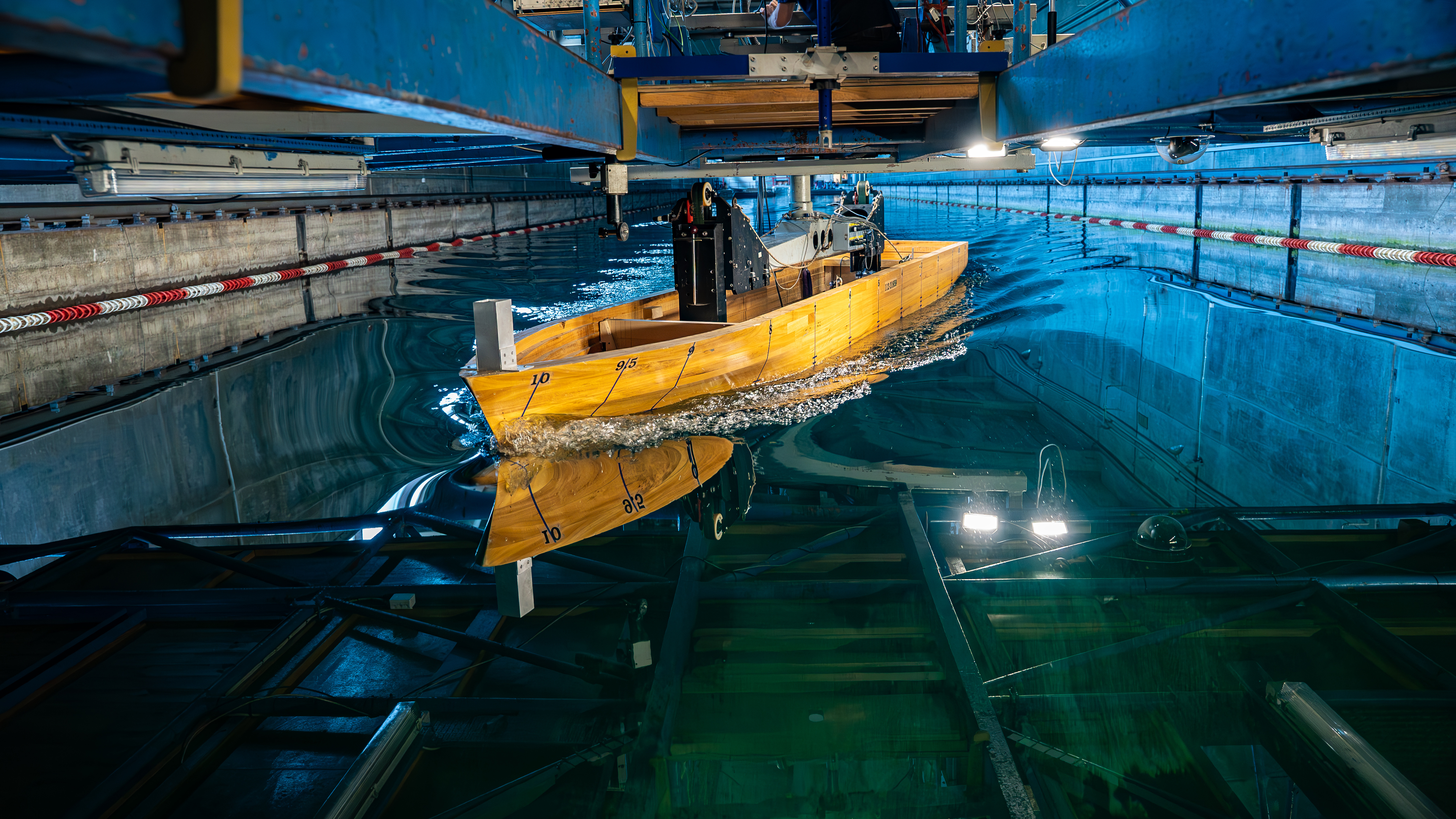
If key design choices are made before the likely vessel behaviour in different sea states, speeds and headings is understood, it can weaken decisions about suitability for the intended operational profile and make later changes harder to implement. The service is part of our expertise area Maritime and offshore engineering.
Challenges
When vessels are not assessed in relevant wave conditions, uncertainty can weaken design and operational decisions.
Unclear motions make vessel behaviour hard to judge
If roll, pitch, accelerations and related motions are not evaluated early, it becomes difficult to judge how the vessel is likely to behave in waves and whether it is suited to the intended operational profile.
Wave effects may appear too late in development
Events such as slamming, deck wetness, green water or propeller emergence may first become visible after key design choices have been made, when adjustments are more difficult to implement.
Operational restrictions remain uncertain
If vessel response is not assessed across sea states, speeds and headings, it is difficult to define realistic operational restrictions for a given sea state and mission and to judge likely speed loss in waves.
Benefits
Get documented seakeeping results that support design review and operational assessment
Support early design decisions
Documented seakeeping results provide a clearer basis for judging whether key design parameters should be adjusted while changes are still possible. This reduces uncertainty about vessel behaviour under relevant operating conditions.
Assess comfort and onboard conditions
The evaluation supports assessment of motions and accelerations that influence comfort onboard. For passenger vessels, this helps judge whether the vessel characteristics are suited to the intended service profile and expected sea conditions.
