Challenge
Without automated energy and CO₂ data, Kvist struggled to document its sustainability efforts and create business value from them.
Solution
Eighteen sensors and a data platform provide real-time insights into energy consumption and CO₂ emissions, with data linked directly to production and ERP systems.
Result
Kvist now has access to reliable CO₂ data that supports energy optimisation while strengthening reporting, stakeholder dialogue, and data-driven development.
As one of the first companies to participate in the 1:1 track of the Data for Sustainability programme, Kvist Industries, has gained real-time insight into energy consumption and the carbon footprint of its electricity use. The result is more accurate reporting and a stronger competitive advantage when working with cus-tomers facing increasingly stringent documentation requirements.
From estimates to knowledge – why measured data matters
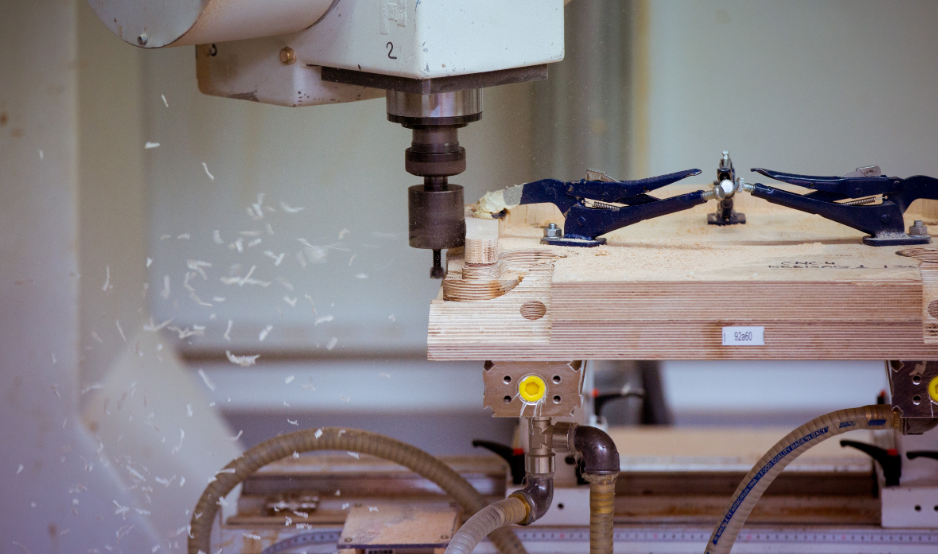
For more than 50 years, Kvist Industries has manufactured designer furniture and has worked strategically with sustainability initiatives for several years, including sourcing FSC®-certified wood and reducing waste and CO₂ emissions. The next natural step has been to collect more precise product-level electricity consumption data that reflects actual production conditions. When CO₂ figures are based on real measurements rather than estimates, both credibility and competitiveness are strengthened. Addressing this need was exactly what Kvist Industries set out to achieve.
Through the Data for Sustainability 1:1 programme, the company sought to identify technologies and methods that would enable product-level measurements and turn data and insights into actionable improvements.
“One of the things we can now actually see is where energy is being consumed in the production process. We can identify which processes are more energy-intensive than others instead of relying on averages. This has given us concrete input for determining energy consumption per production minute. It has also become clear that energy use varies depending on where we are in the production process. We expected that to be the case, but now our understanding is based on facts rather than assumptions. As a result, we can make decisions based on real measured data,” says Santa Staškeviča, Group ESG and Business Development Manager at Kvist Industries.
Data platform – Real-time data directly from production
Following a mapping of its machinery, Kvist Industries worked with the project team to select commercial sub-meters and install 18 sensors, with additional sensors already planned. Without disrupting production, the sensors collect real-time data, enabling Kvist Industries to monitor energy consumption at machine, production line, and overall facility levels.
The project’s platform aggregates and visualises data in a dashboard that not only enables comparison across operations but also supports CO₂ calculations at both product and company levels. The company can continuously add new sensors, and the next step is to integrate ERP data so that product-level calculations can be automated.
Santa Staškeviča emphasises the importance of considering the needs of all departments when designing a data collection setup:
“The programme has improved understanding between departments because data creates a shared point of reference. It makes discussions more concrete and makes it easier to make decisions that are meaningful across the organisation.”
Everyday impact – better dialogue, better decisions
With measured data, Kvist can provide customers with more transparent and well-documented information about product carbon footprints while also using insights to identify patterns in energy and resource consumption that can improve both production efficiency and financial performance. This transforms sustainability efforts from a compliance exercise into a genuine source of competitive advantage.
The company has already installed 18 sensors and implemented the digital platform. At the same time, Kvist has actively tested platform functionalities, identified data patterns, and provided ongoing feedback.
“The collaboration has been characterised by strong dialogue and coordination from both Kvist’s sustainability department and its electricians, making it possible to achieve significant progress early in the programme. As a result, Kvist now has a fully operational data foundation and is ready for the next phase, where data utilisation, optimisation opportunities, and ERP integration can further strengthen reporting and improve decision-making,” says Ioan-Matei Sarivan, Lead R&D Engineer at FORCE Technology and a member of the Data for Sustainability project team.
Regarding Kvist Industries’ participation in the Data for Sustainability 1:1 programme, Santa comments:
“You can clearly feel that you are part of a development programme. It creates many opportunities and provides a great deal of flexibility. At the same time, it requires close coordination and a mutual commitment to fulfilling responsibilities in order to achieve the desired outcomes. That combination has resulted in a positive and rewarding experience.”