The world's first automatic swab robot is Danish - and start-up receives help with approval
Challenge
Lifeline Robotics developed the world’s first automatic swab robot which must be approved as a medical device.
Solution
FORCE Technology introduced Lifeline Robotics to the most important standards within the area and helped the start-up with the approval process.
Result
Lifeline Robotics has been prepared for the approval and is now able to initiate their development of medical devices.
LIFELINE ROBOTICS
The Odense-based start-up wants to make a difference in the health sector with the use of robotics and automation technology.
The company has developed a robot-based system for automated sampling for COVID-19 etc.
The goal is to improve global health safety by improving the quality, availability, and scalability of a standardised procedure and to protect and free up the health workers from monotonous tasks for more value-adding tasks where human contact is essential.
MADE DEMONSTRATION PROJECT
With a MADE – Manufacturing Academy of Denmark - demonstration project, a small or medium-sized company (SME) may receive financial support of up to DKK 100,000 for solving a specific challenge in the company or testing a new technology in the production.
There is a continuous deadline for applications for demonstration projects.
Danish Lifeline Robotics develops the world's first automatic swab robot, but the road to an MDD approval is long. In a MADE demonstration project, FORCE Technology has laid the foundation.
No more false positive COVID-19 results.
The goal for the Odense-based start-up Lifeline Robotics is clear. The company wants to contribute with knowledge and experience to end the pandemic, and the idea of a robot to carry out automatic throat swabs soon emerged.
In just four weeks, a team of researchers managed to complete a prototype which was able to both prepare a test and perform the actual swab, and then only the delivery to the laboratory remains.
While the world's first swab robot was developed in a hurry it is a far slower process to keep track of all the regulations and thus have the robot approved as a medical device.
Lifeline Robotics therefore sought help from a MADE demonstration project where FORCE Technology introduced them to the most important standards within the area and helped the start-up lay the foundation for their future quality control system.
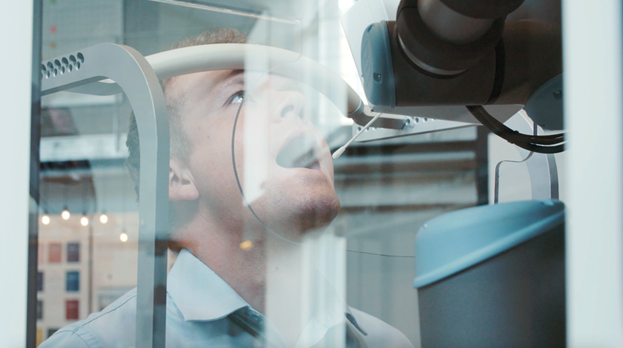
Trial subject is swabbed by the automated swab robot.
“When companies work with medical devices, they must comply with the regulations in EU’s MDR – Medical Devices Regulation”, says Morten Kjær Johansen, senior specialist from FORCE Technology, and he continues:
”Before the company starts producing the actual equipment it has to develop a quality control system that supports the company's processes, including risk management, to comply with all standards in the area.”
The sparring from the experts has been very beneficial to the start-up:
”The MADE demonstration project has prepared us for entering the world of medical equipment, and it has been the launching pad for becoming a company that can start developing medical devices”, says Andreas Holmetoft Lyder, Technical Product Owner at Lifeline Robotics.
Safety first
Before the company is allowed to attempt the demonstration of the product’s clinical capability on humans, it must meet several requirements in the standards regarding the product and the processes to substantiate that all security related details are under control.
”It is always more expensive to make changes in a development project along the way rather than getting it right from the beginning where the processes are adapted to the standards”, says Morten Kjær Johansen. ”This leads to safer and more suitable products in the end."
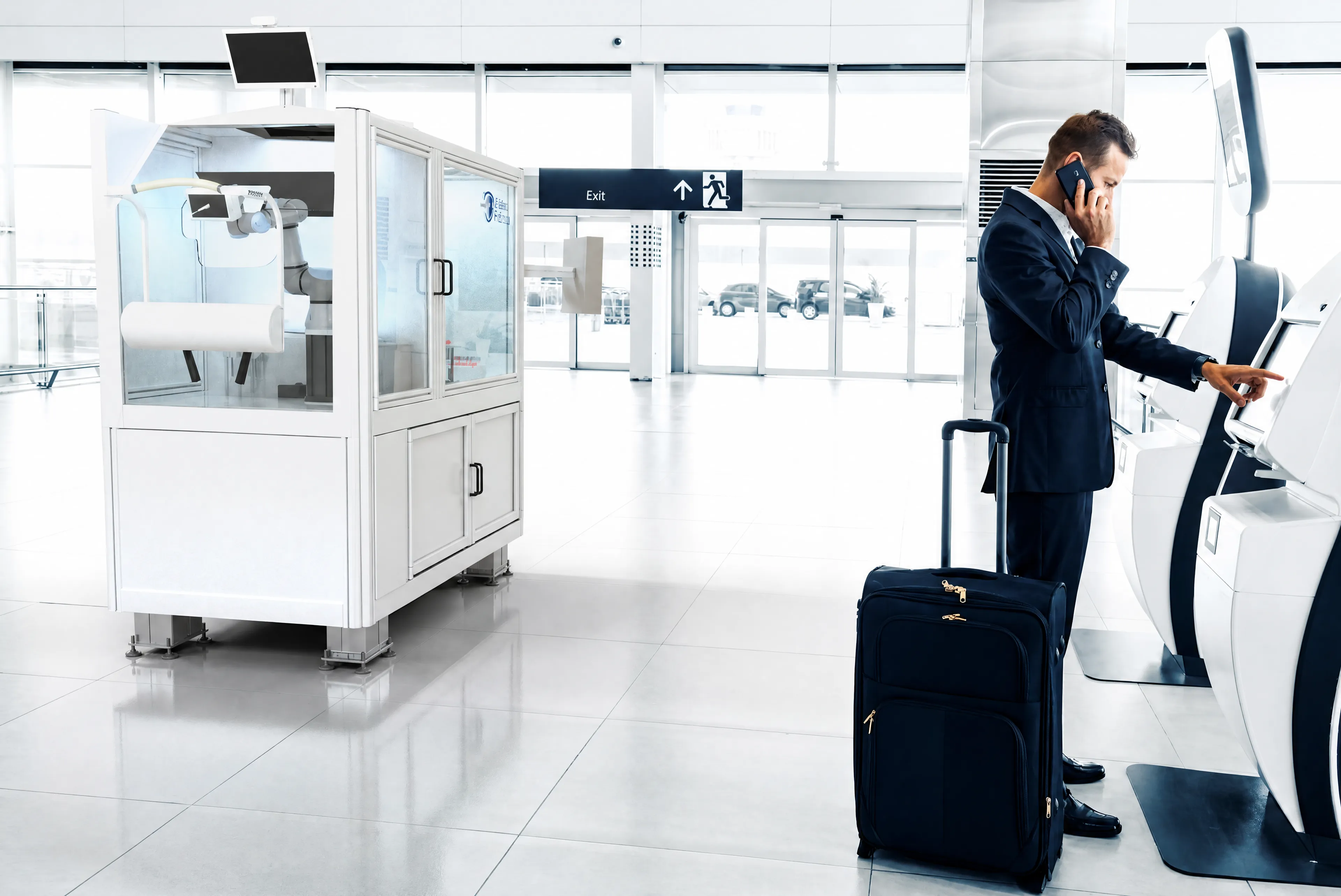
The robot may be used in many places for automated swabbing such as hospitals and airports.
New knowledge called for a new employee
Lifeline Robotics quickly realised the necessity of having a dedicated and experienced coordinator to take the company through all the requirements, and on that basis the start-up had one more employee.
”We could have saved a lot of money if we had known how to go about it from the beginning and hadn't ‘just’ made a prototype of the swab robot right away”, says Julie Dalsgard, CEO at Lifeline Robotics.
”We learnt that we need someone dedicated to establishing a quality control system and working with risk management and usability at our company if we are to have any hope of commercialising a MedTech product”, says Julie Dalsgard.
Continued major need for contact tracing continues the development process
Lifeline Robotics sophisticates the product, and part of the process is to investigate whether sub-elements of the swab are subject to the same requirements as medical devices and to have this part developed, marketed, and sold.
”Even though the COVID-19 is currently heavily declining we still see a major societal need for contact tracing with automated swabbing”, says Julie Dalsgaard and adds:
”The corona pandemic showed us that manual swabbing presents challenges with so many swabbers, and it is inevitable that there is variation in the manual work. However, data from the pandemic have shown that this variation has resulted in a large ratio of false negatives even though PCR analyses have been applied. We would like to change that”, says Julie Dalsgard, CEO for Lifeline Robotics.