
The service includes a site-specific study of wind conditions around an airport, airfield or landing strip. Receive documented results describing flow conditions for arriving and departing aircraft and, where relevant, turbulence conditions along the approach line. These results are used in evaluation of local operating conditions for the investigated site and wind conditions. The scope covers the investigated area and the wind conditions defined for the study. It does not, in itself, define operating rules for all aircraft types, all weather conditions or areas outside the investigated site.
Aerodynamics and wind engineering
Aviation aerodynamics
Assess wind conditions, turbulence and wind shear that affect aircraft operations and aviation facilities.
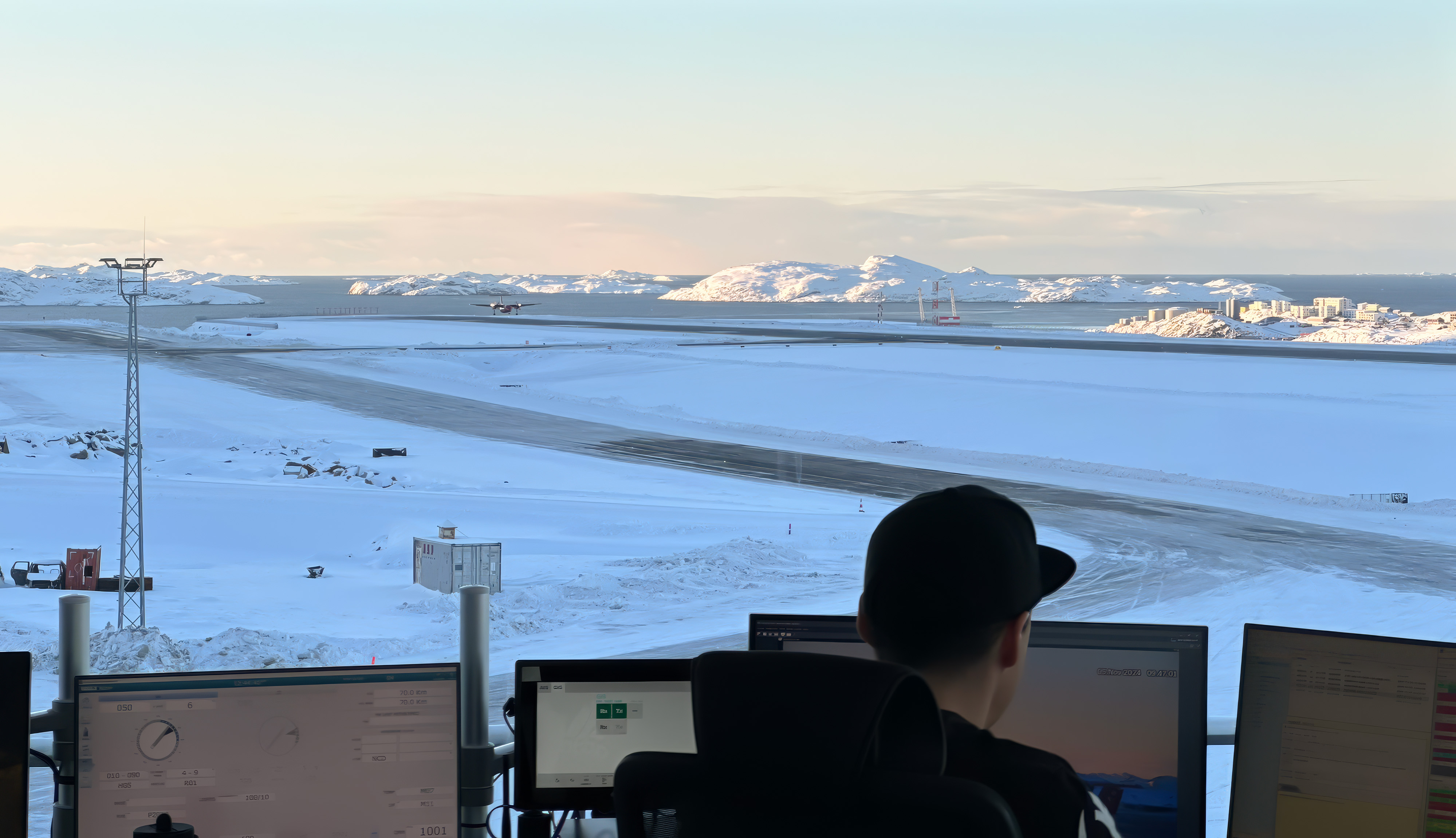
Aviation aerodynamics is used to assess how terrain, local wind conditions and nearby structures influence aircraft operations at airports, airfields and helicopter sites. The need arises when approach, departure or helicopter operations cannot be reliably evaluated using standard wind data.
When wind conditions affect operations
Without a clear basis for judging flow conditions, turbulence and wind shear, it is difficult to assess operational limitations and local warning needs. The service provides documented input for airport operations, helicopter operation zones, simulator use, anemometer placement and Turbulence Warning Indicator set-up. It's part of a suite of aerodynamic testing services.
Challenges
When local wind conditions are unclear, airports and operators lack a reliable basis for operational decisions.
Mountain terrain makes local wind effects difficult to judge
At airports, airfields and landing strips in hilly or mountainous terrain, flow conditions may change significantly with wind speed and direction. This makes it difficult to define operational limitations and assess regularity.
Turbulence and wind shear can affect approach and landing
Aircraft may be exposed to terrain-induced turbulence and wind shear during take-off and landing. This can cause strong acceleration forces and, in severe cases, reduced controllability, especially during low-speed landings.
Airport wind data may not represent the corridors
Local measurements at the airport may give a poor indication of wind conditions in approach and departure corridors. This creates uncertainty when alerts or cautions depend on ambient wind conditions.
Helicopter operations can be limited by local flow conditions
On ships, offshore structures and buildings, difficult wind conditions can affect serviceability of helicopter decks. This is particularly critical where operations support safety functions.
Benefits
Get documented wind assessments that support operations, warning set-up and evaluation of aviation facilities.
Support selection of anemometer locations
The studies can assess planned anemometer positions at or near the airport and compare them with existing meteorological stations. Where terrain disturbs airport measurements, this supports selection of more reliable locations.
