
Get aerodynamic assessments that clarify wind, current and airflow conditions for offshore structures.

Owners, operators and designers in the offshore industry need this service when a vessel or platform must be assessed in relation to wind, current or airflow conditions at sea. The need typically arises in the design and planning phase, where environmental conditions can affect operations, working areas and helicopter operations. 


Documented basis for design decisions 

The service is part of a suite of aerodynamic testing services, and provides documented input for evaluating offshore structures before the design is finalised. The results are used to assess loads, airflow conditions and operational implications for vessels and platforms, which influence the further development of the project. 

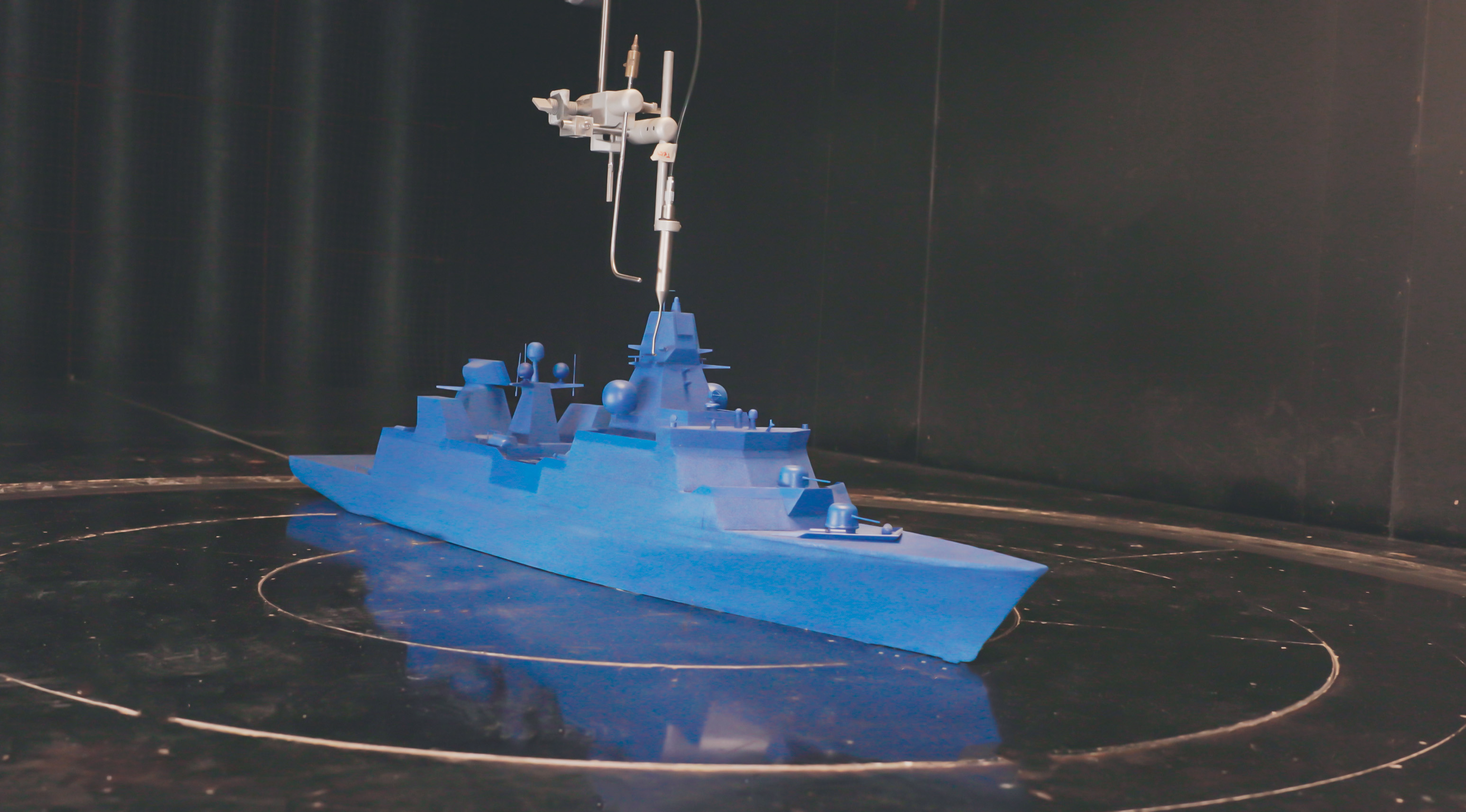
Blue scale model of an offshore vessel positioned on a rotating platform beneath measurement equipment in a wind engineering test facility.
Scale model used for aerodynamic testing of offshore structures and vessels under controlled airflow conditions.

Challenges

When offshore structures face complex wind, current and airflow conditions, uncertainty can delay the design process.

Unclear load data delays design decisions 

Without documented wind and current loads, teams may not have a reliable basis for evaluating propulsion, manoeuvring, dynamic positioning, mooring and stability requirements for vessels and platforms. 


Smoke in work areas disrupts operations 

Adverse wind conditions can reduce stack or funnel performance and leave outdoor working areas or ventilation inlets engulfed in smoke or noxious gases. 


Helicopter conditions are hard to judge early 

Where a platform or vessel includes a helicopter deck, unresolved airflow conditions make it harder to assess serviceability and operational risk under difficult wind and sea states. 


Wind in open areas limits working time 

Strong local winds in outdoor work or recreation areas can reduce crew comfort and create costly limitations on working time if these conditions are not understood during design. 

Benefits

Get documented aerodynamic results that support design evaluation, operational assessment and correction of wind data.

Use load data in design evaluation

Wind tunnel studies provide load coefficients that are used to evaluate propulsion, manoeuvring, dynamic positioning, mooring and stability. The results form part of the design basis, where teams assess environmental loads against system requirements and operational conditions. 

Assess wind conditions in open areas 

Wind comfort studies provide data on local wind conditions in working and recreational areas. The results are used to evaluate how wind affects usability, presence and planning of activities during the design stage.