
Ensure structural integrity, predictable fatigue life and safe performance in load-bearing steel structures.

Uncertainty about weld strength and fatigue performance creates risk in load-bearing steel structures exposed to static and cyclic loading. Welding alters material behaviour through residual stresses, geometric discontinuities and heat-affected zones, while fatigue cracks often initiate at weld details. Without verified calculations, structures risk deformation, premature failure, repairs and downtime. 

Calculation basis for welded structures

Strength and fatigue analysis provide documented verification that welded joints can withstand realistic load conditions throughout their intended service life. Analyses consider weld geometry, material properties, residual stresses and fatigue behaviour. Finite element method (FEM) simulations identify stress distribution and critical details, supported by strain-gauge measurements where required. All assessments follow Eurocode 3 and International Institute of Welding (IIW) guidelines, providing documented support for design approval and structural decisions. The service is part of our expertise area Welding technologies.


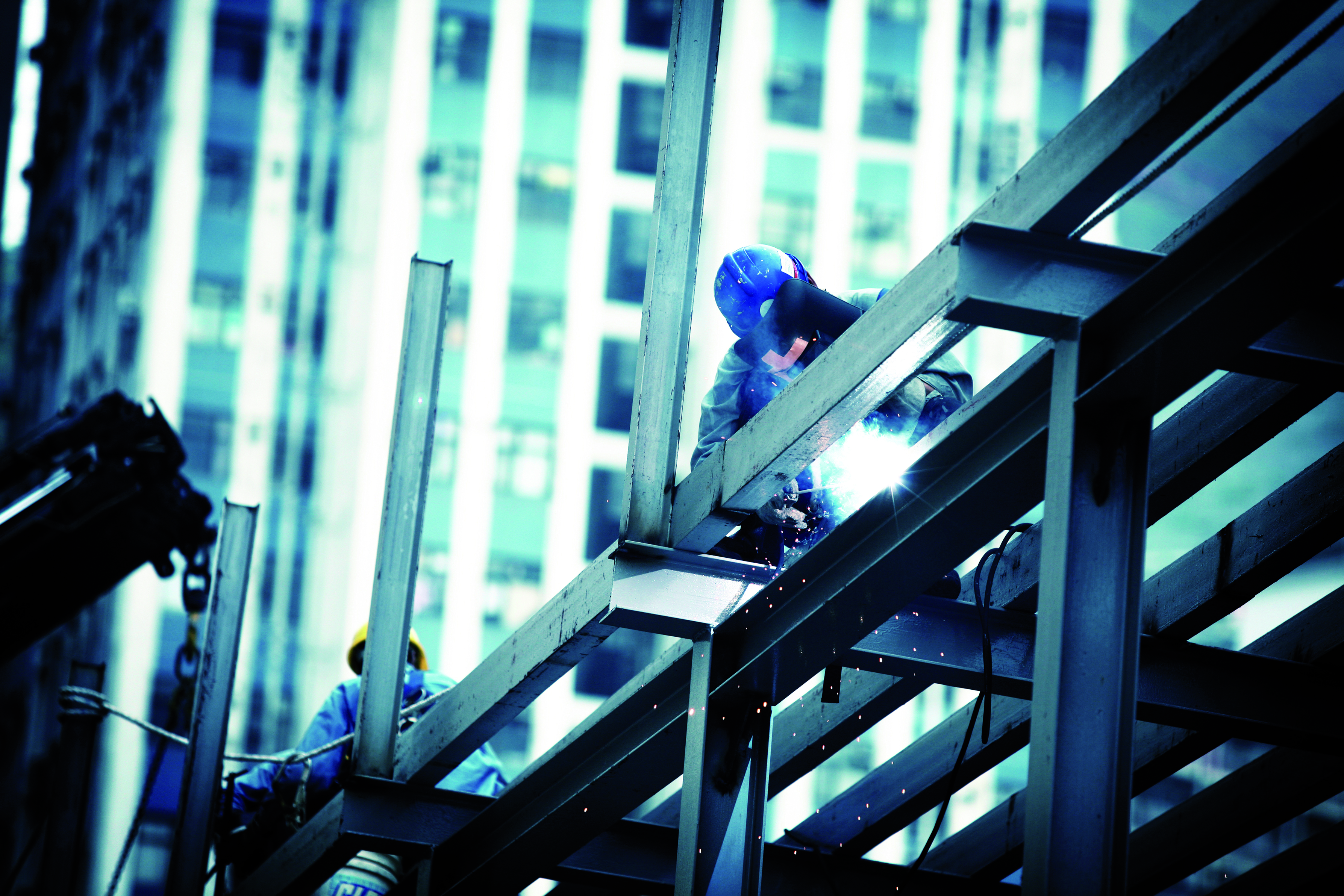
A welder working on welded joints in load-bearing steel beams
Verified strength and fatigue performance of welded joints is essential for safe load-bearing steel structures.

Challenges

When welding effects are not properly analysed, structural safety and lifetime cannot be confirmed

Unassessed welding effects weaken structural reliability 
When residual stresses and heat-affected zones are not analysed, welded joints may not achieve the required strength or fatigue resistance. 

Missing verification delays approval and decisions 
Without clear calculation and assessment documentation, design approval and authority review become uncertain and time-consuming. 

Unpredicted deformation causes rework and fit-up issues 
Lack of reliable analysis makes welding distortion difficult to control, leading to misalignment, corrective work and compromised performance. 

Unclear fatigue life increases risk of premature failure 
When stress levels and fatigue behaviour are not quantified, remaining lifetime and inspection planning cannot be defined with confidence. 

Benefits

Make sure welded structures are strong, safe and fit for purpose

Accurate strength calculation, reliable documentation 

Strength calculations of welded structures provide verified results that confirm weld quality and load-bearing performance, forming a solid basis for design validation and authority approval. 

Targeted strength assessment, optimised weld design

Strength assessment of welded joints highlights local stress concentrations and supports optimisation of weld geometry and material use for safer, more efficient designs. 

Advanced FEM analysis, predictable structural performance 

FEM analysis of welded structures visualises stress distribution and deformation, improving understanding of how the structure behaves under real-world operating conditions.