
The delivery includes course planning based on two practical questions: in which situations participants will use the knowledge, and what they should be able to do in those situations. This gives the client a course structure and scenario basis shaped around learning rather than teaching. The training concept is founded on internationally recognised best practice and pedagogical methods, including participant-centred learning and discovery-based methods.
Maritime simulators
Simulator based navigation training
Build navigation and ship handling competence in demanding operating conditions.
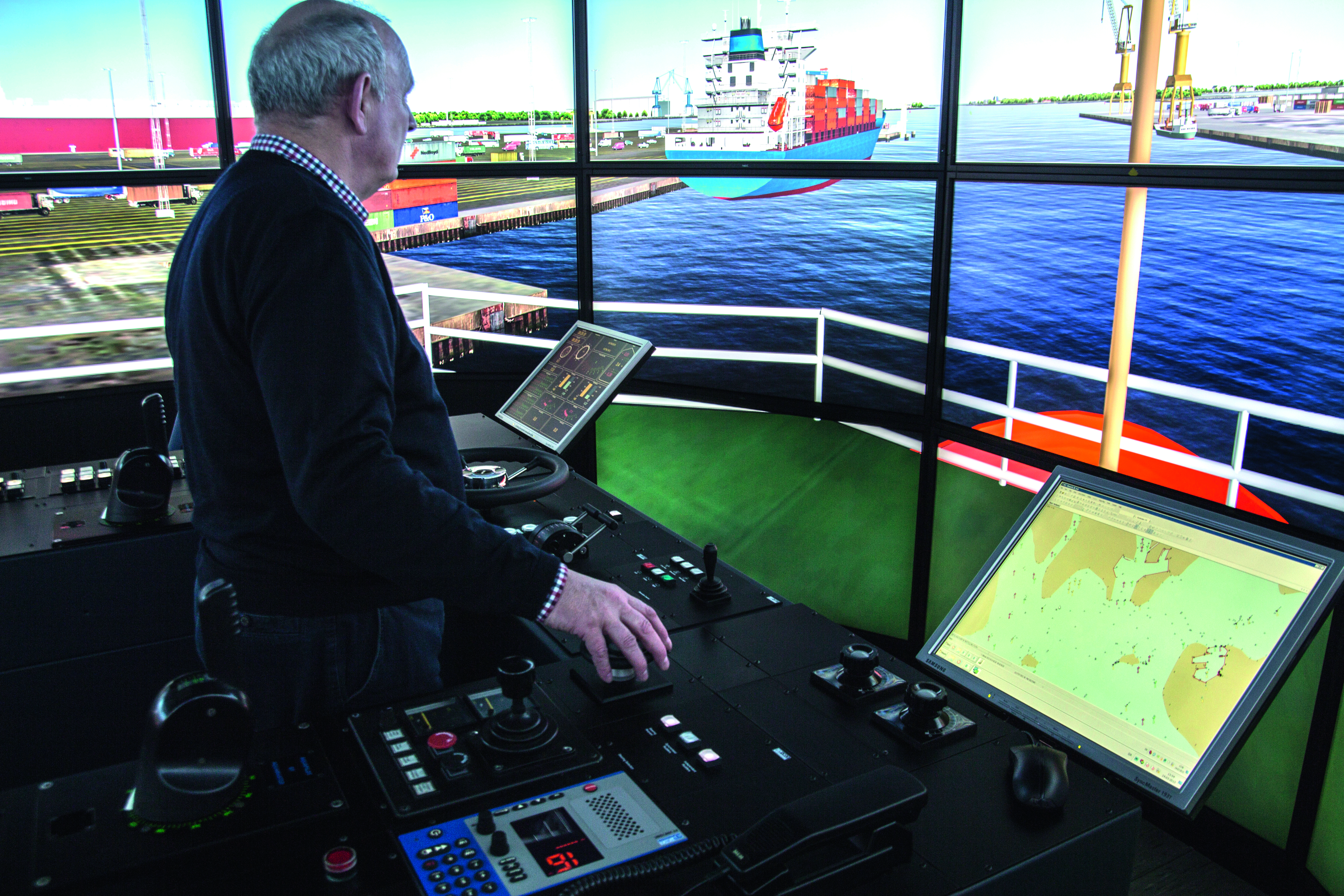
Simulator-based maritime training supports bridge crews, officers and captains when they need to build operational experience faster than onboard training alone allows. The need typically arises when crews must prepare for demanding conditions, strengthen bridge team coordination and improve navigation and ship handling performance across the vessel operation. Training can be delivered both individually and as a complete bridge team, allowing crews to practise communication, coordination and decision-making together in realistic operational scenarios.
Training for demanding operations
Without relevant practice, difficult situations can reduce confidence and weaken efficiency, safety and communication on the bridge. Limited opportunities to train complete bridge teams together can also affect how roles, information sharing and collective decisions function during live operations. Training in a virtual environment gives crews a clearer basis for building competence, operational understanding and shared experience before situations occur at sea. The service is part of our expertise area Maritime simulators.
Challenges
When maritime crews face demanding conditions without relevant practice, decisions, coordination and vessel handling can be affected.
Limited practice in critical situations slows response
Crews may have few opportunities to rehearse demanding or uncommon situations in live operations. This can make responses less consistent when conditions change and leave important decisions dependent on limited prior experience.
Unclear bridge teamwork weakens communication
When roles and interaction are not trained together, communication on the bridge can become less effective. This can affect how information is shared, how situations are understood and how the crew acts collectively.
Generic training content reduces operational fit
Training that is not aligned with the client's operational context may be harder to use in daily work. Participants may complete training without building competence that matches their actual vessel, role or operating conditions.
Benefits
Build bridge team competence for demanding navigation and vessel handling through simulator-based maritime training.
Build confidence in demanding situations
Training in a virtual environment lets participants build experience faster than onboard training alone. This gives crews a stronger basis for acting with confidence when they meet demanding situations.
Support reflection
The training helps participants build self-awareness and develop reflective decision-making skills. This gives crews a clearer basis for learning from their actions across the course.
