
Inspection, verification and maintenance
Calibration and verification for traceable measurements
Maintain compliant, traceable measurements that protect safety, quality and commercial integrity.
Organisations rely on accurate, traceable measurements to demonstrate compliance, ensure product quality, and maintain operational control. Quality managers, production teams, technical managers and compliance functions depend on calibrated instruments and verified systems to support regulatory requirements and internal governance. The need for calibration and verification typically arises from quality management obligations, legal metrology requirements, safety-critical operations or scheduled maintenance of measuring equipment. When instruments drift out of tolerance or traceability is unclear, audit findings increase, and decisions may be based on unreliable data.
Deviations are bad for business
Incorrect measurements not only affect quality. In regulated commercial environments such as fuel dispensing, energy metering or trade measurement, inaccurate instruments directly affect financial transactions, customer trust and legal exposure. Even small deviations can lead to revenue loss, disputes or sanctions if measurement results cannot be defended.
Calibrate for confidence
Calibration and verification services document measurement performance and deviation relative to defined tolerances. Laboratory and on-site activities support both installed systems and distributed equipment across operational environments. Verification evaluates the performance of the measuring system under real operating conditions. The resulting documentation provides a structured basis for audits, compliance documentation and operational decision-making.
Newsletter
Stay informed on calibration and traceability
Subscribe to receive updates on calibration requirements, traceability standards and regulatory developments affecting measurement compliance.
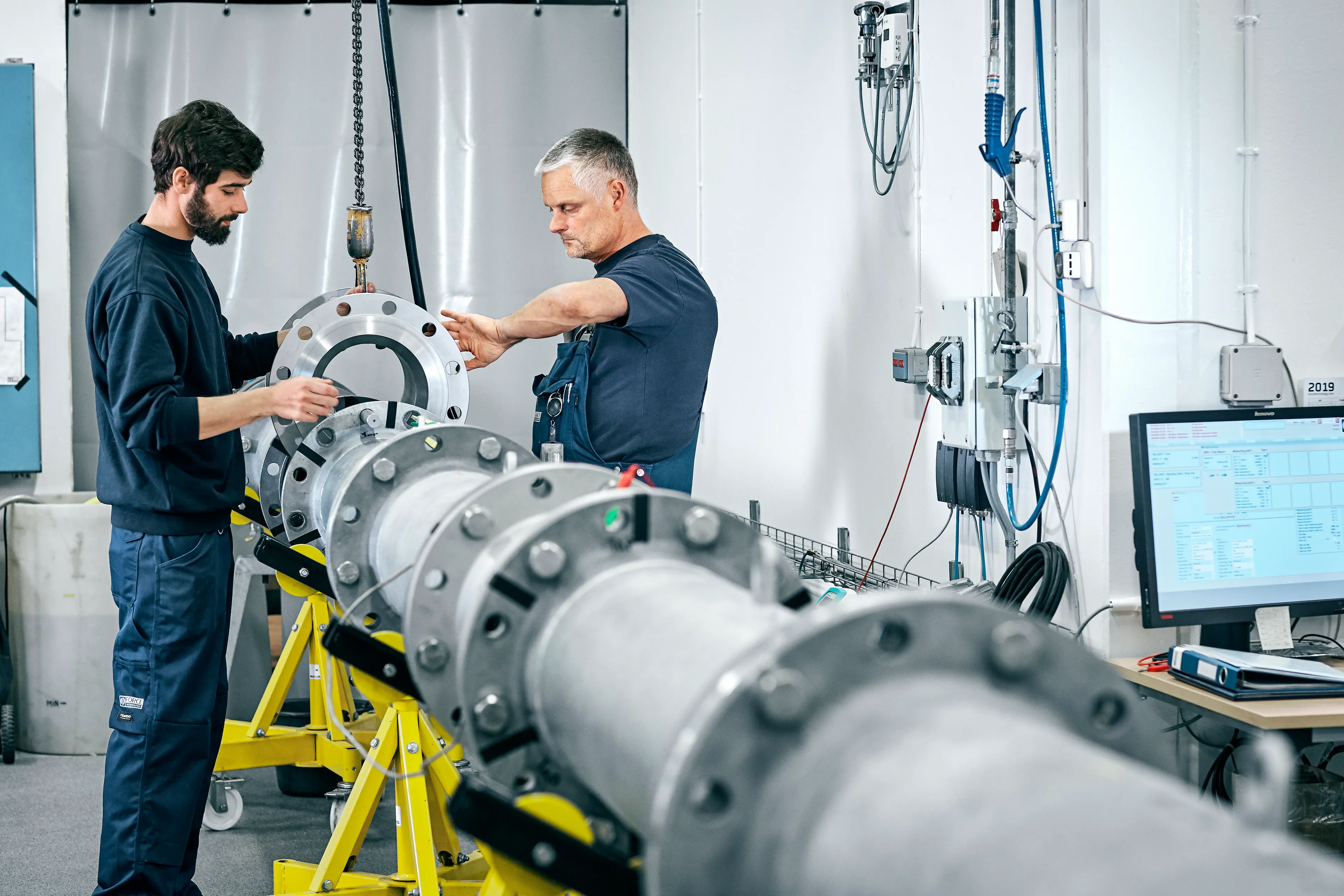
Calibration of liquid and thermal flow meters
Calibration of liquid and thermal flow meters
The world's largest closed loop, operating at maximum pressure and flow all year round.
