News and press contact
New report: How accurately do Danish EV charging stations measure energy?
A new preliminary study from Force Technology provides, for the first time, a fact-based insight into how accurately Danish EV charging stations measure the energy for which electric vehicle drivers are charged. The study comes at a time when the number of electric vehicles and charging stations is growing rapidly, while new EU regulations for measurement systems used in charging infrastructure are expected to be introduced.
Measurement quality is generally good – but varies
“The results provide important insight into how accurately charging stations perform in real-world conditions. When EV drivers pay for electricity, they must be able to trust that the measurement is correct. Fortunately, our study shows that overall accuracy is high, but it also demonstrates variations that make clear requirements and ongoing verification necessary. Ultimately, this is about maintaining consumer confidence in energy billing,” says Brian Kirstein Ramsgaard, Specialist at Force Technology and author of the preliminary study.
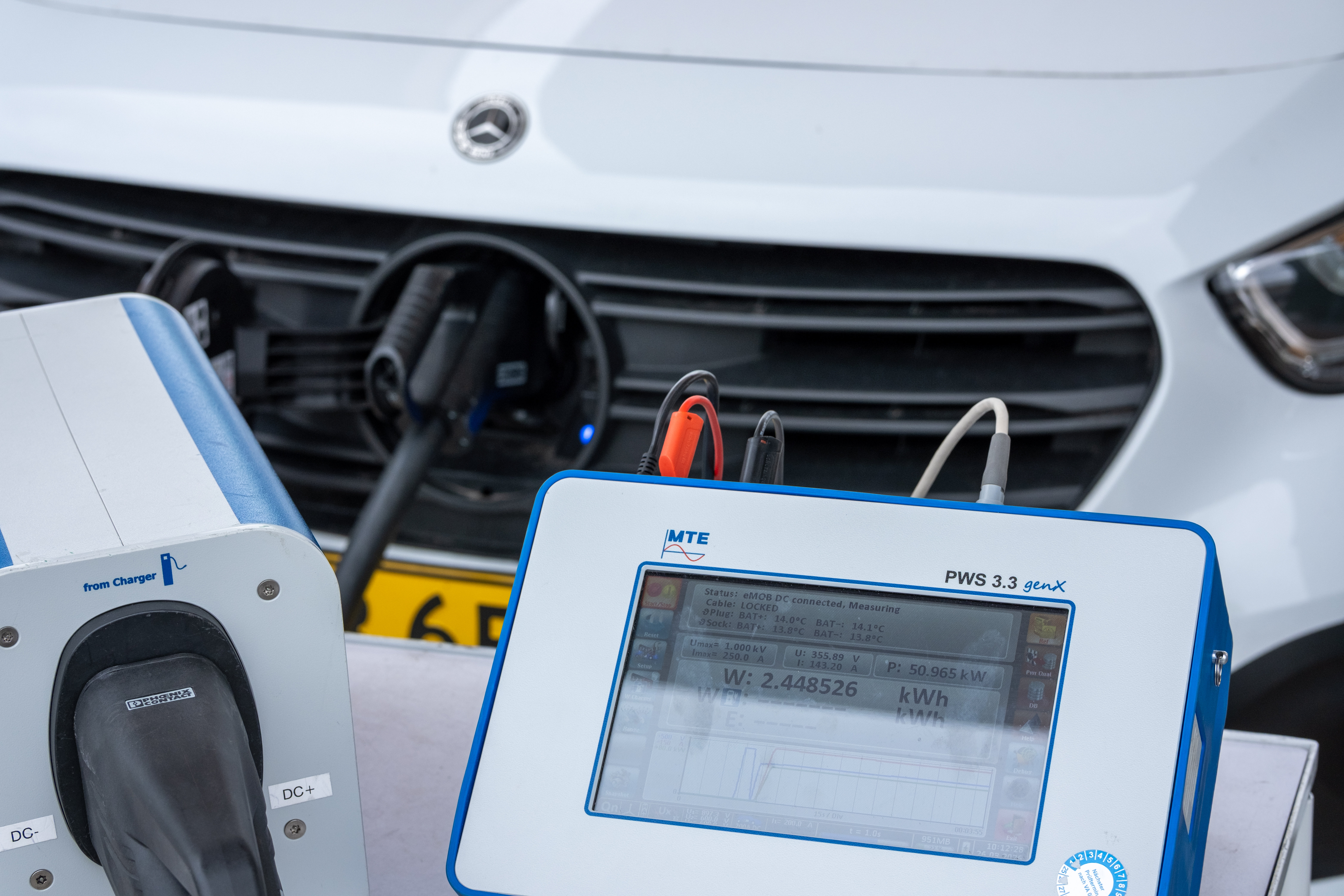
Force Technology carried out measurements on a total of 80 charging points across Denmark, tested under realistic operating conditions. The results show that:
- Most charging stations measure delivered energy with a high degree of accuracy
- AC chargers and DC ultra-fast chargers generally exhibit very small measurement deviations
- Some DC fast chargers show larger and more systematic measurement deviations.
Overall, the results indicate that measurement quality is satisfactory, although differences exist between charging technologies.
An important foundation for new regulations
“The differences between technologies are not surprising in themselves, but they highlight the need for a more systematic approach to monitoring charging stations in operation. DC chargers in particular are subject to heavy use, making it important to track performance over time and ensure that measurements remain accurate as equipment ages,” says Brian Kirstein Ramsgaard.
At present, there are no harmonised requirements for the verification of charging stations already in operation. However, this is expected to change following the introduction of new EU regulations, which are due to take effect in 2027.
The report identifies several key areas where clear regulatory frameworks are needed:
- National requirements for the verification of measurement systems in charging stations in operation
- More systematic monitoring, including ongoing verification of DC chargers and sampling-based verification of AC chargers
- Inclusion of all charging stations in verification schemes, including existing installations
- Clearly defined limits for acceptable measurement deviations during operation
- Independent and accredited verification to ensure comparable and reliable measurement results
- Follow-up studies over time as charging stations age and experience wear.
A first step towards greater transparency
As the vast majority of charging stations in Denmark are still relatively new, the study provides a snapshot of the current situation. At the same time, the findings underline the importance of monitoring developments over time, particularly as utilisation rates increase and equipment ages.
The report therefore represents an important first step towards more consistent and evidence-based regulation of charging stations and energy billing in Denmark.
Download the report (in Danish)
