The service includes tomography by 3D X-ray CT and neutron CT for non-destructive 3D imaging of samples from 1 to 500 mm, with resolution down to 250 nm. As part of our materials technology services, the facility supports analysis of samples in polymers, steel and aerospace materials. Related applications include polymer structures, particle analysis, injection-moulded parts and 3D-printed metals.
Material science
Advanced X-ray and neutron analysis
Advanced X-ray and neutron analysis for companies that need specialised material characterisation methods and facility access.
Companies in the pharmaceutical, energy, transport and manufacturing industries can use advanced X-ray and neutron analysis when they need to examine internal structures, crystalline phases, chemical composition, trace elements or fibre orientations in materials.
When standard methods are insufficient
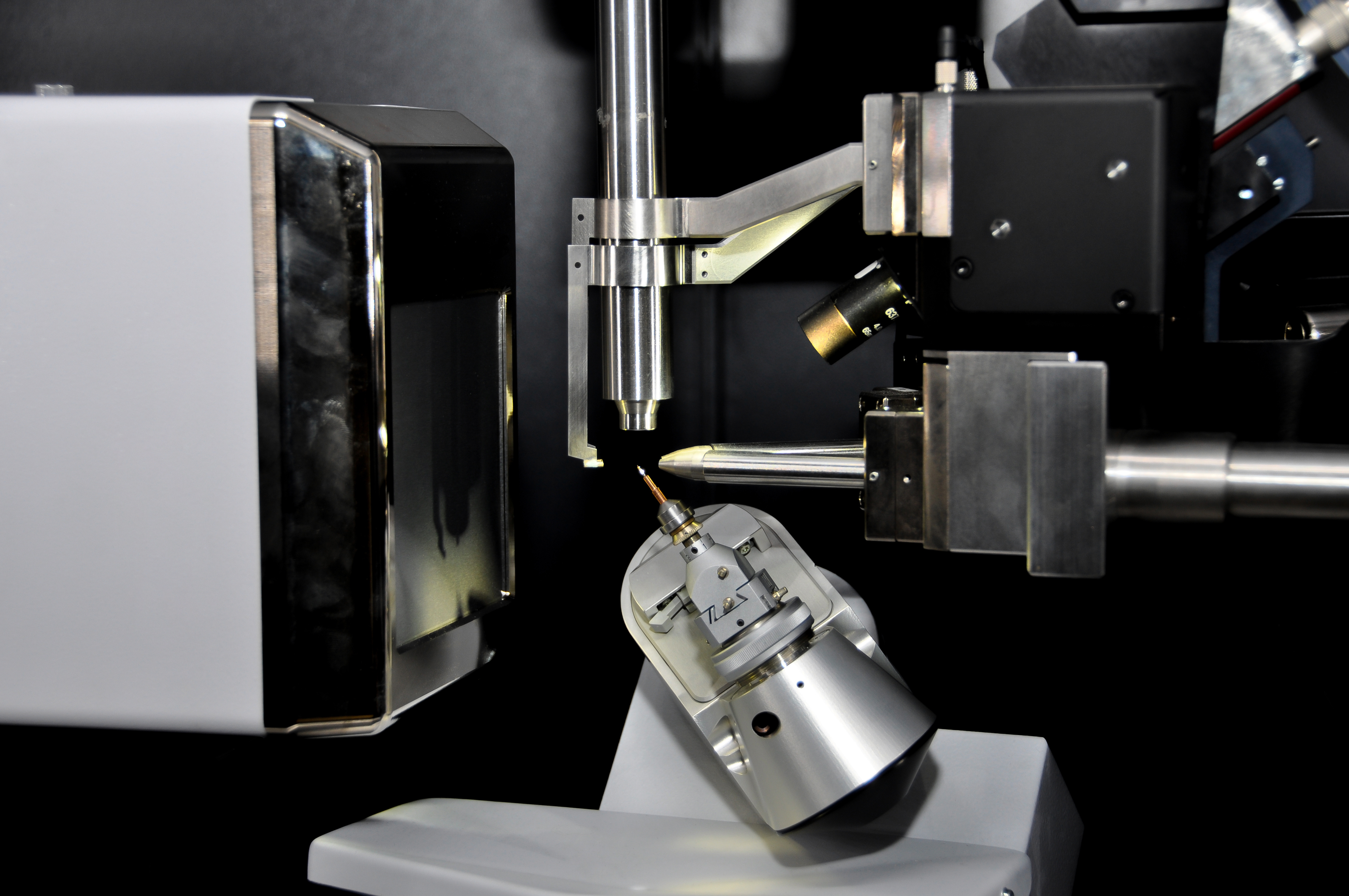
The need typically arises when standard methods do not provide sufficient insight for development, troubleshooting or documentation. The work includes tomography, small-angle scattering, XRD, trace-element analysis and fibre-orientation mapping.
Challenges
When structures, phases, compositions or fibre orientations must be examined, companies face advanced characterisation needs.
Without 3D imaging, internal structures remain hidden
Some material questions require non-destructive 3D imaging of internal structures in samples and components. In these cases, tomography can be used to examine the material's interior without cutting it open.
Without identification, crystalline differences lack
Some tasks require the identification of crystalline phases, the determination of average bulk composition, or the measurement of unit-cell dimensions. In these cases, XRD can be used to distinguish between material states that cannot be explained by chemical composition alone.
Without analysis, composition details are unresolved
Some tasks require analysis of elemental and chemical composition, including trace elements or the binding state of different elements. In these cases, advanced composition methods or neutron-based trace-element analysis can be used to characterise the material in the required detail.
Benefits
Use advanced X-ray and neutron methods to characterise structures, phases, composition and fibre orientations in materials
Complementary characterisation methods
Our service combines complementary X-ray and neutron methods for examining structures, phases, composition, trace elements and fibre orientations in materials.
Wide method range for different characterisation tasks
With available methods like tomography, SAXS, SANS, XRD, chemical-composition methods, trace-element analysis and fibre-orientation mapping, we can solve all of your material characterisation needs.
