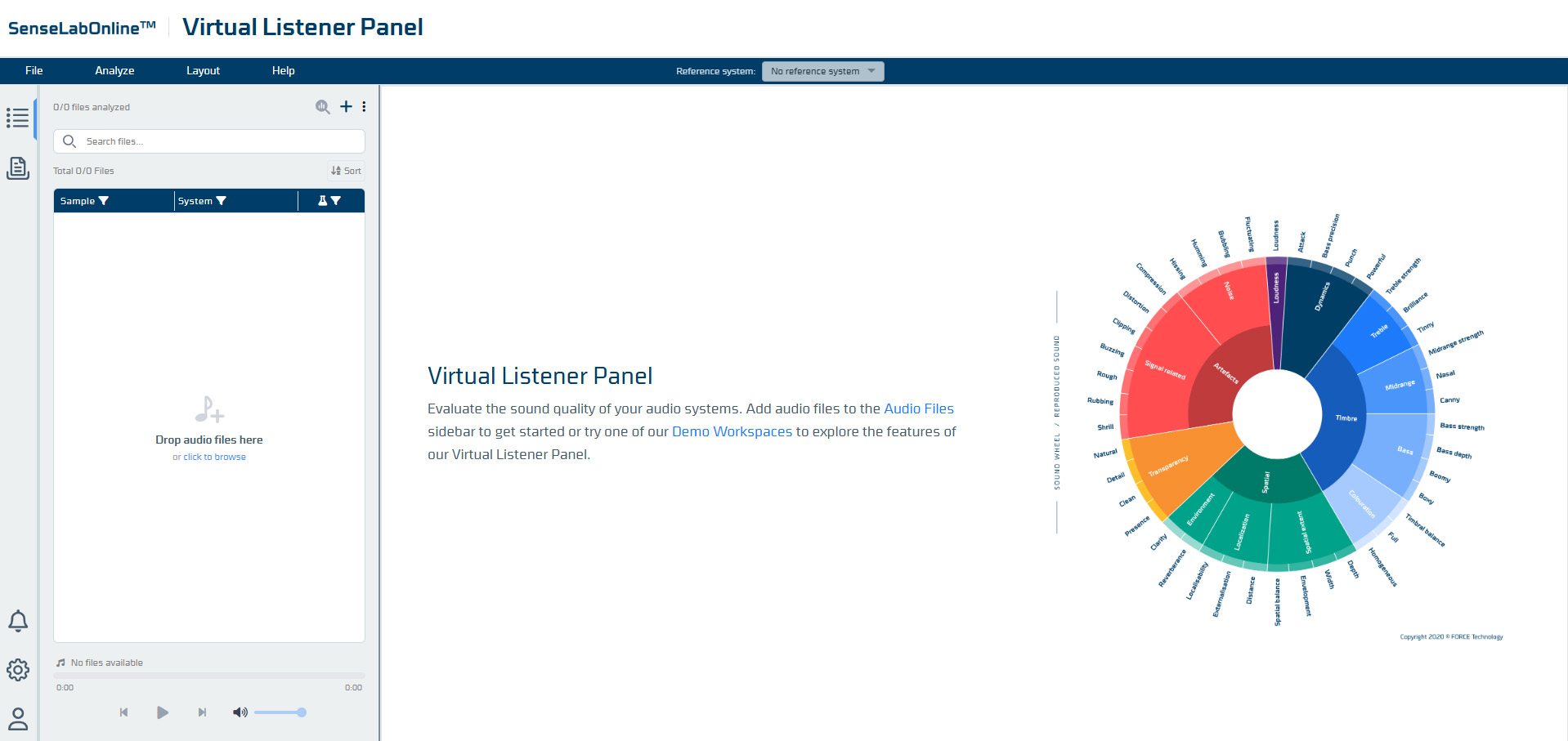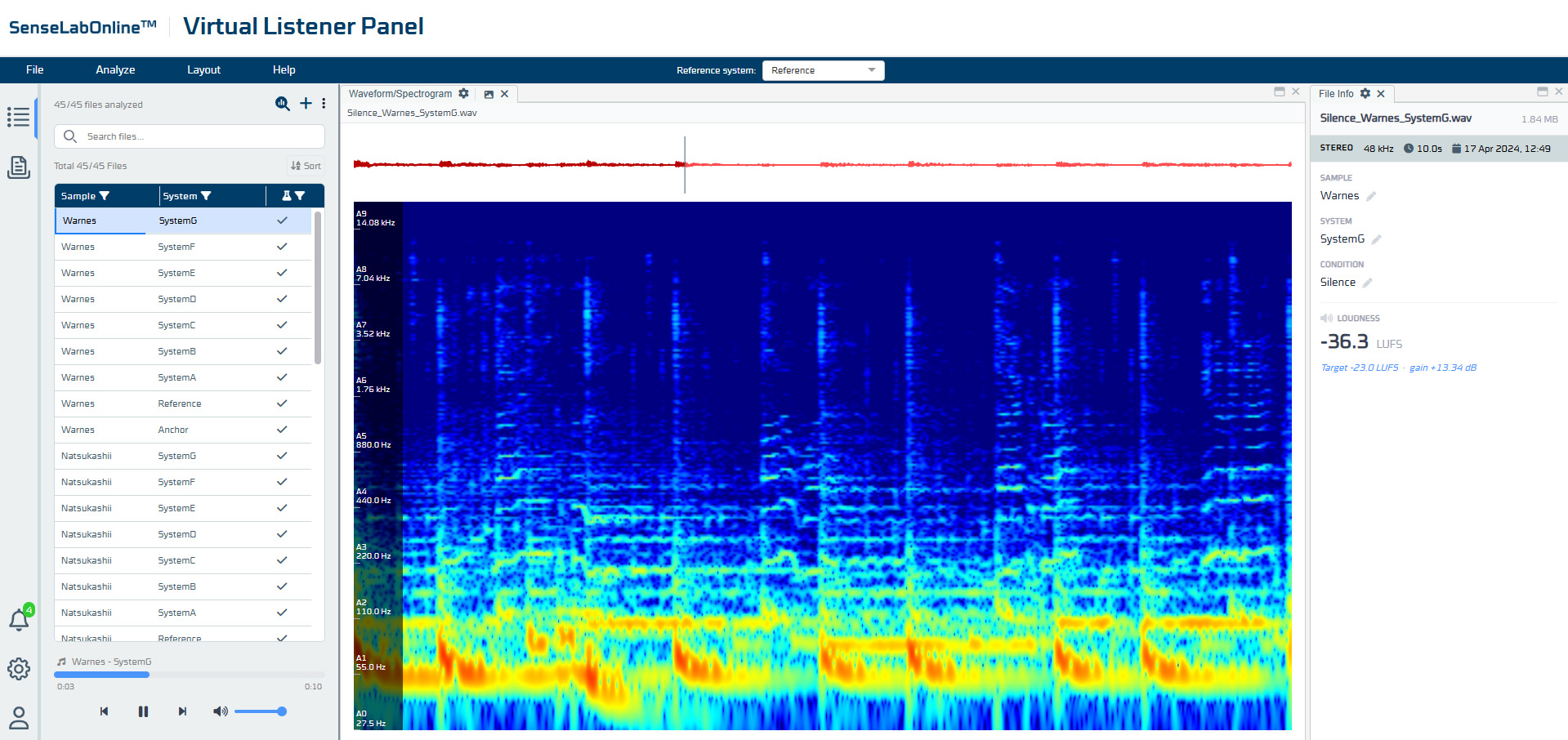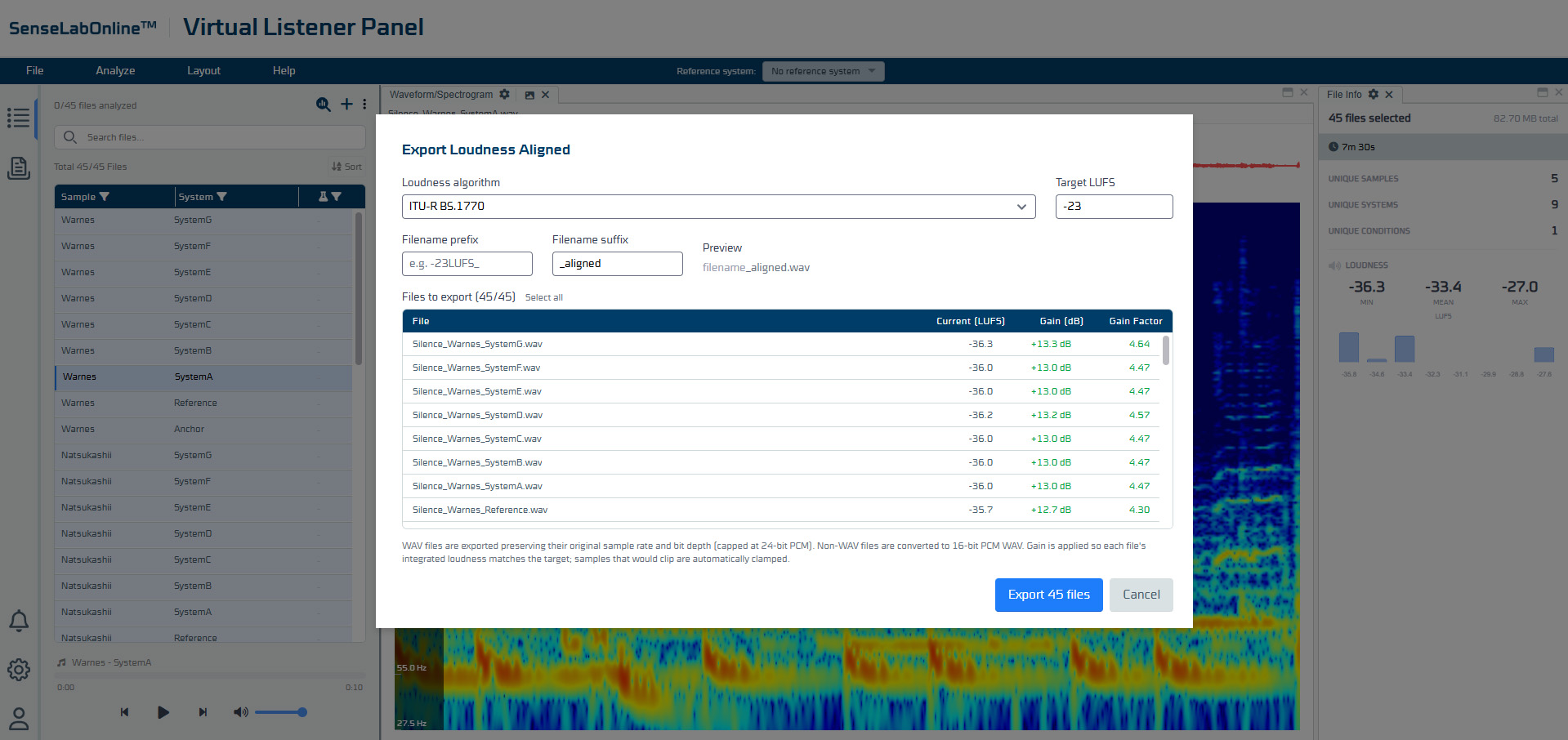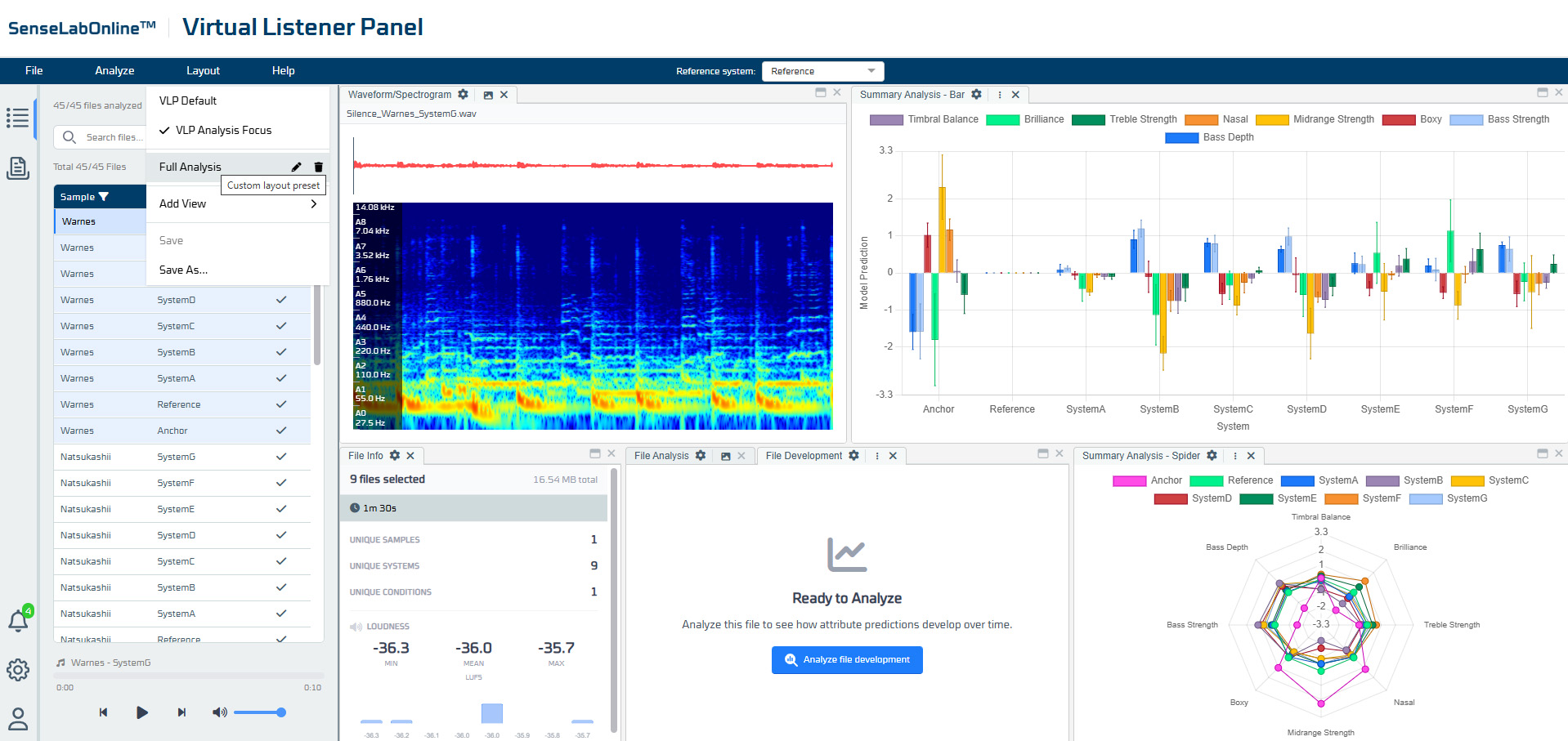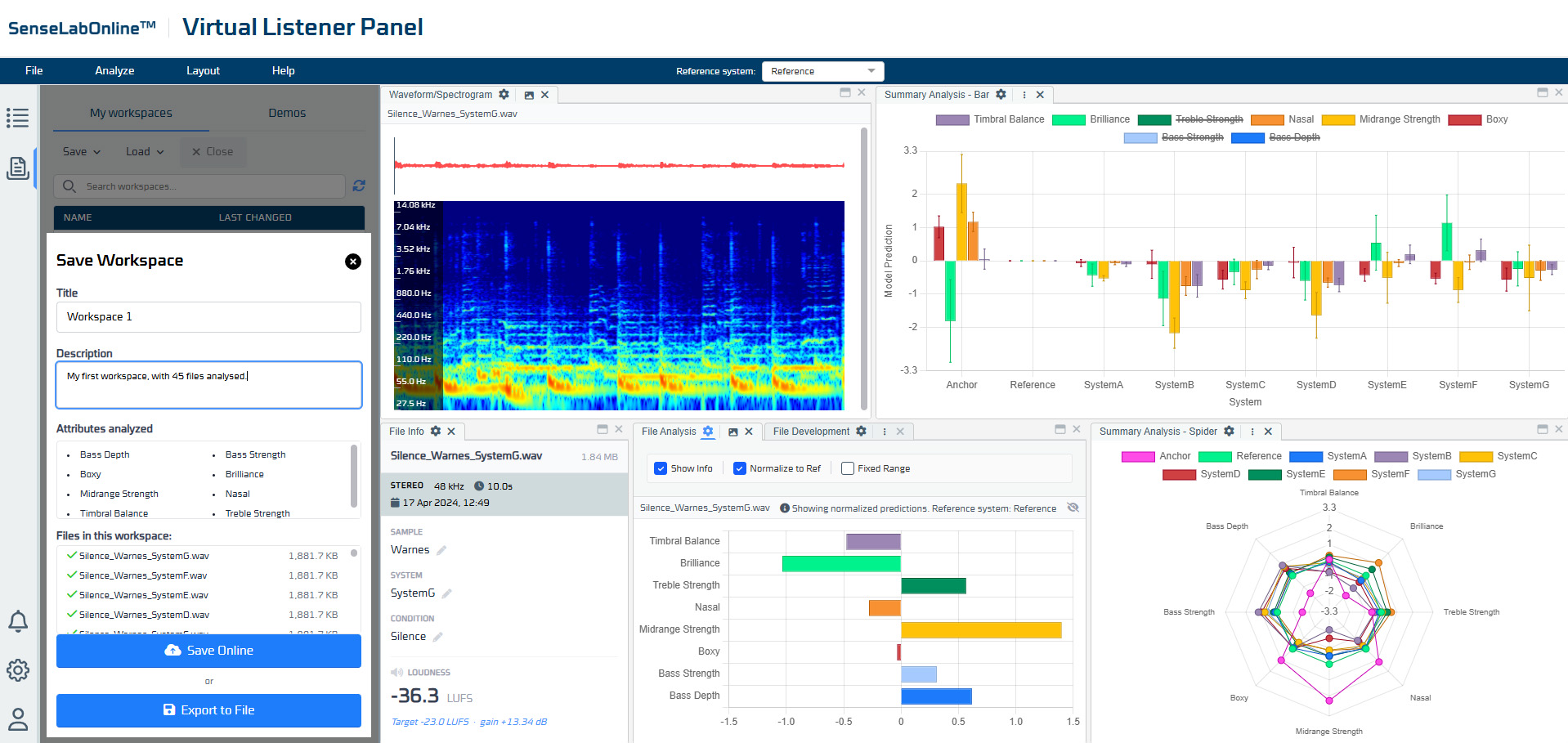
Users upload recordings or simulation files to the cloud-based service as the input for evaluation. The uploaded material is used as the basis for Virtual Listener Panel processing and for generation of sound quality prediction and perceptual attribute results.
Sound quality
Virtual Listener Panel for AI sound quality prediction
Get AI prediction of sound quality that helps audio professionals review perceptual attributes during tuning and product comparison.
Virtual Listener Panel supports audio professionals who need perceptual characterisation of recordings or simulations during tuning and product development. The need typically arises when teams must review how a product is perceived, compare tuning directions, or check alignment with a reference product.
When perceptual review delays tuning
Without clear perceptual feedback, tuning decisions can stall and product comparisons become harder to judge. Virtual Listener Panel helps teams move forward with documented sound quality predictions and detailed attribute results that make perceptual differences easier to review. It's part of a catalogue of services within sound quality.
Challenges
When audio teams need fast perceptual review, limited sound quality feedback can delay tuning decisions and product comparison.
Unclear perceptual differences delay tuning
When teams cannot see how tuning changes affect perceived sound characteristics, it becomes harder to judge whether development is moving in the intended direction.
Limited listener access slows review work
When perceptual evaluation depends on panel availability, recordings or simulations may wait for review, which slows iteration and follow-up comparisons.
Missing comparison points weaken decisions
When current tuning is not checked against a reference or benchmark product, sound quality decisions rely on a less defined basis.
Benefits
Get detailed perceptual results that support tuning review, product comparison and ongoing audio optimisation.
Review attribute results in detail
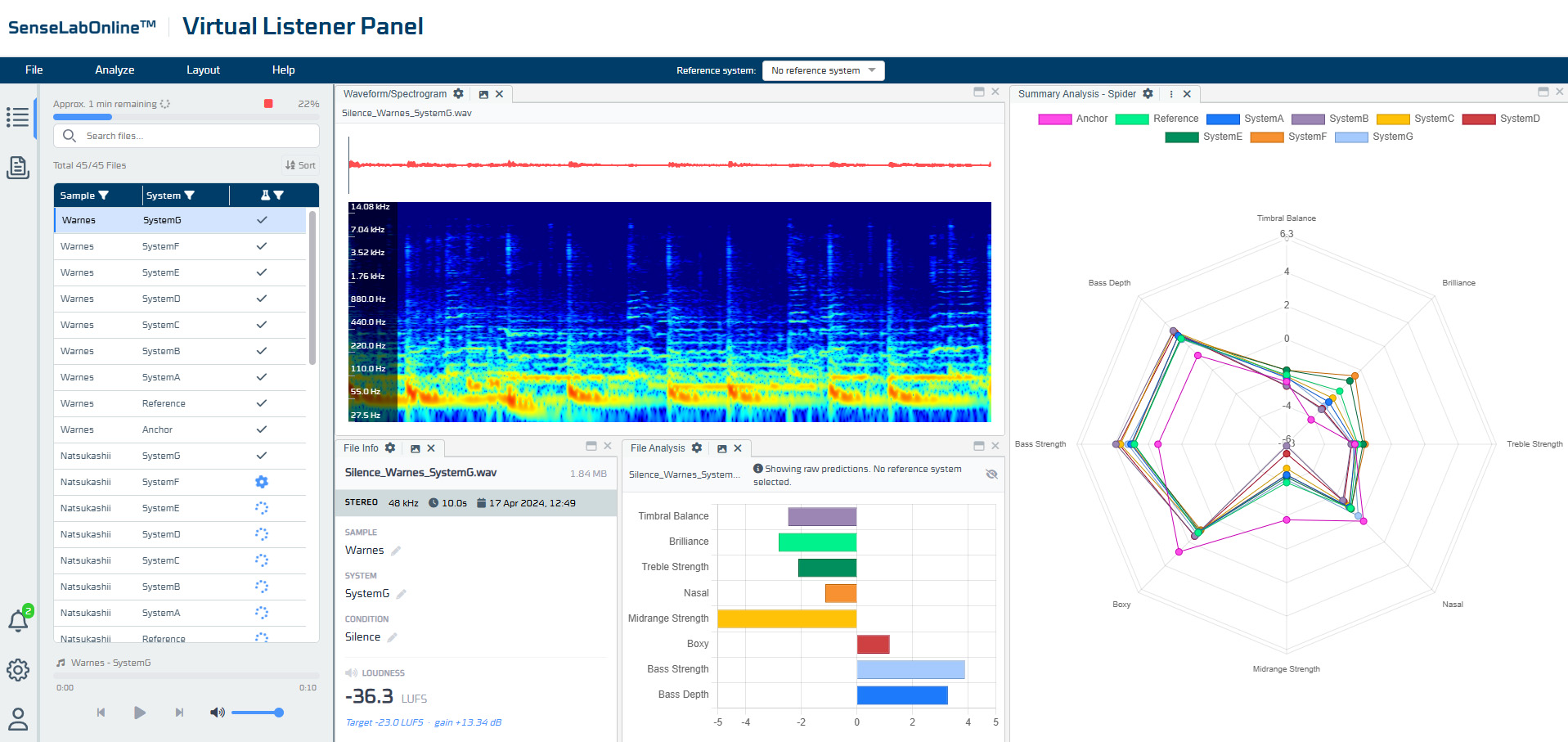
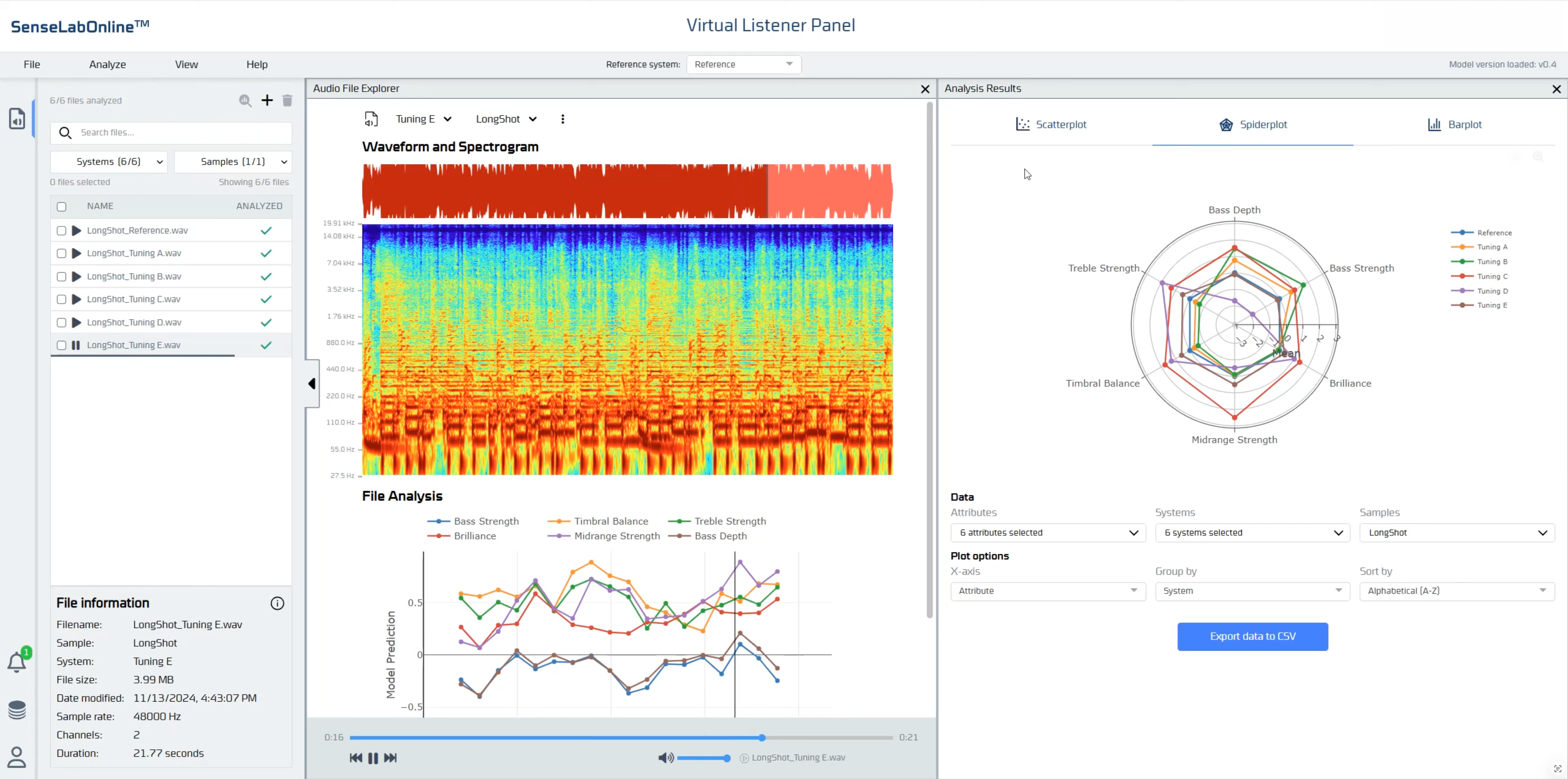
Detailed perceptual results for key audio attributes make it possible to review how specific tuning choices affect perceived sound characteristics. This gives teams concrete output they can use when discussing the current tuning against an intended sound profile.
Compare with defined products
The output can be checked against a reference product, a benchmark product or an earlier tuning. This provides a documented comparison point for reviewing how close the current result is to another known product direction.