
The solution includes access to the integrated simulator software and the full simulation environment used for bridge exercises. The setup can be configured to match training, hardware and infrastructure requirements and can support on-site, remote and hybrid use.
Maritime simulators
SimFlex XR Full Mission Bridge simulator for maritime training
Train maritime crews in realistic scenarios with a flexible simulator that combines physical equipment and XR.
SimFlex XR Full Mission Bridge supports shipping companies, maritime training centres and authorities in situations where traditional training is costly, logistically demanding and energy-intensive. Training often relies on onboarding computer-based training, dedicated simulator centre facilities and crew travel, which drive up costs and make planning training across locations harder.
Physical bridge equipment in XR
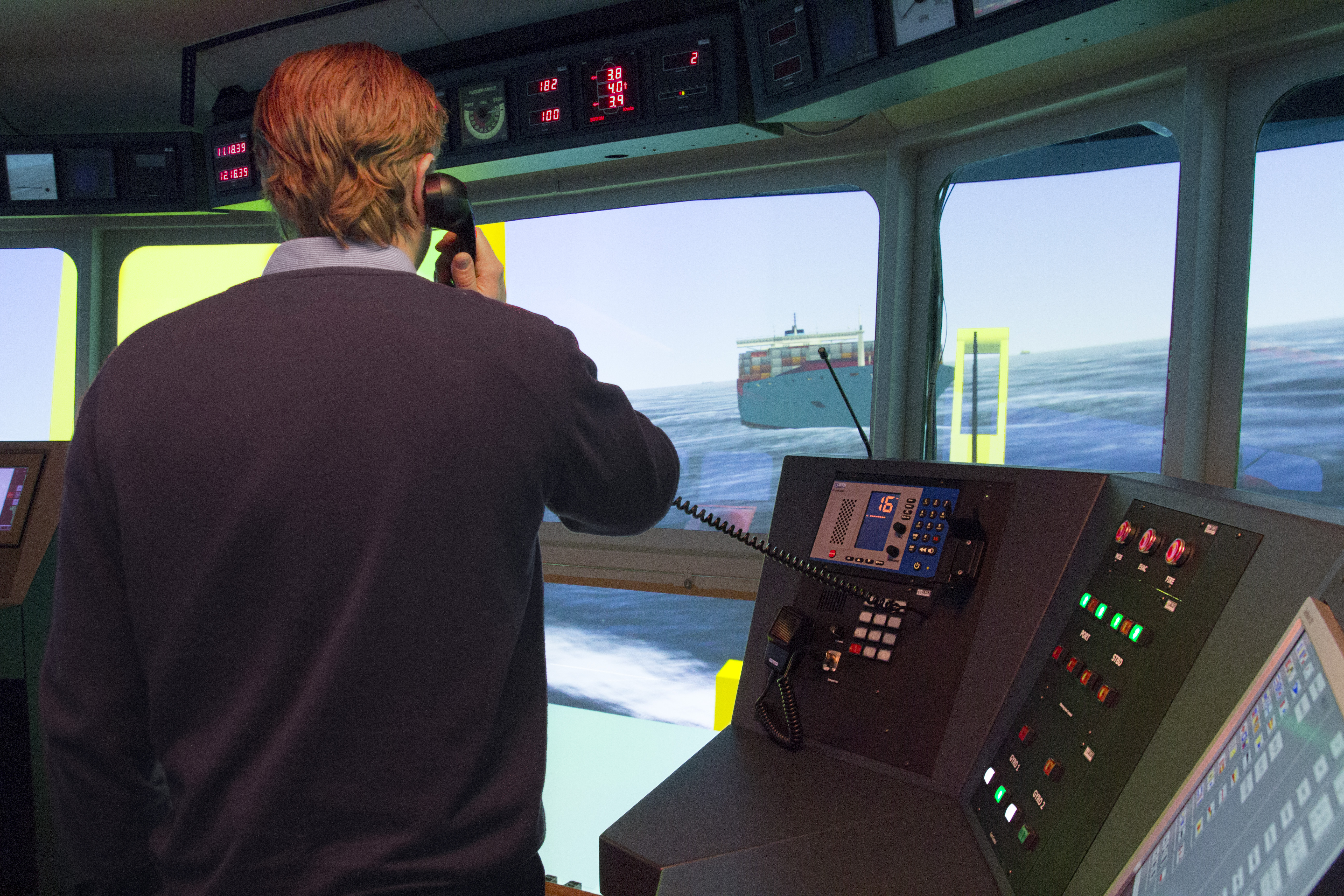
The simulator combines physical bridge controls with immersive XR environments, so trainees can work with equipment such as ECDIS, radar and steering controls in dynamic maritime scenarios. This gives teams a practical basis for bridge team management, operational decision-making, exercise replay and debriefing. The service is part of our expertise area Maritime simulators.
Challenges
When bridge training depends on travel, fixed facilities and extensive setup, it becomes costly, rigid and harder to repeat across teams.
Training logistics increase cost and effort
Crew travel, onboard training and dependence on dedicated simulator facilities make training expensive to organise and resource-intensive to maintain across operations.
Limited flexibility reduces training frequency
When exercises depend on fixed locations and extensive technical setup, it becomes harder to schedule training regularly, involve relevant teams and adapt sessions to operational needs.
Real-world exercises cannot cover every scenario
Live training has practical and safety limitations, which makes it difficult to rehearse complex or high-pressure situations such as emergencies, severe weather and dense traffic in a consistent way.
Benefits
Get a more practical training basis that supports recurring exercises, structured debriefing and broader access across teams and locations.
Make advanced training easier to repeat
A more flexible setup makes it easier to run bridge exercises more regularly without relying on the same level of fixed infrastructure for each session. This supports more consistent training across crews, locations and operational needs.
Strengthen debriefing and performance evaluation
Replay and exercise review give instructors and trainees a clearer basis for debriefing and follow-up. This makes it easier to evaluate decisions, coordination and task execution after completed scenarios.
Reduce resource demand around training delivery
The simulator cuts hardware and IT infrastructure requirements by at least 50%, and reduced travel requirements make training easier to deploy with lower operational overhead.
