
- Accredited calibration according to DANAK Reg. No. 9
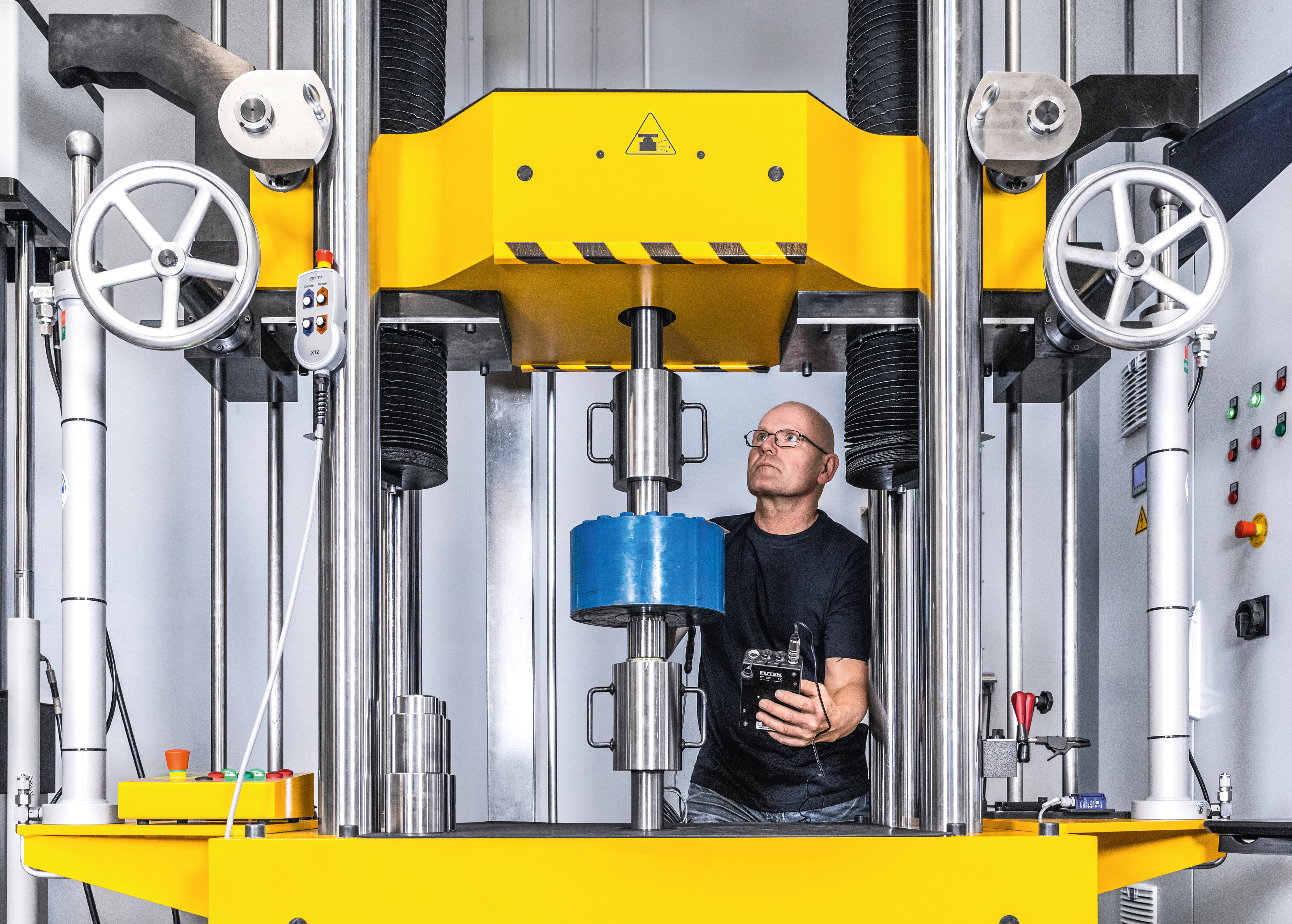
- Laboratory: Push 0.1 N–5,000 kN / Pull 0.1 N–2,000 kN
- On-site: Push 0.05–5,000 kN / Pull 0.05–2,000 kN
- Accuracy ≤ 0.02 %
- Covers transducers, dynamometers, hardness testers, testing machines and impact testers
- National Reference Laboratory for force calibration
Calibration and verification
Calibration of measuring equipment
Accredited calibration of measuring equipment in laboratories and on-site with documented traceability to recognised standards
Accredited calibration in laboratories and on site
Calibration documents the performance of measuring instruments and establishes traceability to recognised standards. Accredited calibration is available in both dedicated laboratories and on-site and to avoid downtime. Services cover force, pressure, temperature, vacuum, density, viscosity, flow, humidity and volume. DANAK accreditation across multiple fields ensures traceability to SI units and alignment with international standards.
For industries where precision and compliance are essential
Calibration supports organisations that rely on precise measurements in production, testing and trade. Inaccurate instruments lead to costly deviations and potential nonconformities. Regular calibration detects drift early, maintains product quality , and helps organisations demonstrate that their measuring equipment is calibrated in accordance with recognised requirements. Accredited calibration under DANAK provides documented traceability to recognised standards and reference units. The service is part of our expertise area Calibration and verification and we also offer verification of measuring instruments.
Challenges
Measurement reliability challenges in laboratories, production and inspection activities
Measurement drift leads to audit non-conformities
Without regular accredited calibration, instruments may drift outside acceptable tolerances. This creates undocumented deviations, failed audits and potential suspension of testing, production or trade activities.
Unreliable data affects product quality
Inaccurate measurements in force, pressure, temperature or flow directly influence product specifications. Undetected deviations can result in rejected batches, rework, customer complaints or contractual disputes.
Lack of traceability undermines compliance
If calibration is not traceable to recognised standards, measurement results cannot be documented with confidence. This creates risk during certification audits and reduces credibility with customers and authorities.
Unplanned downtime disrupts operations
Reactive calibration or failed instruments cause unexpected interruptions. Production schedules, laboratory throughput and delivery timelines are affected when instruments must be removed from service urgently.
Book accredited calibration service
Keep measuring instruments compliant, accurate and traceable. Schedule calibration on-site or in accredited laboratories to maintain measurement integrity.
Standards
