
Get a documented basis for material selection in CCS facilities through corrosion testing under high pressure, elevated temperature and exposure to CO2.

Corrosion testing for carbon capture and storage (CCS) supports teams working with material selection for CCS infrastructure. The need typically arises when materials and components must be assessed for exposure to CO₂, water, impurities, elevated pressure and temperature. Without test data from relevant environments, material selection relies on assumptions, increasing the risk of unsuitable material choices, unplanned maintenance and costly downtime. 


HPHT corrosion testing for CCS materials 

The service provides documented input for evaluating material performance under defined CO₂-related conditions. Our specialists assess corrosion behaviour and the ability of materials to resist corrosion after testing, supporting material selection for CCS plants and facilities. 

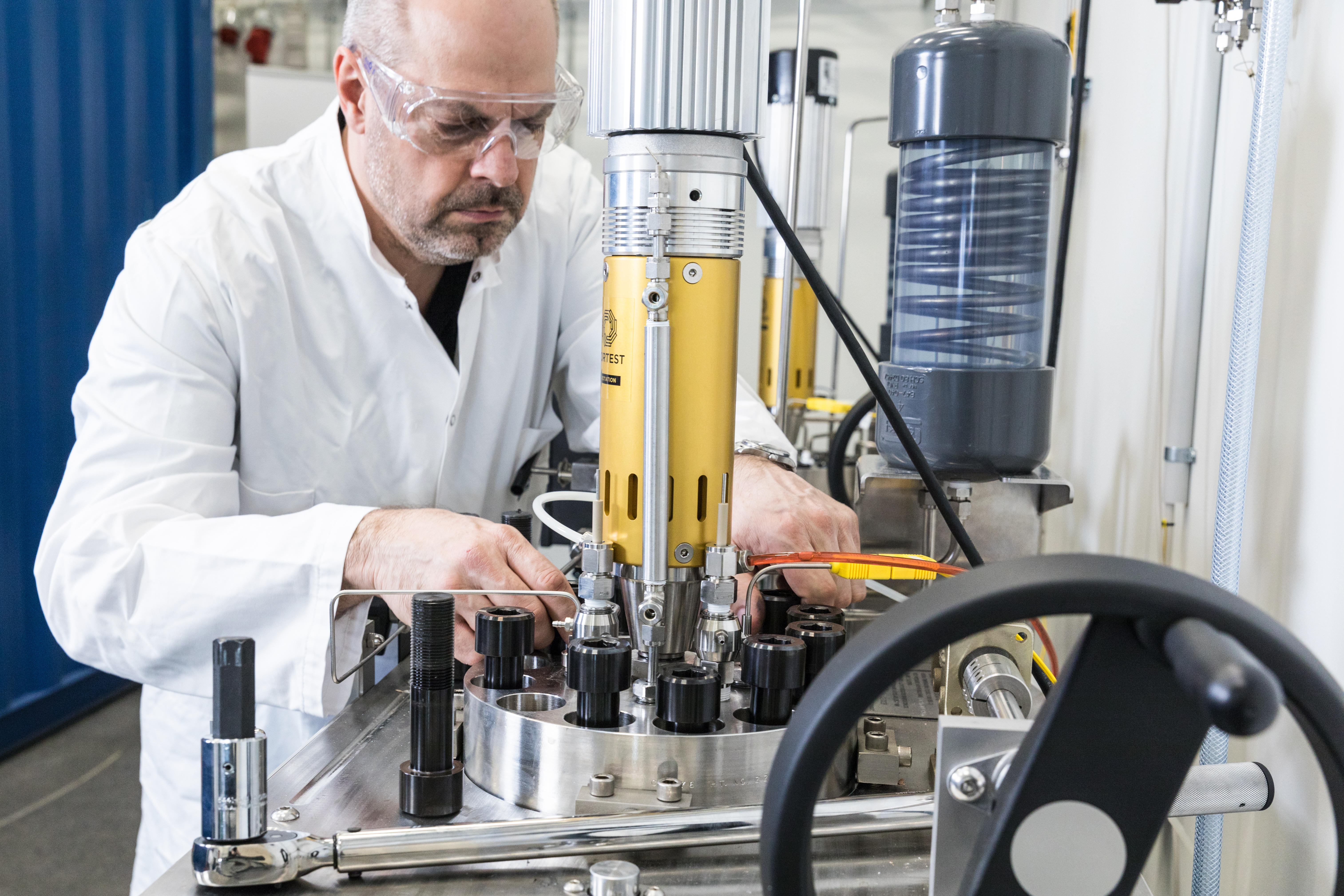
Engineer configuring high-pressure, high-temperature autoclave equipment for corrosion testing of metallic materials exposed to CO₂-rich environments representative of CCS service conditions.
HPHT setup for corrosion testing of metallic materials under CO₂ exposure, enables the development of CCS.

Challenges

When material performance under CO₂ exposure is unknown, material selection and lifetime expectations become uncertain.

Unverified corrosion behaviour weakens material selection 

Without data from relevant CO₂ pressure, temperature and impurity conditions, material selection and corrosion resistance assessments rely on assumptions rather than documented performance. 


Water and impurities increase corrosion risk 

Small amounts of water, oxygen or sulphur species can significantly affect corrosion behaviour in liquified or supercritical CO₂, making it difficult to predict whether materials can withstand the intended environment. 


Wear and mechanical impact increase damage risk 

Incorrect material selection can lead not only to corrosion damage, but also to wear, mechanical impact and inadequate mechanical strength in CCS infrastructure. 


Unplanned offshore maintenance leads to downtime 

Replacing infrastructure components or performing unplanned maintenance offshore is costly and can result in significant downtime for CCS facilities.

Benefits

Reduce CCS project risk with verified corrosion data for materials and components.

Documented basis for technical documentation

Corrosion data generated in accordance with relevant EN, ASTM and NACE frameworks can be used as input for technical documentation describing material performance under defined exposure conditions.

Input for long service life and reduced downtime

Test results support material selection for CCS plants exposed to aggressive CO₂ environments. This helps reduce the risk of premature replacement, unplanned maintenance and downtime.