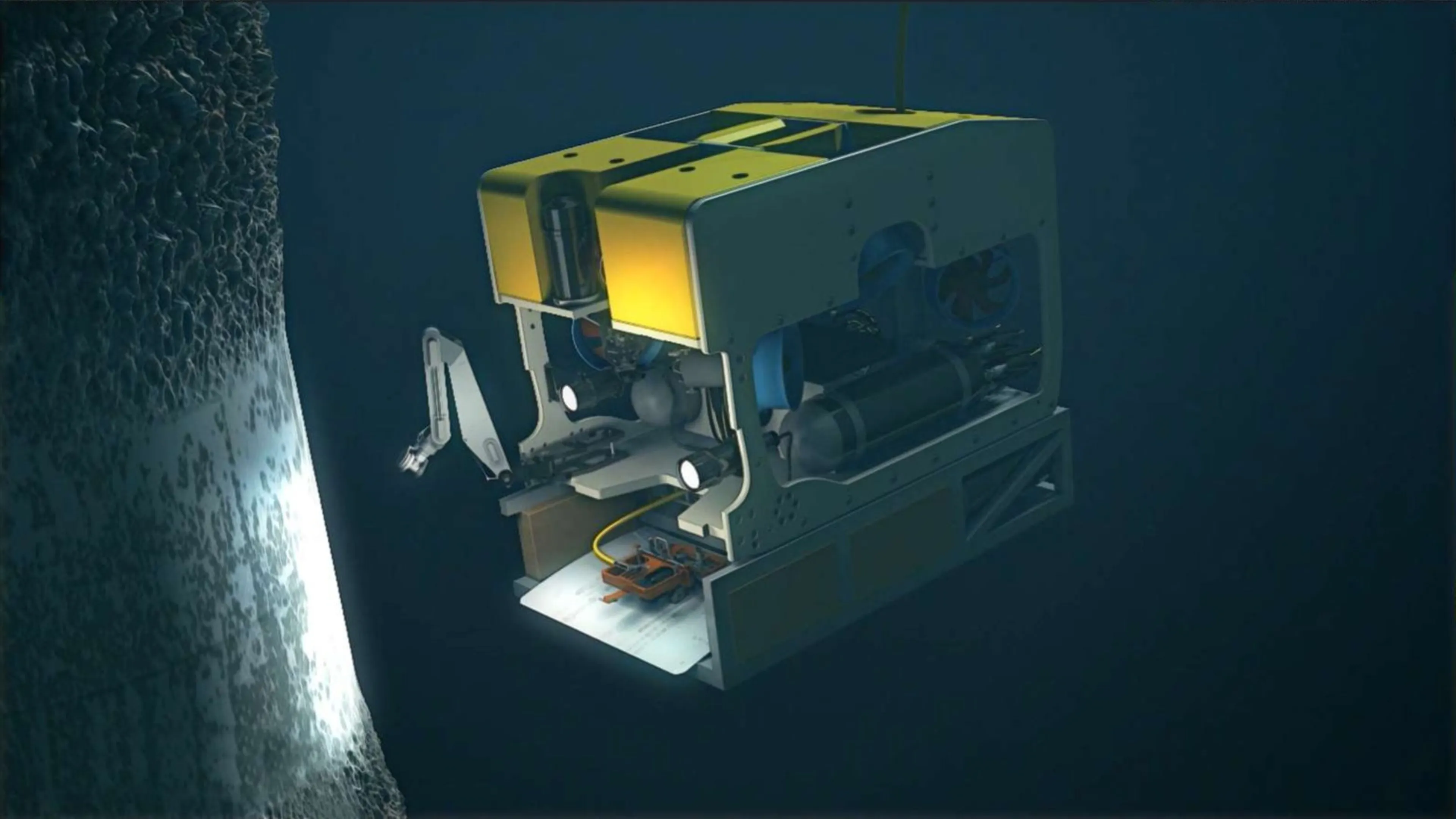
Helping operators make better subsea integrity decisions.
Operators are under increasing pressure to keep offshore assets safe, reliable and productive while controlling inspection costs and reducing time offshore.
For many subsea pipelines, risers and structures, the challenge is not simply to collect more data, but to obtain the right information from the critical locations with the required accuracy and reliability at the right time to support confident integrity decisions.
To understand and manage asset condition, prioritise maintenance, avoid unnecessary interventions and address degradation risks before they affect operations, operators need a well-planned inspection programme based on the right available technologies and reliable data. Our contribution is detailed knowledge of inspection and monitoring technologies, combined with cost-effective access to accurate and reliable data.
The customer challenge: uncertainty below the surface
Subsea assets operate in demanding environments where corrosion, erosion, cracking, fatigue and mechanical damage can be difficult to detect and assess.
When inspection information is incomplete or uncertain, operators may face difficult decisions: whether to continue operation, inspect again, repair, replace or accept a higher level of risk.
The consequences of poor decision support can be significant, including unnecessary vessel campaigns, delayed maintenance actions, conservative operating restrictions or increased exposure to integrity-related failures.
The value of advanced inspection is therefore measured not by the technology alone, but by how well the findings provide clarity, reduce uncertainty and enable operators to act with confidence. Our broad technology understanding and experience help provide this clarity.
Turning inspection data into actionable insight
Inspection methods such as ultrasonic testing, electromagnetic inspection, advanced imaging and remotely deployed sensors can provide detailed information about asset condition and loading.
However, data only creates value when it is interpreted in the context of operating conditions, design assumptions, degradation mechanisms, previous findings and remaining life requirements.
By combining the right inspection technology with engineering assessment, modelling and forecasting, operators can decide where to focus maintenance, when to plan the next inspection and how to document continued safe operation. We support this process with both off-the-shelf and custom-built solutions.
A risk-based approach to each asset
No two subsea assets present the same inspection challenge.
Pipelines, risers, jackets, manifolds and subsea structures differ in design, loading, accessibility, consequence of failure and expected degradation mechanisms.
A risk-based inspection strategy helps operators select the methods that answer the most important service life uncertainties for each asset, rather than applying the same scope everywhere.
This allows inspection resources to be directed where they create the most value: reducing uncertainty, supporting timely decisions and helping maintain safe and efficient offshore operations. Our experts can support deployed tools remotely, providing immediate data, insight and findings.
