
Maritime and offshore engineering
Maritime and offshore engineering
Assess vessel and offshore behaviour to support compliant, reliable and efficient operation.
Assess vessel and offshore behaviour to support compliant, reliable and efficient operation.
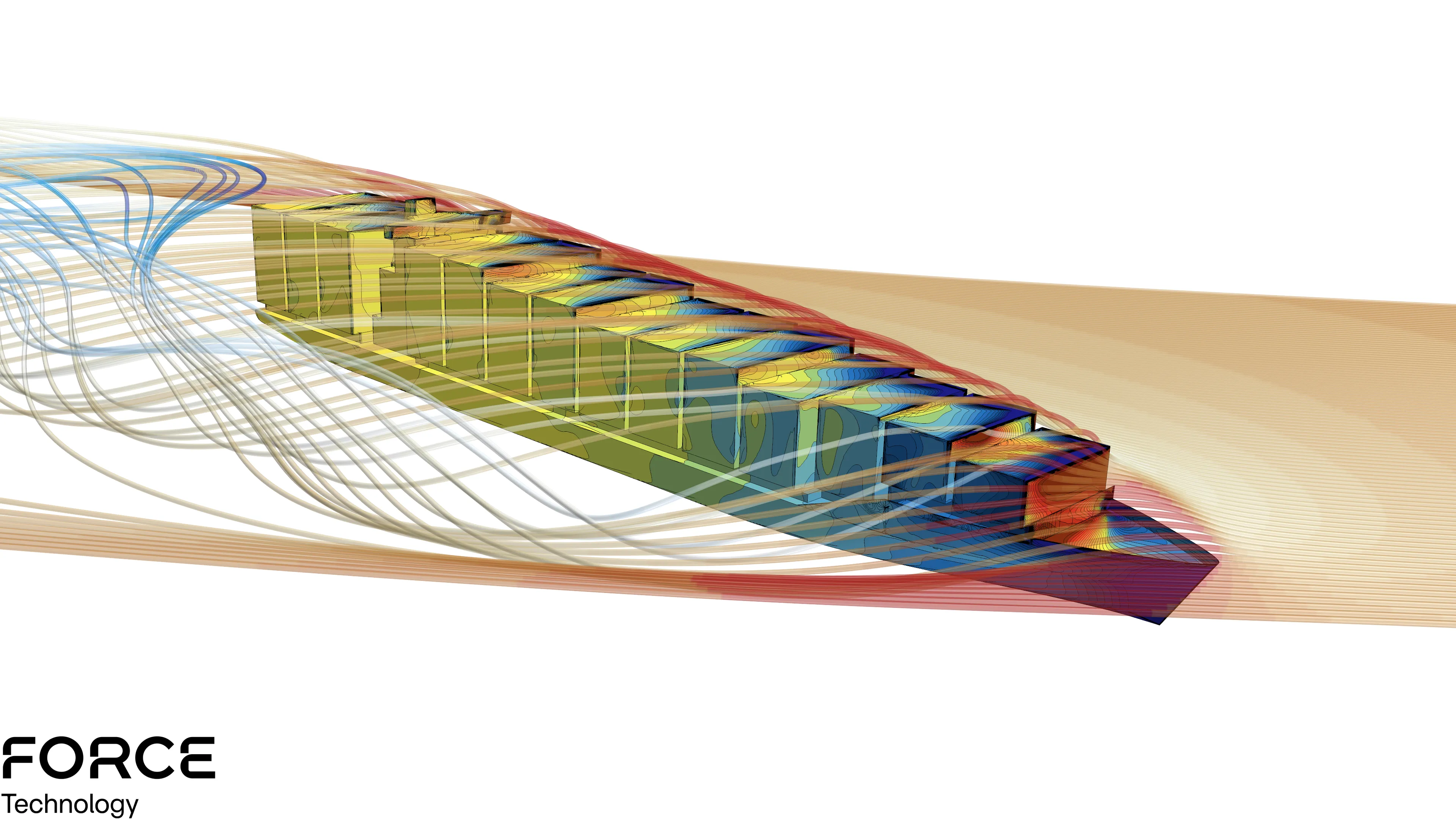
By predicting hydrodynamic and aerodynamic behaviour before physical testing, CFD supports vessel performance assessments, ship design optimisation and specialised engineering analyses throughout the design process.
CFD uses numerical methods to simulate fluid flow under defined operating conditions. Digital models enable engineers to predict how water, air and waves interact with a vessel, providing insight into complex flow phenomena that are often difficult or costly to investigate through measurements alone.
Simulation results typically provide information about:
CFD results help engineers understand vessel behaviour and evaluate the effects of design changes before physical testing.
In maritime engineering, vessel performance describes how efficiently a vessel moves through the water. It includes characteristics such as resistance, propulsion efficiency, trim and energy consumption, all of which influence operational performance.
CFD enables engineers to visualise the interaction between the hull, propeller and surrounding flow, revealing how changes to hull geometry, operating conditions or loading influence the vessel. This provides a solid basis for evaluating performance improvements during both newbuilding and retrofit projects.
Ship design optimisation requires balancing multiple hydrodynamic factors rather than improving a single parameter. Changes to the hull, appendages or propulsion arrangement often affect the vessel's overall behaviour.
CFD allows engineers to evaluate hull forms, bulbous bows, appendages and propulsion concepts under consistent operating conditions. CFD-based hull optimisations are particularly well-suited to numerical simulation because multiple design alternatives can be efficiently assessed before physical model testing.
Modern maritime CFD commonly uses Reynolds-Averaged Navier–Stokes (RANS) simulations to predict the interaction between the hull, propeller and wake under realistic operating conditions.
Unlike resistance calculations alone, RANS CFD enables self-propulsion analyses that evaluate the complete propulsion system, including wake distribution, propeller loading and propulsion efficiency.
CFD also enables virtual sea trials, allowing engineers to assess speed-power relationships, trim behaviour and propulsion performance digitally during vessel development or retrofit projects.
In addition to vessel performance and ship design optimisation, CFD supports a wide range of specialised maritime and offshore engineering analyses.
Assessment of planning hulls
For high-speed vessels, CFD can assess planning-hull performance, including dynamic lift, trim and resistance at different speeds and loading conditions. These simulations support both design development and performance evaluation.
Wave loads on ships and offshore structures
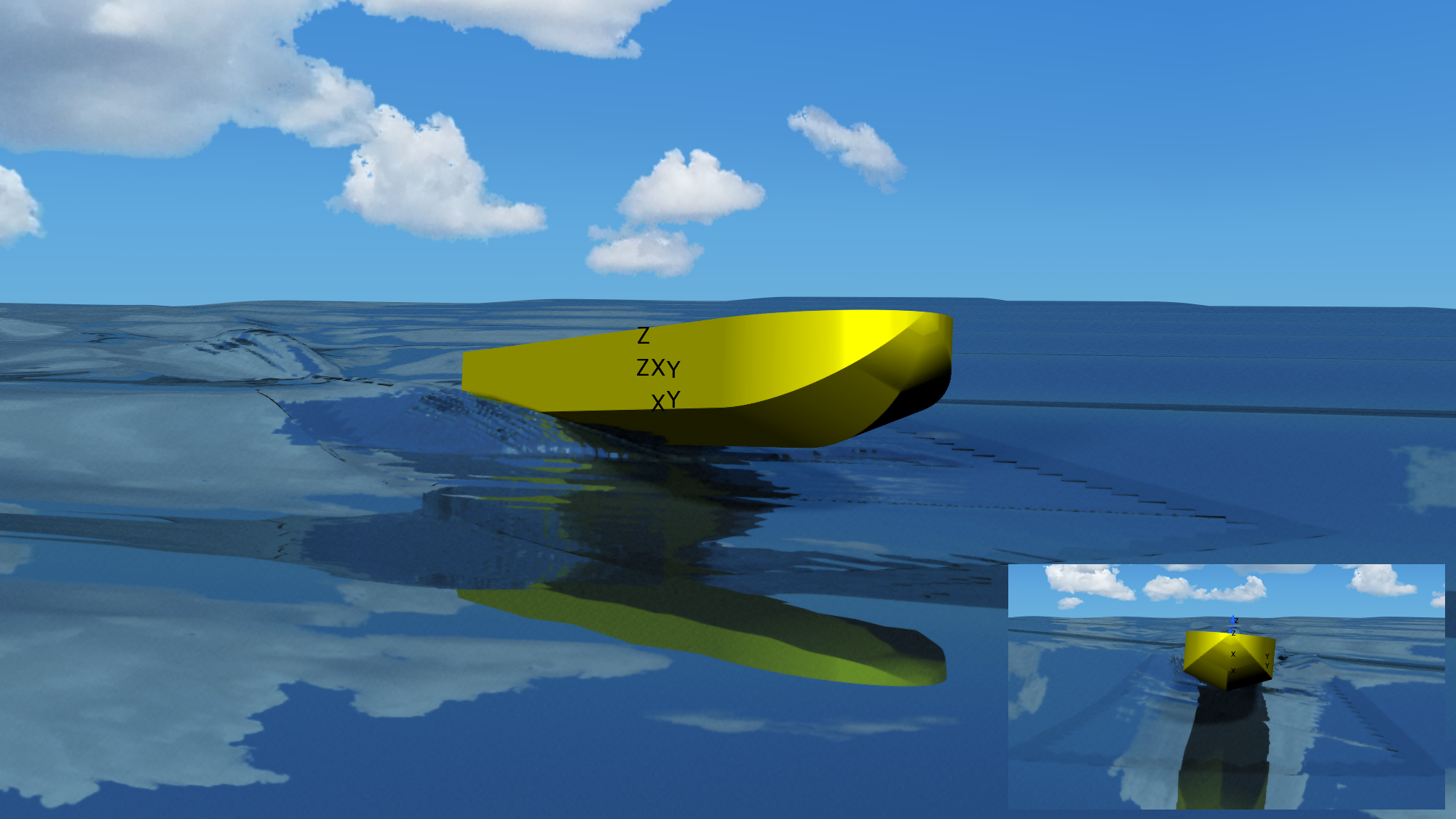
CFD is used to investigate the interaction between waves and floating or fixed structures. Simulations can predict wave-induced loads, vessel motions, local pressure distributions and green water effects, providing valuable insight for ships and offshore installations operating in demanding environments.
Bubble Sweep Down analysis
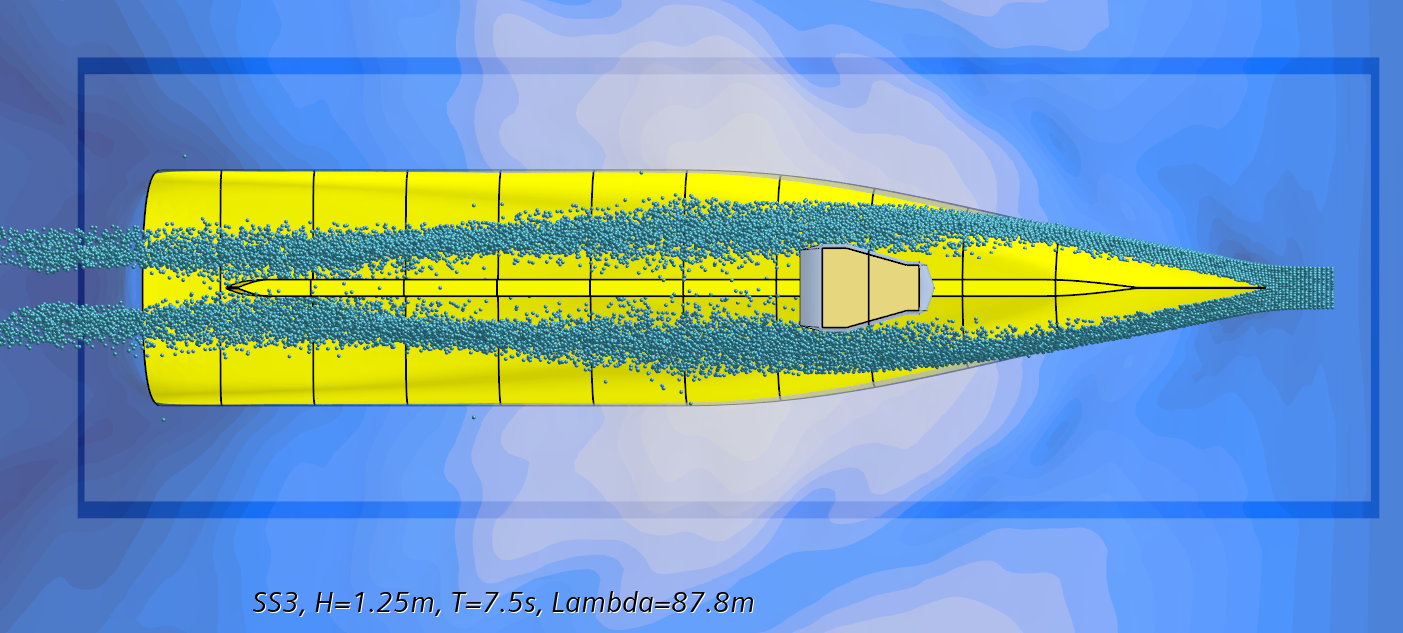
CFD can also predict Bubble Sweep Down (BSD), where air bubbles generated around the bow are transported beneath the hull by waves and vessel motion. Tracking bubble movement helps engineers evaluate whether sonar systems or other underwater acoustic equipment may be affected, supporting the design of research vessels, naval vessels and other specialised ships.
Aerodynamic simulations
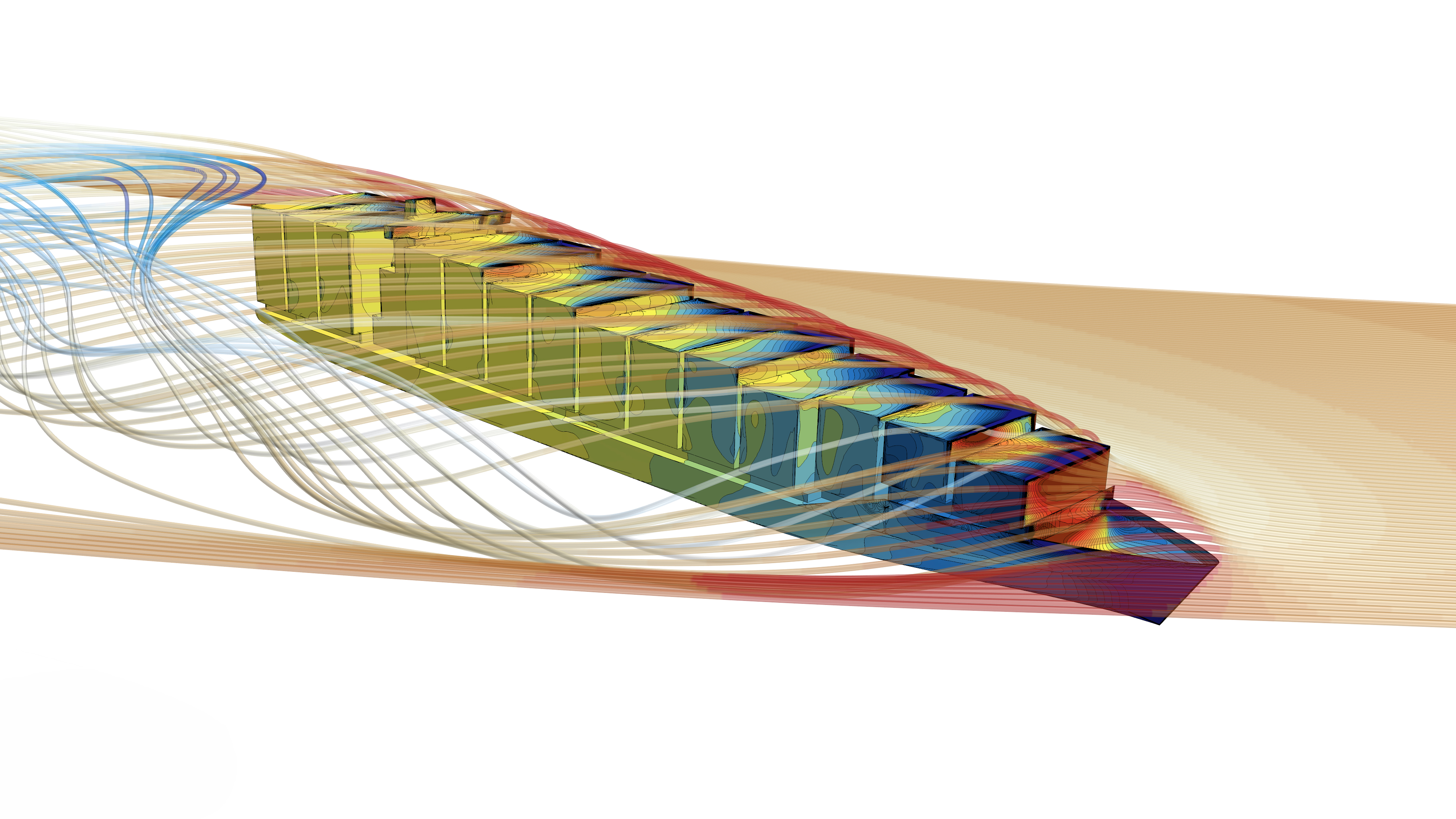
Maritime CFD also includes aerodynamic analyses of wind loads on vessels and offshore structures, airflow around superstructures, helicopter operating conditions, exhaust gas dispersion and ventilation performance. Similar methods are applied in civil engineering to assess wind effects on buildings, bridges and other large structures.
CFD supports the evaluation of hull modifications, propulsion improvements, trim optimisation and retrofit concepts aimed at improving vessel efficiency. The resulting hydrodynamic data can also support engineering assessments related to regulatory initiatives such as the IMO Energy Efficiency Existing Ship Index (EEXI).
CFD and physical model testing complement one another throughout vessel development. Numerical simulations provide an efficient way to investigate concepts and compare alternatives, while model testing can be used where experimental verification or additional hydrodynamic investigation is required.
Together, they provide a comprehensive understanding of vessel performance and support the development of reliable engineering solutions.
CFD supports applications ranging from vessel performance and ship design optimisation to self-propulsion, virtual sea trials, wave-load assessments, and aerodynamic analyses. Whether the objective is to optimise a new vessel, evaluate a retrofit or investigate a specialised engineering challenge, CFD provides valuable engineering insight throughout the design and development process.
