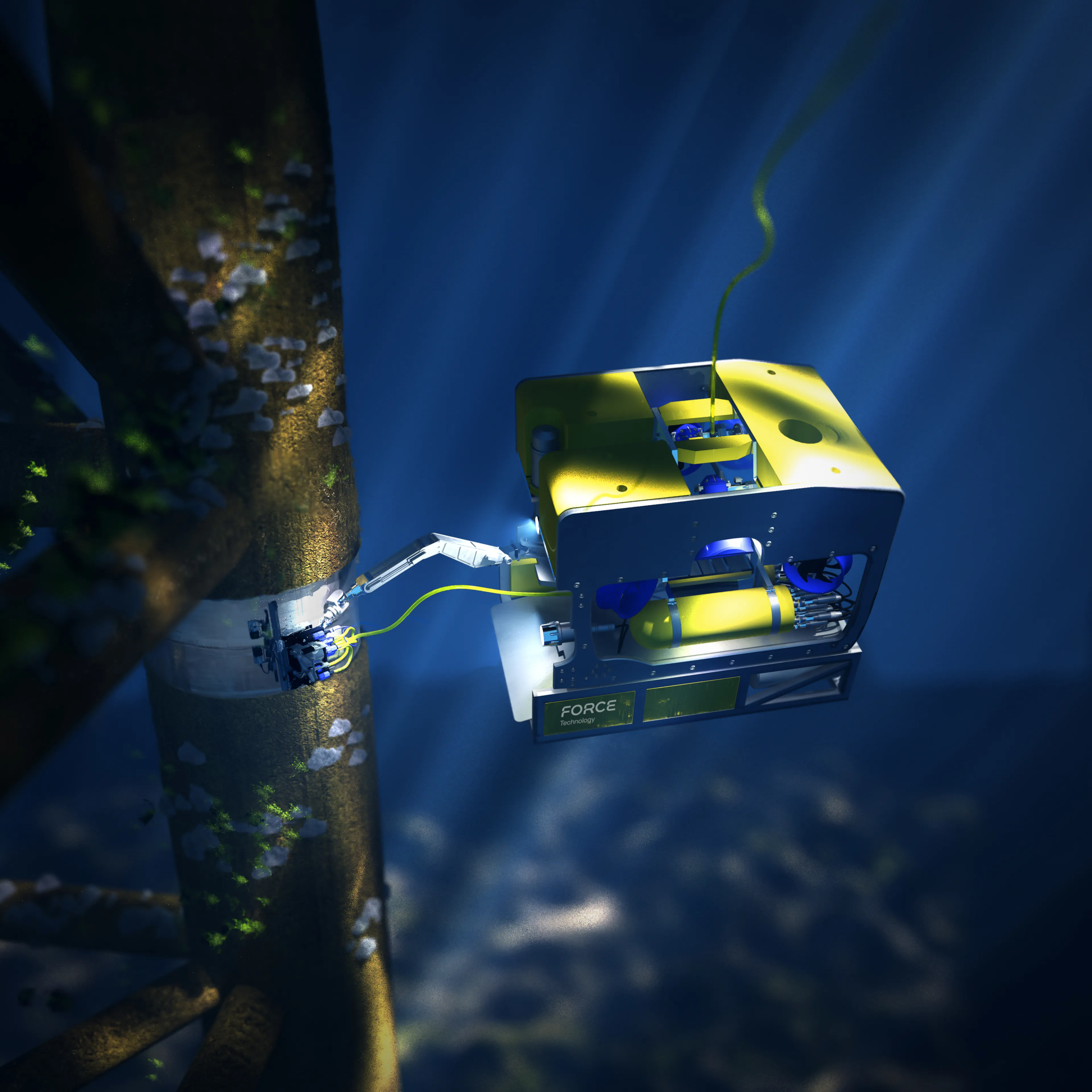
Reducing uncertainty in ageing subsea assets.
Operators of subsea assets are under growing pressure to operate and extend field life while reducing offshore activity and maintenance costs - without compromising safety or integrity.
The challenge is not simply to collect more inspection data. It is to understand which risks matter most, where degradation is developing, how it can be controlled, and which interventions are needed to keep the asset safe, reliable and fit for continued operation.
For many operators, this means moving from isolated inspection findings to an integrated view of asset condition. By combining advanced non-destructive testing, cathodic protection assessments and structural monitoring, integrity teams can turn separate data sources into a clearer basis for maintenance planning, risk reduction and life extension decisions.
Providing this key information is our expertise.
Understanding where the real integrity risks are
A key question for operators is where degradation is occurring and whether it could affect the safe performance of pipelines, risers or subsea structures. Advanced non-destructive testing can detect, measure and size defects such as corrosion- or erosion-related wall loss, cracking, mechanical damage and material degradation. This enables targeted intervention and helps prevent loss of production. We provide off-the-shelf and custom-built systems that accurately and reliably collect and interpret this information.
Another critical question is whether corrosion protection remains effective. Cathodic protection surveys, combined with forecasting, help confirm that protection systems are performing as intended and identify areas where protection levels may no longer be sufficient - or may become insufficient over time. Our FiGS and Seacor tools are state-of-the-art technologies that provide these insights cost-efficiently.
Periodic inspections provide important snapshots, but they do not always show how an asset behaves over time. Structural monitoring adds this perspective by showing how operational and environmental loads affect the asset under real-life conditions and by improving the accuracy of structural models. Our FORCENCE suite of monitoring tools provides accurate and reliable data to support this understanding.
Together, these methods - and our expertise in deploying them - help answer the questions that matter most to operators: where is the risk increasing, how quickly is the condition changing, and where should resources be focused first?
Prioritising the right inspections and interventions
Inspection programmes are often planned around predefined intervals. While this provides structure, it can also lead to inspection scopes that do not fully reflect the asset’s actual condition or risk profile.
A more risk-based approach allows operators to focus offshore activity where it creates the greatest value. This requires reliable information about current condition, corrosion protection performance and structural behaviour.
When inspection and monitoring data are viewed together, integrity teams can better distinguish between areas that require action, areas that need closer follow-up and areas where inspection activity may be safely reduced. Our tools provide accurate, trusted and reliable information, helping reduce uncertainty in the underlying data.
This supports more targeted campaigns, fewer unnecessary interventions and a stronger basis for documenting that integrity risk remains under control.
Making better decisions about asset life extension
As offshore infrastructure ages, operators must decide how long assets can continue to operate safely, which maintenance actions are required and where future investment should be prioritised.
Integrated inspection, corrosion protection assessment and monitoring provide a stronger technical basis for these decisions when the trust in the data quality is high. The value lies not only in the individual data points, but in how they are interpreted together to reduce uncertainty. We help generate reliable data cost-effectively and provide the technical understanding needed to apply it in operational and strategic decision-making.
By building a more complete understanding of asset condition and how it develops over time, operators can prioritise the right actions, avoid unnecessary offshore work and make life extension decisions with greater confidence.
