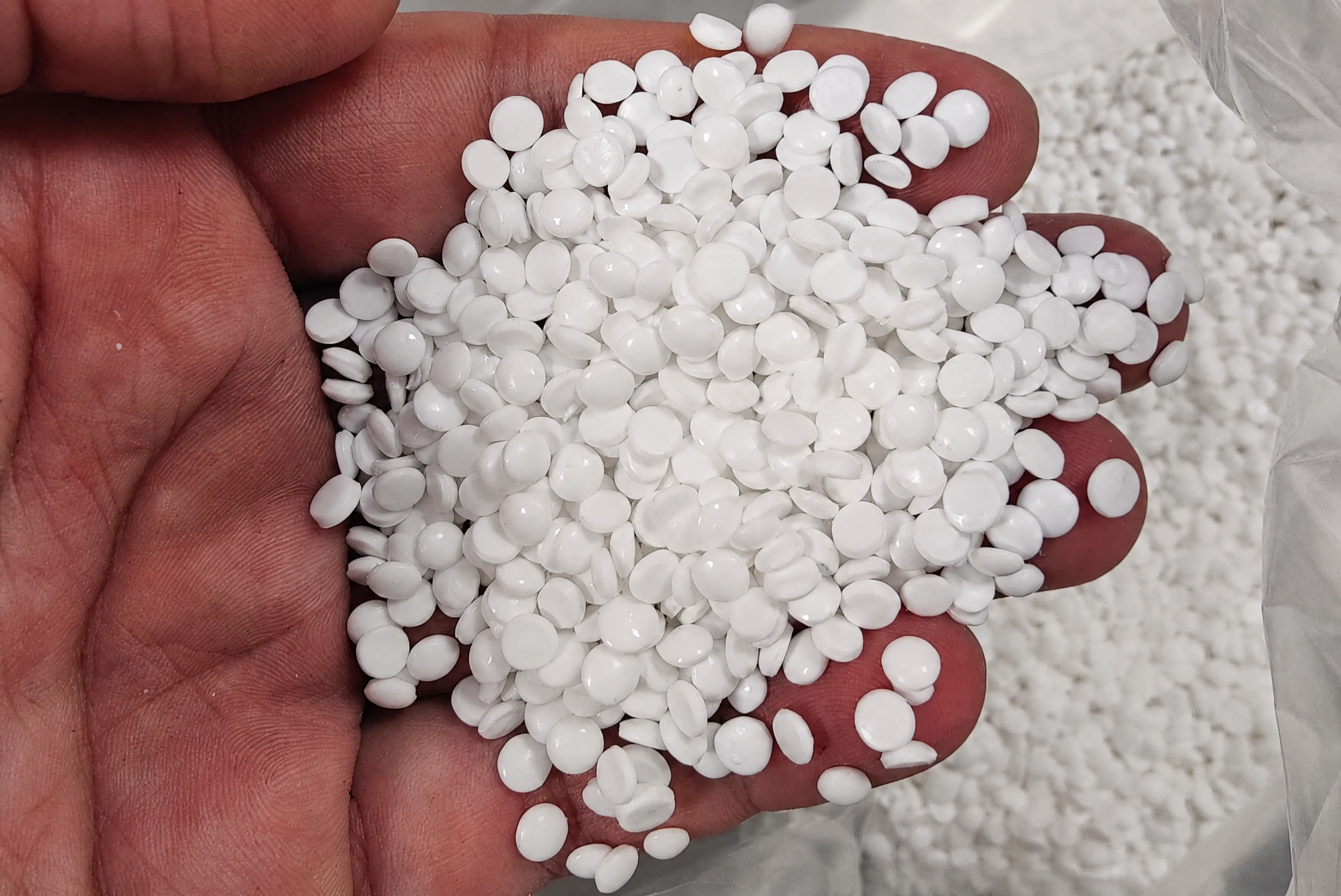
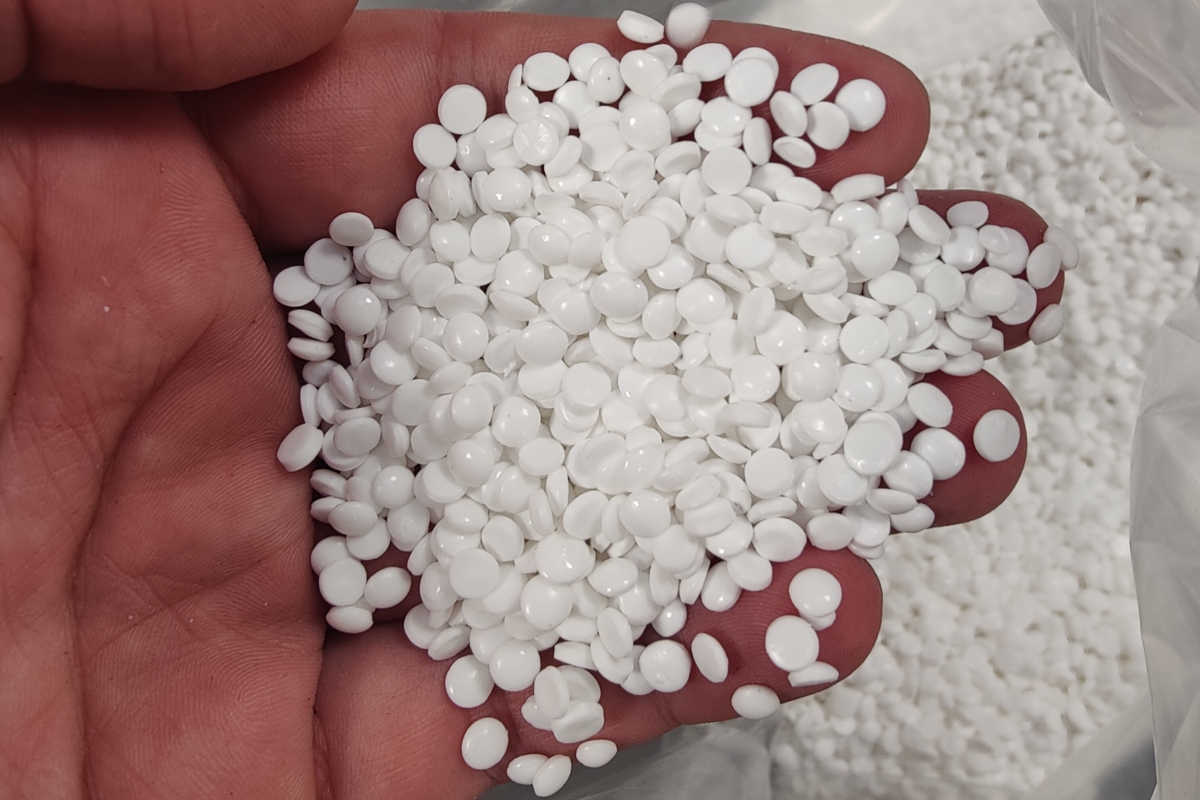
The pill bottle gets a second life as food-contact plastic
Challenge
Genplast aims to recycle plastics for food applications so that they remain food-contact plastics instead of being downcycled.
Solution
Force Technology helped develop a new quality management system and evaluated different types of plastics intended for food contact applications.
Result
Genplast is ready for approval by the Danish Veterinary and Food Administration and to begin recycling plastics for food contact applications.
MADE Material Demonstration Project
Are you a manufacturing company looking to develop or test a new concept?
Or are you a technology supplier seeking to test your solutions in collaboration with manufacturing companies and a GTS institute?
MADE continuously develops tailored projects that help both manufacturing companies and technology suppliers address shared challenges and optimise production through the application of new technologies and methods.
Genplast
Genplast A/S purchases surplus plastic from companies and recycles it into plastic granulate for the plastics industry. The company is based in Farsø in northern Denmark and employs 30 people.
Downcycling
Downcycling is the process of converting a material into a product of lower value than the original.
A new quality management system paves the way for Genplast to obtain approval for its recycled plastics production, allowing the material to be used in food contact applications.
Today, there is typically only one path in the lifecycle of plastics approved for food contact: downcycling.
Food-contact plastics are not recycled at scale
Pill bottles and yoghurt pots can potentially be recycled into components for products such as garden furniture, plastic pipes and polyester before ultimately being converted into electricity and district heating at a waste-to-energy plant. However, food-contact plastics are not widely recycled back into the same type of application. Genplast, a small company based in Farsø in northern Denmark, wants to change that.
“It started when we received raw materials that were simply too valuable to be downcycled. That made me look into whether we could reprocess food-contact plastics so they remain food-contact plastics. On top of that, food-contact plastics can generate 10–20% higher value,” says Nikolaj Rasmussen, Head of Purchasing and Sales at Genplast. He continues:
“After three or four months, I became increasingly confused every time I spoke to someone. I was being sent back and forth between the Danish Veterinary and Food Administration and the Danish Environmental Protection Agency, and I needed help moving forward.”
Genplast received that support through a MADE Materials Demonstration Project carried out with Force Technology, with the aim of enabling the material not merely to be reused, but to be recycled back into the same food-contact application.
“We prepared Genplast for approval of its quality management system for the reprocessing of food-contact plastics by the Danish Veterinary and Food Administration. We also helped the company evaluate different types of plastics for reprocessing,” says Jens Sinding, Senior Consultant at Force Technology.
Genplast A/S purchases surplus plastic and recycles it into plastic granules for the plastics industry. With a new quality management system, the company can now also use the recycled plastic for food contact applications.
“We received raw materials that were simply too valuable to be downcycled. That made me investigate whether we could reprocess food-contact plastics so they remain food-contact plastics.” Nikolaj Rasmussen, Head of Purchasing and Sales, Genplast
Production waste is Genplast's raw material
Genplast's raw material consists of production scrap from manufacturers of plastic products. In other words, it is not post-consumer food-contact plastic collected after use. However, this does not necessarily make the process easier. To market reprocessed plastic for food contact applications, Genplast must be able to document which substances are present in the recycled material.
That information is not always available, as the companies that originally manufactured the plastic may not disclose its composition.
Mixed materials present a challenge
Food-contact plastic products are often made from several different polymer types. This was the case for the plasma bags - commonly used by hospitals for blood storage - that were investigated during the MADE project as a potential raw material for Genplast.
The inner layer of the bag consists of food-contact plastic, while the outer layer is made from a different type of plastic. Following reprocessing, the combined material would therefore also need to comply with food-contact requirements.
“It actually looked promising, but then a competitor stepped in and secured the supplier - and therefore the raw material. We operate in a highly dynamic market,” says Nikolaj Rasmussen.
Can plastic cups be recycled for food contact?
A similar challenge applies to familiar plastic cups used for dairy products and similar foods. Although the cups themselves are manufactured from food-contact plastic, the outer surface is printed with inks.
The MADE project showed that, after reprocessing, the mixed material could not immediately be used for food contact applications. Extensive identification and assessment of the substances originating from the printing inks would be required.
“At the moment, we only have one raw material that we can reprocess. That's pill bottles, because we know exactly what the plastic contains. However, the volumes we can obtain are not sufficient to justify the administrative effort involved in starting food-contact plastic reprocessing. So we'll continue looking for other food-contact plastic fractions and have them analysed,” says Nikolaj Rasmussen.
A quality management system has strengthened the entire company
The second part of the MADE project - meeting the regulatory requirements - is now fully in place.
“Force Technology helped Genplast implement a quality management system that ensures the company's production processes support the quality requirements for food-contact plastics. The system has also been designed to accommodate upcoming, more stringent EU requirements, including those relating to storage and traceability,” explains Jens Sinding.
Before implementation, Force Technology reviewed Genplast's production facility in Farsø and identified areas requiring improvement. For example, food-contact plastics must be transported and stored in dedicated, closed containers to prevent contamination from other types of plastic.
Strengthening the company's production processes has done more than prepare Genplast for approval by the Danish Veterinary and Food Administration.
“It has strengthened the entire company. We intend to use the quality management system across all of our production. It also opens the possibility of obtaining certification to relevant ISO standards,” says Nikolaj Rasmussen.
Meanwhile, the company continues its search for suitable food-contact plastics that can be reprocessed.
“We see significant potential. Right now, we can source around 100 tonnes of pill bottles, but if we can increase that to, say, 600 tonnes, we stand to earn roughly DKK 1.5 million more from food-contact plastics. So it's absolutely worth making this work,” Nikolaj Rasmussen concludes.