
If an emergency towing operation is not properly trained and prepared for the outcome can end up being even worse than the ship incident.
When a large ship is drifting close to shore with risk of grounding or collision one of the main concerns is oil spill and damage to the environment.
Today IMO has regulations for emergency towing gear on board tankers, but not for other ship types even though the big container ships carry a high quantity of fuel as they need a big bunker capacity to sail their routes.
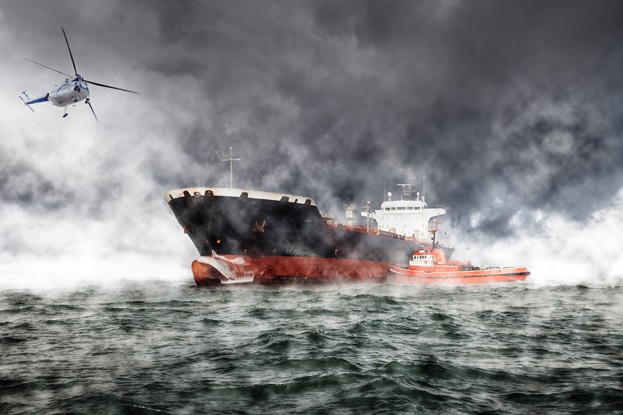
Emergency towing of these large ships set high demands for the tugs and crew. They often need to make a safe connection to bollards and fairleads on board a disabled ship in high waves. If the connection is not prepared properly there is risk of parting the towing gear or ruining the bollards or tear fairleads out of the ship.
Simulating the operation
A towing operation that has not been properly prepared for and trained can end up in parted towing lines and equipment, colliding with disabled ships and even towing equipment and wires falling into the propellers of the tug and bring the tug out of function. Preparing for an operation involves training in handling the emergency towing gear, selecting the correct tow line and throwing the tow lines correctly to get hold of the ship.
There are many advantages of training these operations in a ship bridge simulator. One of them is the possibility of training during harsh weather with strong wind and waves.
”The simulator is a great tool to train the operation. Besides creating a realistic situation, it also allows us to adjust the training to the specific needs of each company, offering different weather scenarios and even special operations like salvage of a ship about to be caught in a wind mill farm,” explains Steffen Schultz, salvage consultant and external instructor at Force Technology.
Emergency towing training
According to Steffen, communication is one of the most important factors in a successful emergency towing operation: “Often two different cultures are involved in the operation. During stressed situations, people tend to forget how to communicate in English if it is not their mother tongue. This makes it difficult for the emergency towing team to explain the procedures to the crew. In these cases, it is important to obtain on board assistance from a helicopter boarding team, which is also something we train in the simulator”.
Our three-day emergency towing course combines theory and simulator exercises with special emphasis on manoeuvring techniques, communication, distances, and time frames.
Emergency towing booklet
According to SOLAS all ships of more than 500 DWT should have an emergency towing booklet on board explaining how to connect to an ETV tug. The crew should be familiarised with the book and perform regular exercises with the equipment mentioned in the booklet.
Steffen’s top 7 most important factors for successful emergency towing:
- Planning
- Knowing how to perform risk assessment
- Knowing how to connect to other vessels and tankers
- Knowing how to rig a towing connection
- Knowing how to manoeuvre and tow in high seas
- Being well trained in the emergency response organisation in order to prepare to strand the vessel or bring it to a port of refuge
- Proper communication
