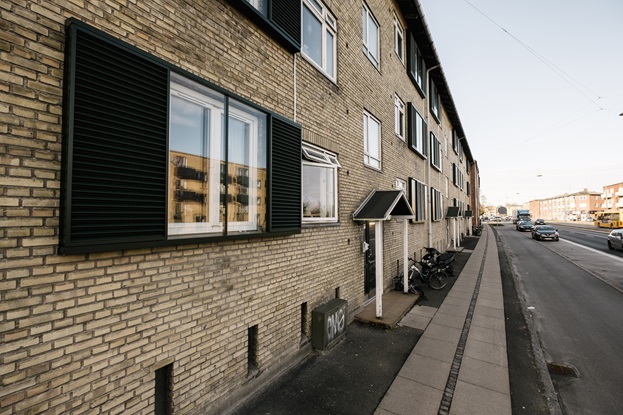
Traffic noise is a major problem for our health. Indoors, we are partially shielded from the noise, but windows are usually a weak point.
Noise from traffic is the most dominant source of noise in our society.
In 2018, WHO published the report "Environmental Noise Guidelines for the European Region," which documents that noise poses a serious health problem. In March 2020, the European Environment Agency (EEA) published the report "Environmental noise in Europe – 2020," which shows that noise pollution is still increasing.
There is therefore every reason to do what we can to reduce noise nuisances.
Significant differences in noise reduction of windows
The home's windows are important for letting light and air into the residence. At the same time, the windows are a key element for the thermal insulation of the building and sound insulation against external noise. Furthermore, there are often architectural factors to consider when choosing windows.
The majority of traffic noise usually enters the home through the windows. There can be up to a 20 dB difference in how well a window solution reduces noise, which is often overlooked. For comparison, a reduction of 10 dB will feel like cutting the noise in half. So there is truly a lot to gain.
Documentation of window sound insulation
The sound insulation of windows can be documented either in a building acoustics laboratory or through field measurements. The former is done according to the DS ISO 10140 series, and the latter according to DS ISO 16283-3.
The measurements are carried out at least in the frequency range 100 Hz – 3150 Hz (alternatively 50 Hz – 5000 Hz).
The standards were originally intended solely for use with closed windows. Depending on the opening method, the standards can likely be optimized for use with open windows, which is currently being investigated in this project:
Sound insulation of windows expressed by a single number (single number values)
Sound insulation of windows expressed by a single number (single number values) Using DS ISO 717-1, a range of single-number values can be calculated, which allows the sound insulation to be described simply.
For windows and traffic noise, Rw+Ctr or R’w+Ctr are usually used for laboratory or field measurements, respectively. The higher the values, the better the noise reduction.
Traditional noise-reducing windows
Standard windows with panes, frames, and sashes typically provide a sound insulation of up to about Rw+Ctr = 39 dB (see fact box on window sound insulation).
In noisy areas, you should always use windows with documentation for the total sound insulation of the window — including panes, frames, and sashes — and not rely solely on values for the glass pane itself.
It is also important to ensure that there are no other building components around the window where noise can enter, such as the wall below the window.
Finally, it is essential to ensure proper installation, as an unsealed window typically does not suppress noise as effectively as a well-sealed window.
Sound insulating panes with multiple glass layers and acoustic laminate
When replacing a window for a noise-reducing one, it is advisable to install windows with acoustic glass.
It is important to stress that the term "acoustic glass" is used (and misused) in many contexts — even by professionals — to describe both highly effective and less effective solutions. Therefore, you must be very precise when ordering acoustic glass and preferably consult a specialised acoustic advisor.
A standard window fitted with "acoustic glass" can, in practice, reduce noise by between 29 dB and 39 dB. Noise insulating windows will in most cases also improve thermal insulation. However, the opposite is not always true.
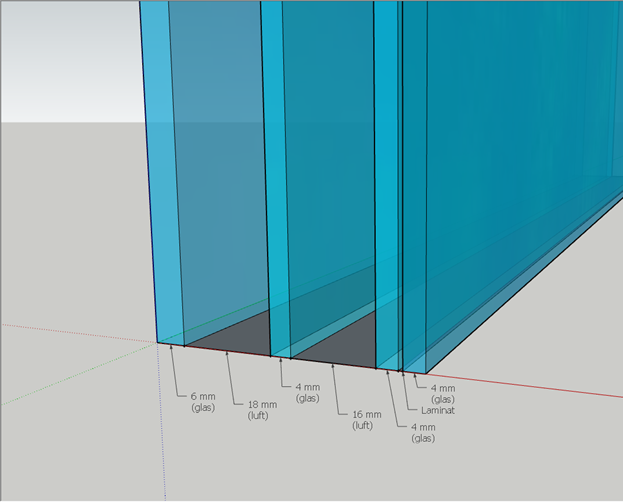
The construction of an acoustic pane typically features two or three layers of glass. The glass thicknesses should be different, and the distance between the panes should be as large as possible.
For triple glazing, it is recommended that the spaces between the glass panes are different. Often, one or more panes are laminated with an acoustic film, as this increases the acoustic insulation. Laminated glass consists of two glass layers separated by a plastic interlayer which, depending on the material type and thickness, can provide greater or lesser noise reduction properties.
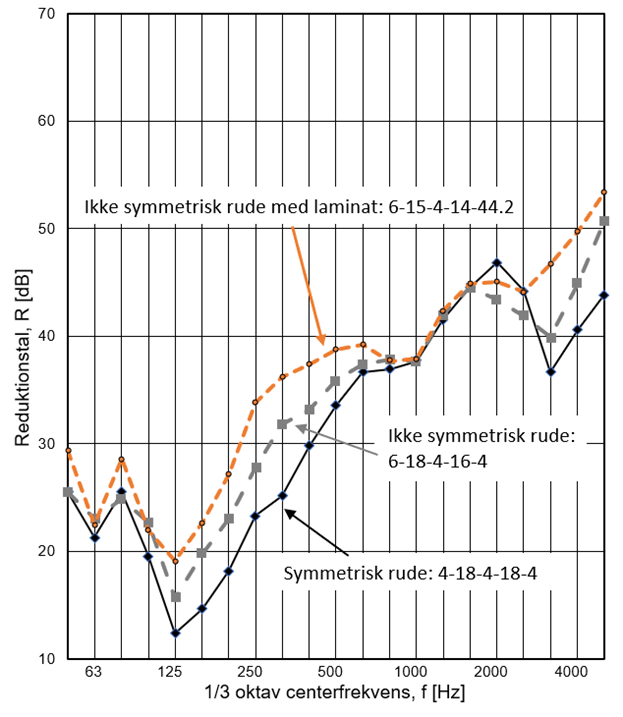
Example of the construction of a triple‑glazed pane with laminateTimber/aluminium window measured in a laboratory with 3 different panes. Symmetrical pane (4-18-4-18-4), Rw+Ctr = 27 dB. Asymmetrical pane (6-18-4-16-4), Rw+Ctr = 31 dB. Asymmetrical pane with acoustic laminate (6-15-4-14-44.2), Rw+Ctr = 34 dB. Data from The Danish Window Industry.
Secondary glazing preserves the look of older homes
In older buildings, where there is a need to improve the existing windows' sound insulation and at the same time preserve their architectural appearance, secondary glazing is an obvious solution. Secondary panes can significantly reduce external noise and provide good thermal insulation.
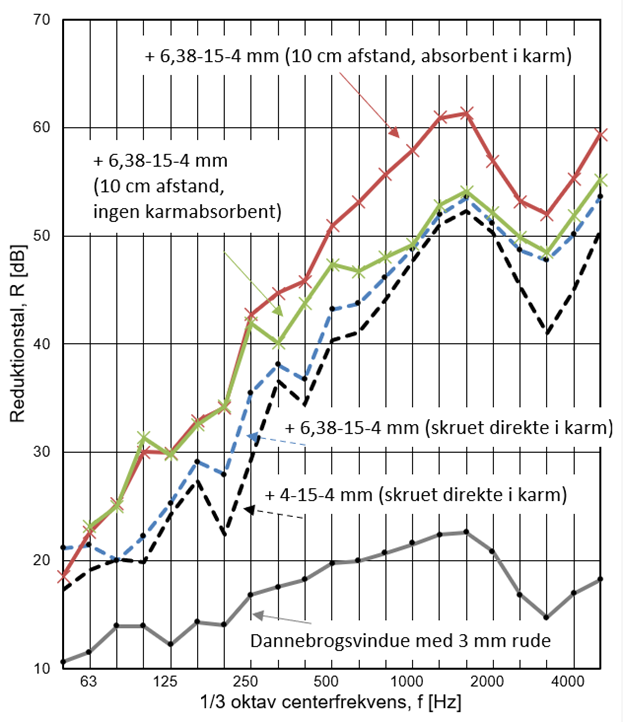
The gap between the original window and the secondary solution makes it harder for street noise to get in and for heat to escape. This is because the alternation of solid material and air, which the noise must pass through, reduces its level.
A secondary glazing solution essentially consists of an extra pane mounted on the interior side of the existing window. There is a wide variety of materials, thicknesses, and appearances, and the solution can be tailored to match the existing window's look.
In noise-affected properties, many owners face the choice between preserving the original windows or replacing them with new acoustic windows. It is important to consider the potential benefits of keeping the original windows and using secondary glazing, including potentially very effective noise reduction, durability, the advantage of not having to replace the whole window, aesthetics, and more.
When designing secondary glazing, it is crucial to match it to the existing window. You can work with both the thickness of the pane and the distance between the panes. Consider what you are willing to invest in optimising the solution for the best possible outcome in terms of aesthetics, functionality, noise reduction, and energy savings.
Most glaziers can advise on the different solutions' noise reduction capabilities. It may also be advisable to consult an acoustician, who can suggest the optimal solution based on the specific noise outside the building.
Laboratory measurement of sound insulation for a "Dannebrog" window with a 3 mm pane and different secondary glazing solutions. Higher values indicate better noise reduction. The secondary panes are shown with two different types of glass, and the significance of the distance to the primary window is also shown. Data from Energiforsatsgruppen.
New window types combine ventilation and sound insulation
In 2007, the Danish Environmental Protection Agency issued new guidelines for, among other things, traffic noise. In areas with high noise levels, there are also requirements for indoor noise levels with open windows.
The requirements are intended to ensure the possibility of air exchange without raising indoor noise to an unacceptable level. This has driven innovation in new window types, generally called ventilation windows, some of which are described below.
Russian windows preheat the air
The most commonly used ventilation window is also called a "Russian window," as the principle originated in Russia, where it was originally used to preheat outdoor air in winter before it enters the building.
The Russian window is typically used in areas where the noise load on the facade is 58 dB < Lden ≤ 68 dB for roads and Lden > 64dB for railways.
A Russian window is constructed as a double window unit with a relatively large gap between the outer and inner window sashes. Often, sound-absorbing materials are placed along the sides, top, and bottom of the gap.
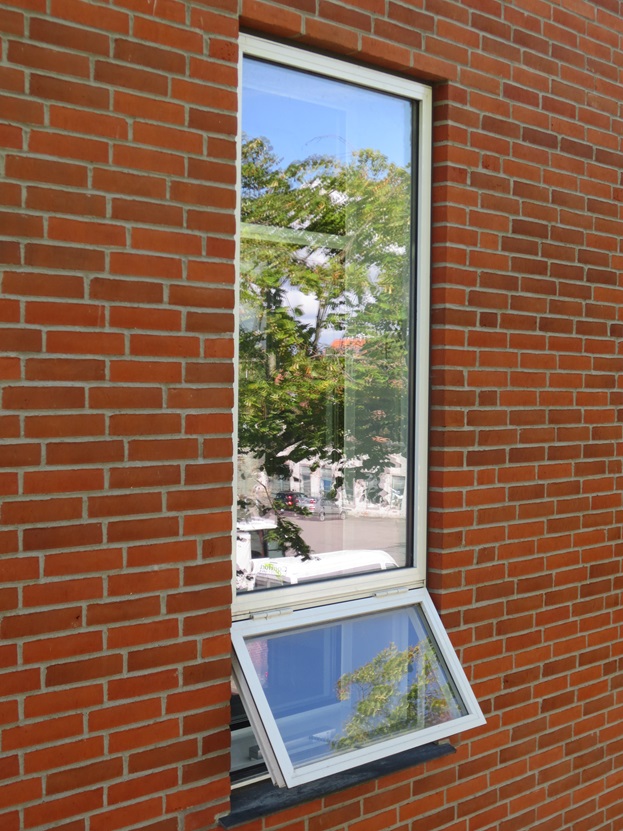
In terms of sound and ventilation, the Russian window operates so that noise and air enter through an outward-opening sash at the bottom of the exterior window, then vertically upward and into the home through an inward-opening sash in the inner window. While air and noise pass through the gap, the air is warmed and the sound is absorbed by the materials in the top, sides, and/or bottom.
When open, the pane types do not influence the window's sound insulation. The most important parameters for Russian windows are the window height, the opening area of the two sashes, and the placement of the sound-absorbing material in the gap. The distance to the room ceiling matters as well, especially if the ceiling is absorbent.
In the closed position, the Russian window can be compared to a secondary glazing solution, and the sound insulation is typically very high.
Example of a Russian window. Source: Force Technology
Acoustic shutters can be added to existing windows
The acoustic shutter is an external shutter that reduces noise from traffic in the home and can be fitted to an existing window. The shutter is effective for both closed and open windows, while also allowing for ventilation of the home.
The shutter works by having the outside air pass through a sound trap on each side of the existing window. The sound trap suppresses the noise while ensuring fresh air can enter.
If occupants need significant ventilation, the shutter’s pane can be moved completely to the side, allowing the window to open fully and provide free airflow.
However, the choice of acoustic shutters is highly dependent on the facade’s appearance and the building’s overall architecture. If the building already features shutters, the acoustic shutter is an obvious choice for window noise reduction. But if the building is of an older type, such as with "Dannebrog" windows, the acoustic shutter may not be the best aesthetic choice.
Example of an acoustic shutter. Source: Rambøll
Windows are essential for noise reduction in homes
As described in this article, there is much that can be done to reduce noise in our homes by optimising windows to best mitigate noise.
Ongoing work focuses on developing even more effective noise-reducing windows and on improving methods for measuring the noise-suppressing performance of windows.