
Power-to-X: From green vision to global business
Power-to-X: From green vision to global business
Challenge
PtX is still immature with limited field data on electrolyser stack lifetime and O&M. Assessing condition and setting realistic lifetime expectations is complex and can be costly, yet critical for long-term investment decisions.
Solution
Instead of treating stack issues as a replacement question, Eurowind Energy used the facility as a learning asset. With Force Technology, independent failure and root cause analysis were carried out, using SEM/EDX to document membrane damage and degradation.
Result
The collaboration clarified stack behaviour and lifetime considerations, supporting stronger O&M strategies and supplier dialogue. Eurowind Energy’s facility builds PtX know-how, directly shaping the company’s future PtX strategy and approach to hybrid renewable parks.
Eurowind Energy develops, builds and operates renewable energy assets and parks. In Power-to-X (PtX), the Danish company faces a demanding operational reality: complex hydrogen plant equipment, limited service maturity and high-value components that are difficult to assess before they run.
When Eurowind purchased an existing hydrogen plant near its headquarters in late 2023, the start-up process quickly highlighted how high-cost electrolyser stacks can drive uncertainty, downtime risk and difficult replacement decisions. Collaborating with Force Technology gave Eurowind an independent evidence base for decisions, while giving Force Technology rare hands-on insight that strengthens failure analysis methods and know-how for future PtX cases.
Eurowind experienced issues inside an electrolyser stack. A stack is a bundle of many electrolysis cells compressed together to produce hydrogen. During start-up with the manufacturer, Eurowind discovered that the stacks were end-of-life. Later, one stack was found damaged.
“Since you make the hydrogen in the electrolysis stack, that is obviously a really important part of any hydrogen plant. It is also often the most expensive part – and the most vulnerable,” Marco Hoekstra, Technical Operations Engineer at Eurowind Energy, explains.
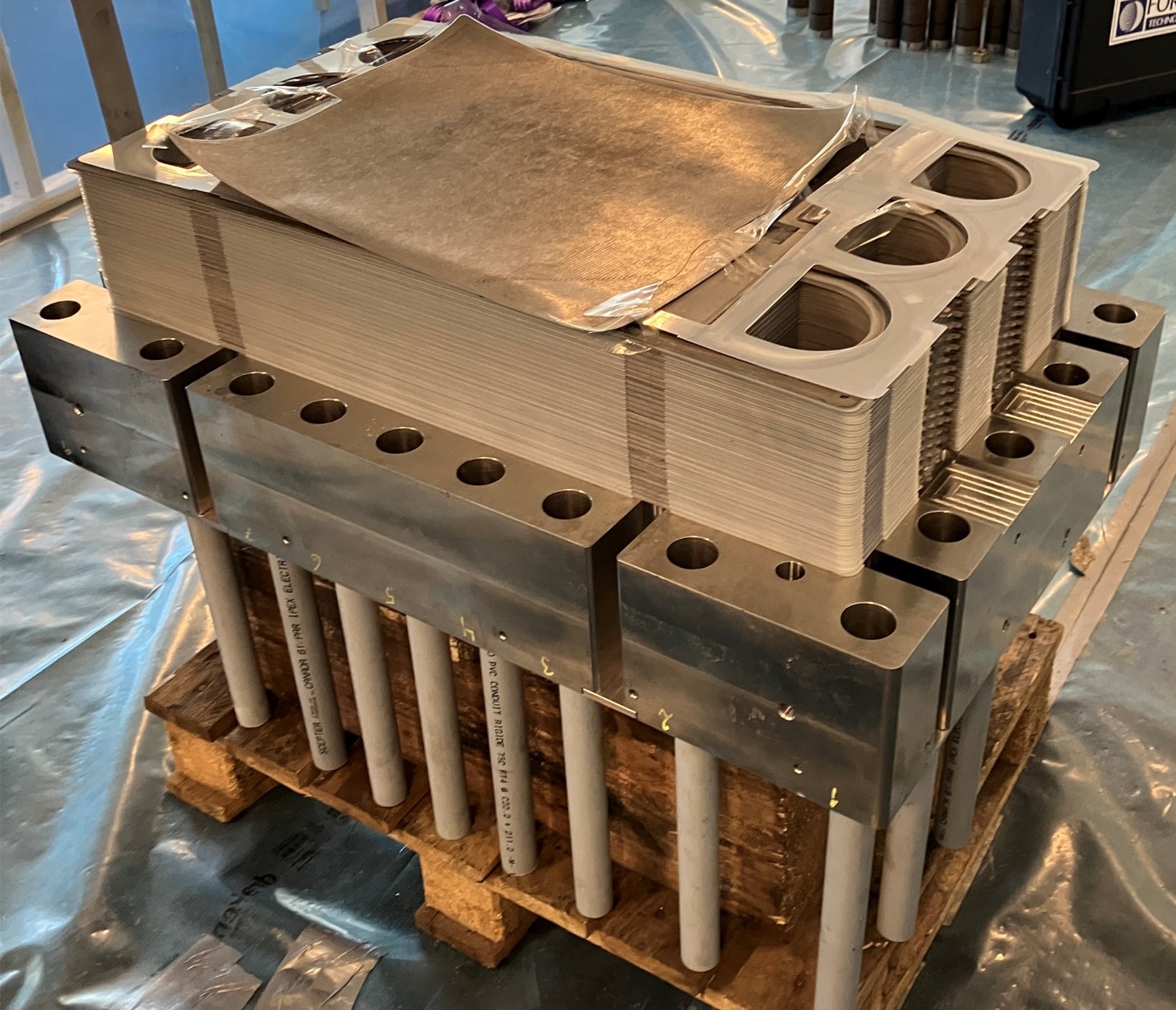
Replacement of the electrolyser stack was not viable, as no like-for-like replacement was available. A newer design would require modifications and integration work, while a stack from another manufacturer would also trigger re-certification.
Repair was not a reliable alternative either. Stack repair is uncommon in the market, and an attempt to combine parts from two broken stacks into one was not pursued further.
Instead, the damaged stack became valuable in a different way: as evidence that could support failure analysis and learning.
Eurowind and Force Technology first connected at a conference. The relationship developed further through a PtX operations and maintenance (O&M) network under DDV (The Danish Maintenance Society). Thomas Møller Hansen, Integration Specialist at Eurowind, explains: “Power-to-X is quite an immature industry, so besides being competitors, we also help each other, so that we can get plants up and running faster than we would be able to on our own.”
Eurowind later decided to involve Force Technology for independent failure analysis and root cause analysis of the electrolyser stack. In other words, the goal shifted from repair or replacement to learning from the failed stack, in order to strengthen future O&M decisions and reduce the risk of repeat failures.
The investigation began with careful access to the stack and a structured sampling plan. Eurowind opened the stack in a workshop setting, and Force Technology helped document what was seen, decide what to sample and ensure the parts were handled correctly. This was important because PEM (proton-exchange membrane) electrolyser components are delicate, and handling can introduce artefacts.
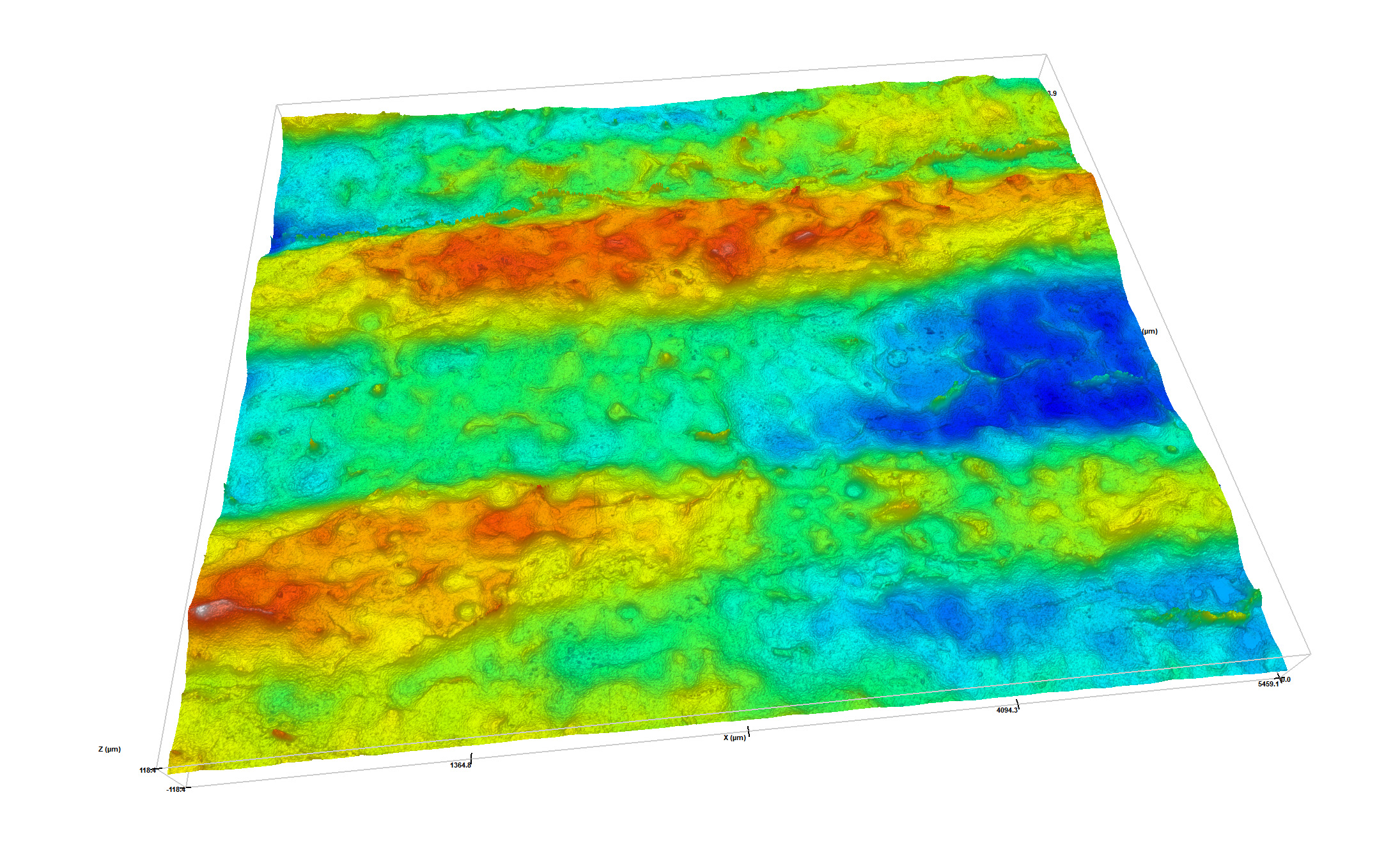
In the laboratory, Force Technology used failure analysis methods for the thin, sensitive layers inside the PEM electrolyser cell. SEM (scanning electron microscopy) enabled close inspection of micro-scale features. Combined with EDX (energy-dispersive X-ray spectroscopy) and surface topography, SEM helped map membrane damage and adjacent interfaces. Throughout the work, the team prioritised evidence quality: traceable samples, controlled preparation and clear separation between confirmed observations and hypotheses.
In early-stage technology, one failed stack rarely delivers a single definitive answer. Marco Hoekstra explains: “We have not received a conclusion yet, and when we do, I am not sure if it will be a clear conclusion.”
Even so, the collaboration created value by helping Eurowind clarify what to be aware of and how to form more realistic expectations for electrolyser stack lifetime.
The work also supports a stronger dialogue with suppliers and partners. Eurowind points out that lifetime claims often rely on small-scale laboratory testing, while operators need realistic expectations grounded in practical conditions. Independent failure analysis and field evidence help operators challenge assumptions, define better acceptance criteria and prioritise prevention and lifetime extension over repeated, costly replacements.
This case shows what happens when an immature PtX sector treats failure as evidence instead of waste. Eurowind gained a clearer basis for decisions about reliability, O&M and supplier dialogue. At the same time, Force Technology gained rare, hands-on access to real components and could strengthen methods and know-how for investigating fragile PEM electrolyser materials.
The value also extends beyond the two organisations. Force Technology supports other companies with similar challenges, which helps mature investigation methods across cases over time. When selected learnings are shared in trusted forums – such as the PtX network – the whole industry benefits. Expectations become more realistic, prevention becomes more practical and costly repeat failures become less likely.
