Hydrodynamic model tests strengthened the design of rescue vessels for the inner Danish waters
Challenge
The Danish Defence Acquisition and Logistics Organization (DALO) was in the process of replacing the vessels of the Danish Coastal Rescue Service and needed deeper insight into the manoeuvrability and general performance of the new vessels in all types of weather.
Solution
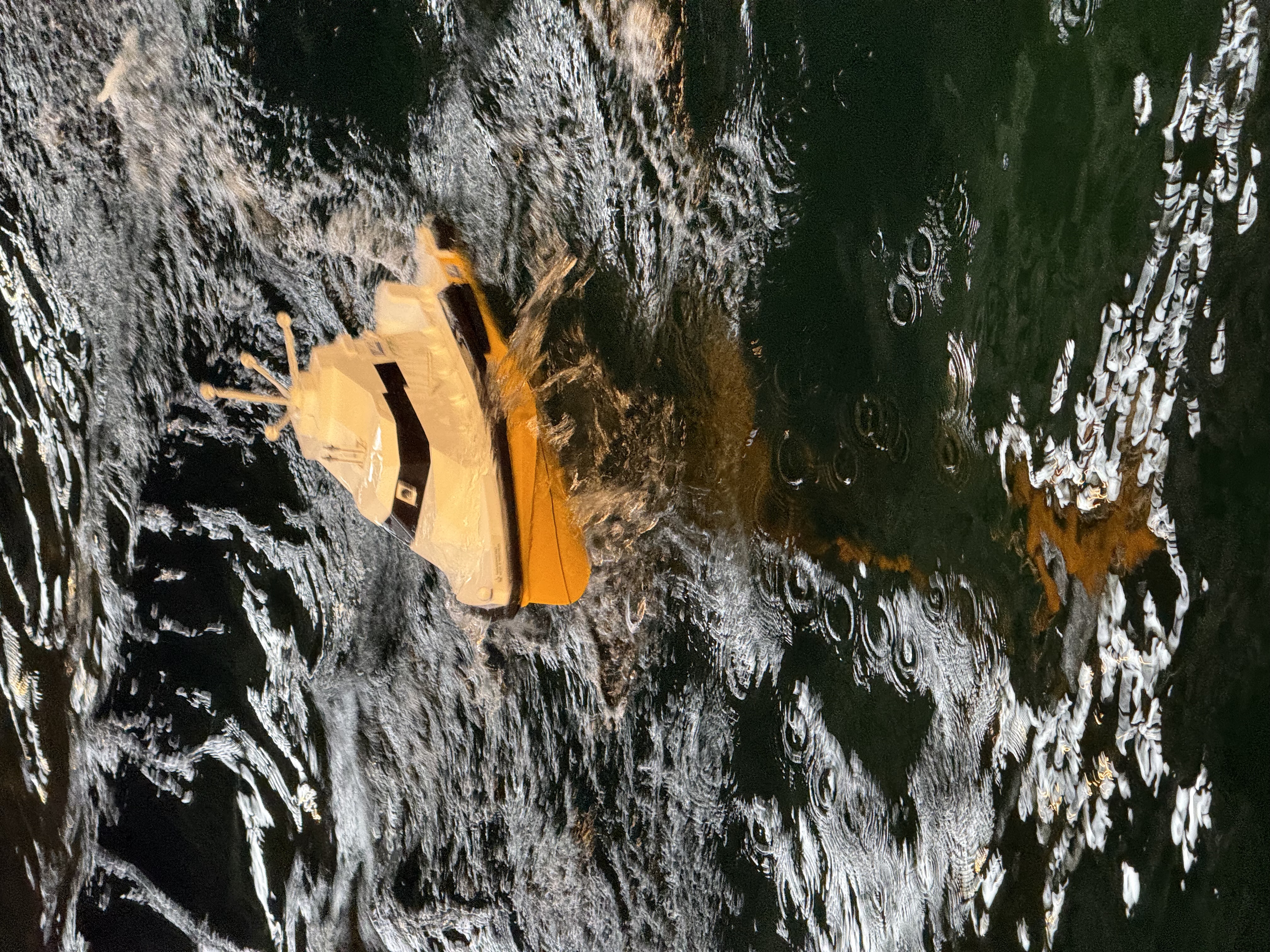
Force Technology carried out model tests with scale models under controlled wave, current and wind conditions.
Result
The project provided important information for the design basis and a better opportunity to ensure that the vessels meet requirements and needs.
The Danish Coastal Rescue Service is facing the renewal of its rescue vessels for the inner Danish waters, after the existing vessels have been in operation since 1989. To ensure a technically robust basis for the design of the new vessels, DALO conducted extensive hydrodynamic model testing at Force Technology.
The challenges in the existing fleet were clear: increasing operating costs, worn-out components and missing spare parts.
Allan A. Andersen, naval engineer and former navigator, was responsible for ensuring the best possible seakeeping qualities for the new coastal rescue vessels.
“The current vessels have performed well, but they have started to become very expensive to operate. Many spare parts can no longer be obtained."
The need for new vessels also created an opportunity to integrate modern requirements for manoeuvrability, speed and maritime safety.
New requirements for the vessels
The next generation of vessels must be self-righting, able to handle rough seas and provide faster response in emergency situations. The top speed will be 35 knots – a significant upgrade from the current 18 knots – and an important lift for the Danish Coastal Rescue Service.
As coastal rescue vessels are often put under pressure in sometimes extreme conditions, it was essential that the design be thoroughly validated before entering production.
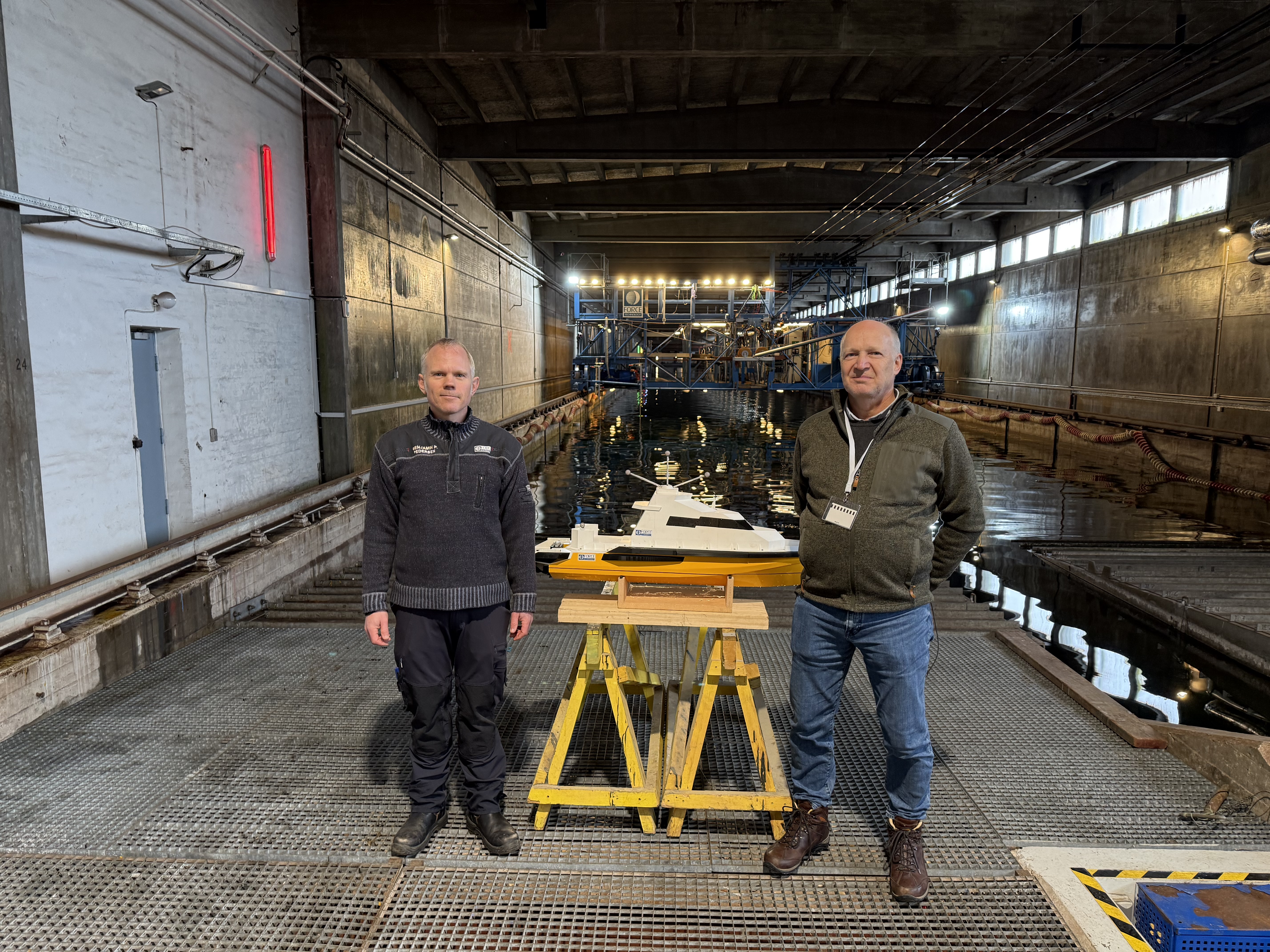
The technical lead at Force Technology was naval engineer Benjamin Pjedsted Pedersen, who has two decades of experience with complex model test campaigns.
“We create the right qualitative and quantitative data basis. It is not our role to define the design, but to provide a solid basis for it,” says Benjamin Pjedsted Pedersen.
According to Allan A. Andersen, the work with model tests is central:
“The work of the model tank is an important tool that cannot simply be replaced.”
The scale model was tested under controlled conditions to document how the rescue vessel design would perform in realistic wave, wind and current conditions before construction.
From design drawing to dynamic model
The scale model of the rescue vessel was built with geometric accuracy and equipped with an advanced setup with wireless data acquisition and sensors to measure movements, as well as steering input from the waterjet.
The model had to be small enough to be tested in a realistic high sea state and weighs only 7 kg, which is unusual compared with traditional ship models that we have tested.
“Model building is an art in itself. A model must have the same mass, centre of gravity and dynamics as the full-scale vessel,” says Benjamin Pjedsted Pedersen.
The model was tested both in Force Technology’s towing tank and at DHI in a specially designed coastal marine environment to investigate the vessel's response under different sea states and in the presence of wind and current. The physical conditions in the tank provided direct insight into how the vessel would react in realistic scenarios.
“I have sailed with the existing vessels and know them quite well. That provides a good mix of technical and operational experience,” says Allan A. Andersen.
A basis that reduced the risk of errors
The hydrodynamic tests provided a detailed picture of the vessel's overall performance and manoeuvring characteristics. At the same time, the tests gave clear insight into how changes in the design – such as variations in hull length – affected the vessel's behaviour.
The model tests enabled comparison of several design tracks and the discard of those that could cause problems later in the process. The results, therefore, became a central decision-making basis for both DALO and the shipyard.
“There is less risk of surprises when you get further into the process,” says Allan A. Andersen.
The collaboration between DALO and Force Technology combined operational experience with hydrodynamic model testing to strengthen the design basis for the new coastal rescue vessels.
Expertise, documentation and collaboration at the centre
The collaboration between Allan A. Andersen and Benjamin Pjedsted Pedersen shows how technical expertise, advanced model tests and operational experience can be combined to develop vessels that must function in real rescue operations.
Model tests at Force Technology helped reduce the technical and operational risk of a critical capability in the Danish rescue service and laid a robust foundation for the continued development of maritime safety.