
Inspection, verification and maintenance
Inspection and non-destructive testing – in-service verification
Verify structural integrity, detect defects and document compliance during operation and manufacturing.
Companies working with pressure equipment, storage tanks, pipelines and other safety-critical structures must continuously document the condition of their assets. Inspection and non-destructive testing (NDT) are used to identify cracks, corrosion, wear and manufacturing defects without damaging components and often without interrupting operations. Operations managers and inspection engineers must be able to present documented inspection data to support maintenance decisions and regulatory approval.
Situations that trigger inspection needs
The need typically arises during planned condition assessments, risk-based inspections, regulatory requirements or when changes in operating conditions require new evaluations. Without updated and documented inspection, damage can develop unnoticed, and compliance with applicable requirements cannot be demonstrated.
Inspection and documentation in practice
Our services include in-service condition monitoring, production control, inspection of pressure equipment, and technical inspection at nuclear power plants and other energy facilities. We use NDT testing to verify welds, material thickness and the condition of structures such as ammonia tanks. Results are documented and reported to support continued operation, maintenance planning and compliance with relevant legislation.
Newsletter
Stay informed on inspection requirements
Subscribe to receive updates on inspection, NDT methods and regulatory developments affecting asset integrity and compliance.
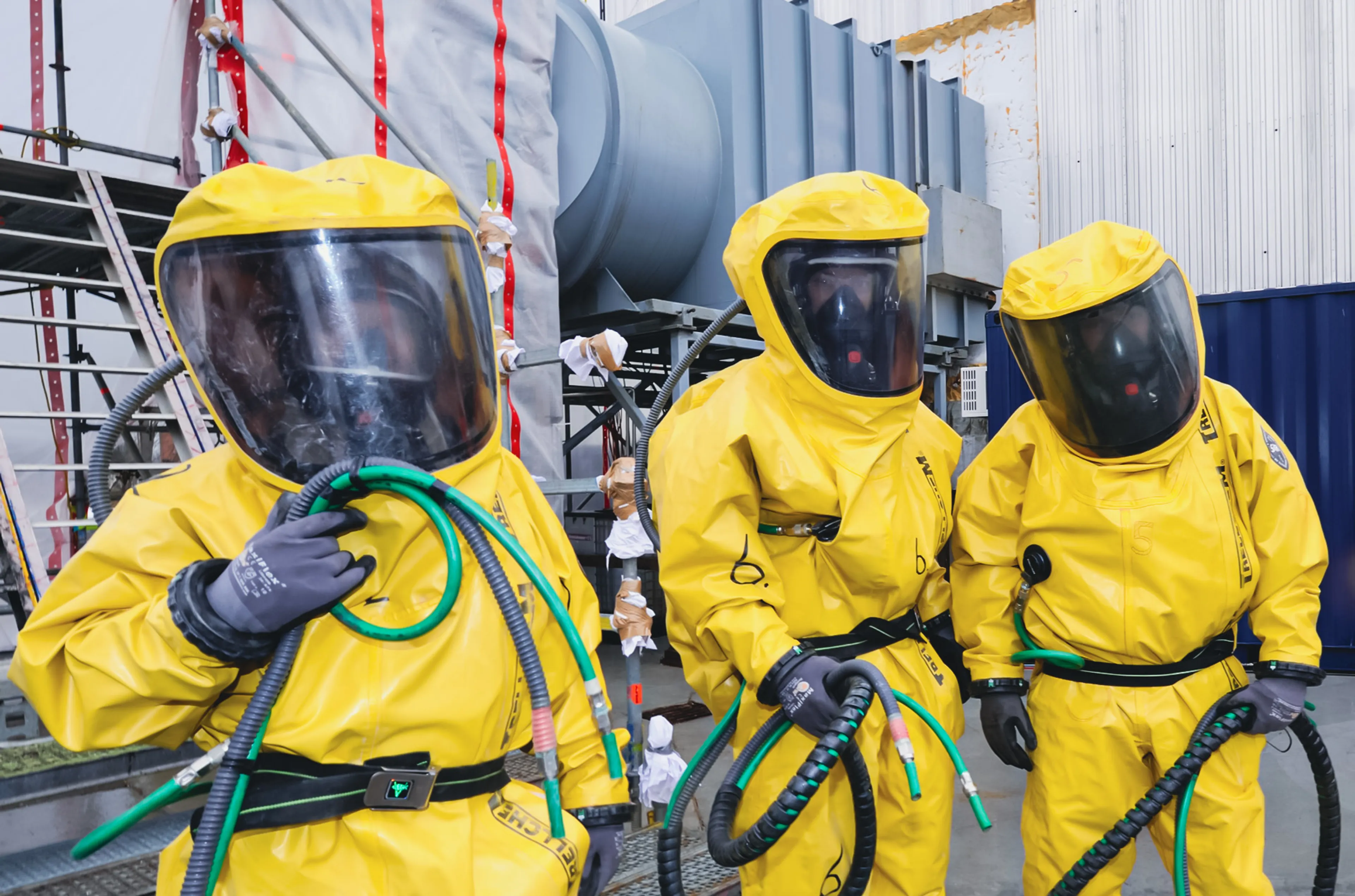
In-service ammonia storage tank inspection
In-service ammonia storage tank inspection
Automated ultrasonic weld inspection of atmospheric ammonia storage tanks detects stress corrosion cracking while the tank remains in operation.
