Improve weld quality, stabilise processes and increase productivity
Inconsistent weld quality often arises when welding processes, parameters or equipment are not well matched to the task. Variations in heat input, travel speed or arc behaviour can lead to recurring defects, unstable results and reduced productivity.
Understanding causes of inconsistent welds
Welding technology consultants help analyse existing welding practices, review equipment setup and adjust key parameters to create stable, high-quality welds. Typical activities include identifying the root causes of defects, refining process settings, assessing suitable welding methods and recommending equipment that fits specific materials and joint designs. The result is a predictable, efficient welding process that delivers reliable performance in production.
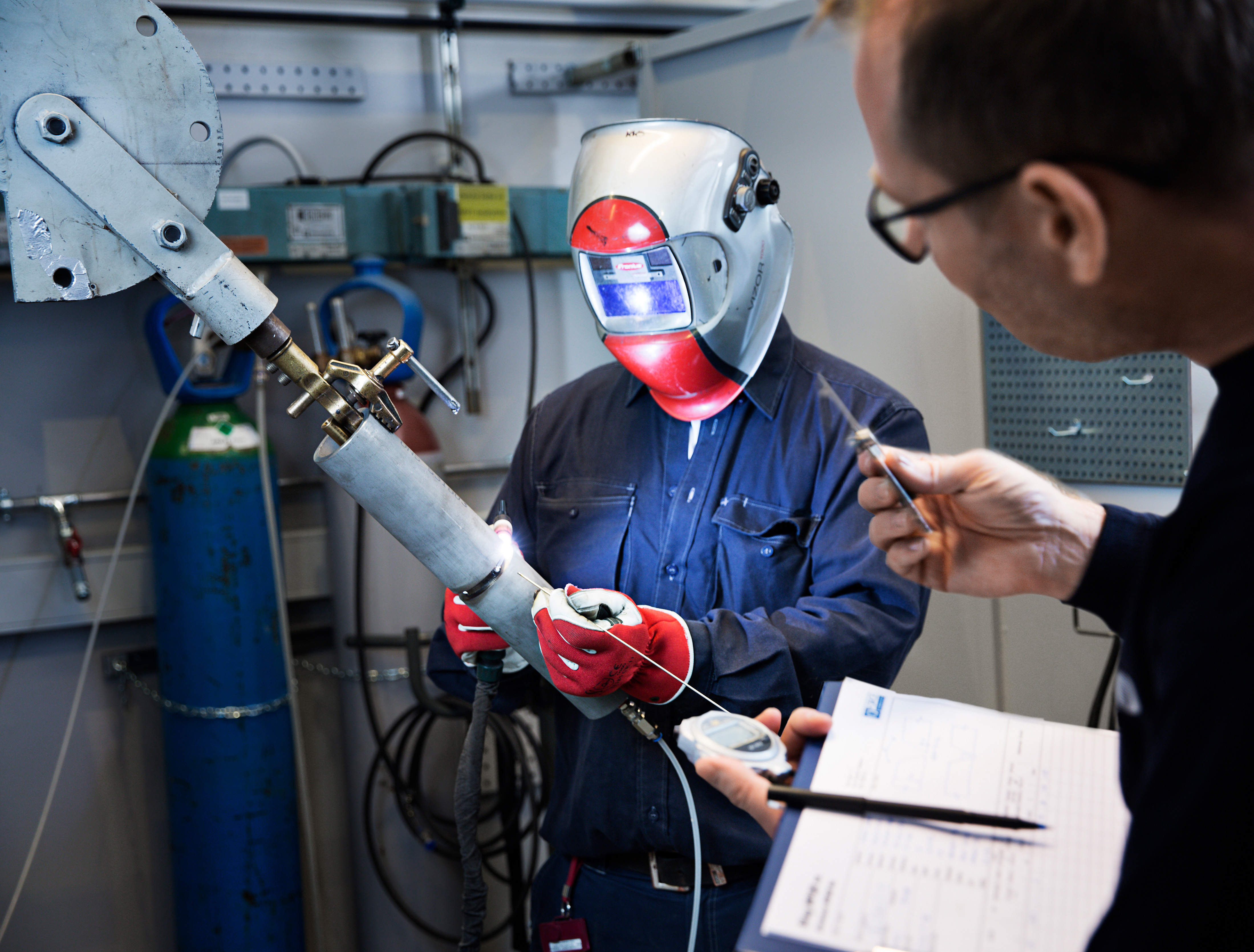
Hands-on welding assessment combines practical testing with expert review to improve weld quality and process stability.
Challenges
When welding results vary, internal know-how may no longer be enough
Unclear parameters drive recurring weld defects When heat input, travel speed and arc settings are not clearly defined, defects repeat and quality becomes unpredictable.
Process drift disrupts daily production Variation during welding leads directly to rework, downtime and unstable output.
Wrong equipment choices limit weld quality and efficiency Equipment that does not match materials or joint design reduces productivity and increases scrap.
Untranslated requirements block acceptance and delivery When standards and tender demands are not turned into practical welding instructions, approval and handover stall.
Benefits
Take control of weld quality and production stability
Consistent weld quality, predictable production results
Refined parameters, suitable equipment and correct preparation create stable welding conditions that reduce rework and variation.
Fewer welding issues, smoother daily operation
Clear process limits and focused troubleshooting minimise unexpected disruptions, keeping production running efficiently.
Equipment matched to materials, joint types and production demands supports reliable performance and improved output.
Precise requirements, easier compliance
Interpretation of welding standards and tender demands ensures that processes and documentation meet project expectations.
Get support to stabilise weld quality and improve process control
Small changes in parameters, preparation or equipment setup can have a big impact on weld quality. A structured review highlights practical improvements that support stable production and consistent results.
Service scope
Welding process capabilities and practical applications
Evaluation of existing welding methods, parameter settings and equipment configuration to stabilise welding processes and improve weld quality. The review identifies process limitations and opportunities to refine welding practices to achieve consistent, predictable results in production.
Clarification of heat input, travel speed, arc characteristics and consumable settings that influence weld formation and quality. The work establishes defined operating ranges that reduce variation and support stable welding performance during production.
Assessment and comparison of power sources, torches, shielding gas systems and automation options to determine whether the equipment setup matches material types, joint design and production requirements.
Diagnosis of weld defects linked to preparation, consumables, equipment condition, parameter drift or material variation. The activity may also include reviewing manufacturing documentation, welding procedures, standards, and tender requirements to clarify practical welding expectations.
Standards
Requirements that guide welding quality, process control and equipment use
Defines welding quality requirements often used when reviewing process control and production practice.