
Circular products: from design to remanufacturing
Circular products: From design to remanufacturing
Challenge
Scattered product data made it difficult for Akuart to document materials, traceability, and circularity throughout the value chain.
Solution
Mapping activities, workshops, and collaboration with Force Technology laid the foundation for a Digital Product Passport.
Result
Akuart has structured its product data, launched a DPP prototype and established a foundation for new circular services.
Read more about Servitize
Akuart is a Danish company that develops, designs, and manufactures acoustic solutions which combine effective sound absorption with visual aesthetics. Its solutions are used in offices, schools, institutions and cultural environments, among other settings. The company works according to circular design principles.
“Our products are made from a small number of simple materials that can be disassembled into individual components, which can then be replaced, repaired, or disposed of,” explains Kasper Sánchez Vibæk, Head of Sustainability at Akuart.
This circular design approach creates strong opportunities to extend product lifetimes. However, it also places demands on the product data that accompanies materials and components throughout the value chain.
At Akuart, the relevant information was spread across multiple systems, processes, and stakeholders. This made it difficult to create a complete overview of product materials, composition, and lifecycle. At the same time, the company wanted to prepare for upcoming European requirements related to the Digital Product Passport and the Ecodesign for Sustainable Products Regulation (ESPR)..
As part of the project “Circular Products – Ecodesign and Product Passport”, Akuart collaborated with Force Technology and Aarhus University to map product data and information flows across the company’s value chain and translate them into a Digital Product Passport.
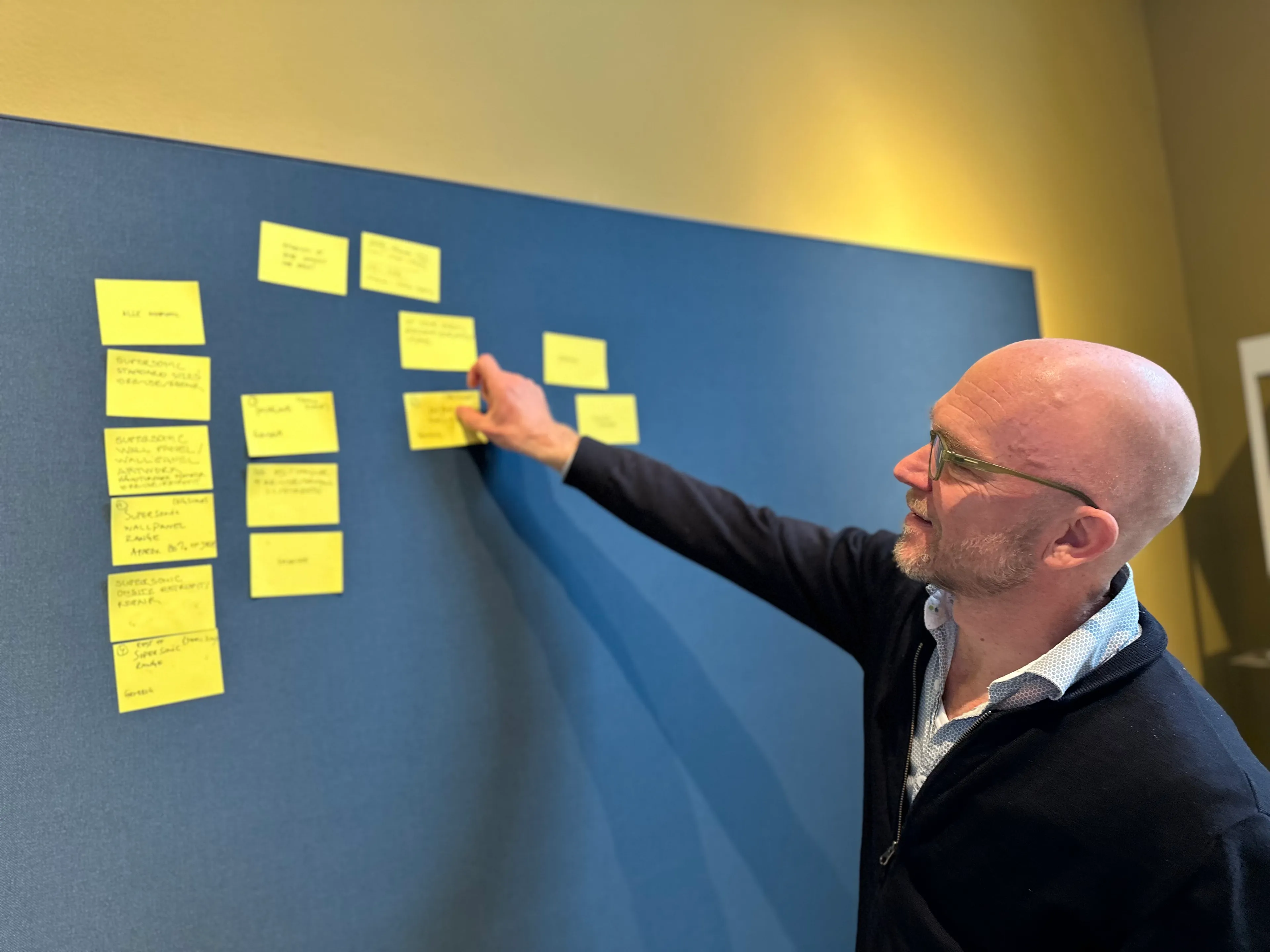
During workshops, Akuart identified which data a Digital Product Passport requires, which information the company already had available, and where data gaps existed. The work also addressed data ownership and data quality, as the necessary information is rarely located in a single place or held by a single stakeholder.
Force Technology contributed expert guidance, facilitation, and analytical tools. This provided Akuart with a structured framework for the process and helped the company transform product data from across the value chain into the foundation of a Digital Product Passport.
The project demonstrated that the path to a Digital Product Passport is not primarily about technology. The crucial task is to understand, structure, and ensure the quality of the product data that follows a product throughout its entire value chain.
The project resulted in Akuart’s first functional prototype of a Digital Product Passport for the company’s acoustic panels.
The first version is now available on selected products. Customers can scan the Digital Product Passport to access information about the product and its materials. Thus, the prototype makes the company’s work with digitalisation and the circular economy tangible and accessible.
At the same time, Akuart has identified the key data types and data sources needed to support future product documentation. The company now has a clearer overview of product materials and its value chain and is better positioned to meet future requirements for documentation and data traceability.
The Digital Product Passport now provides the framework for Akuart’s continued development efforts. Alongside its DPP work, the company has participated in the project “Servitize – The Sustainable Service Concepts of the Future”, where Force Technology helped Akuart explore how digitalisation and product data can support new circular service concepts.
Among other areas, the company has examined opportunities for take-back schemes, reuse, repair, and other service-based models in which data and traceability can support products through multiple lifecycles. Akuart intends to build on this work with the ambition of developing both more circular products and new service concepts.
“There are so many benefits beyond the DPP itself to getting all this data under control,” says Kasper Sánchez Vibæk.
By starting the process before the Digital Product Passport becomes a regulatory requirement, Akuart has been able to test solutions and continue working on topics that can otherwise be difficult to prioritise in day-to-day operations.
“I would definitely recommend that other companies participate in a similar programme. It has given us the time and the framework to make real progress on some of the issues we have discussed many times but struggled to prioritise in a busy working day,” says Kasper Sánchez Vibæk.