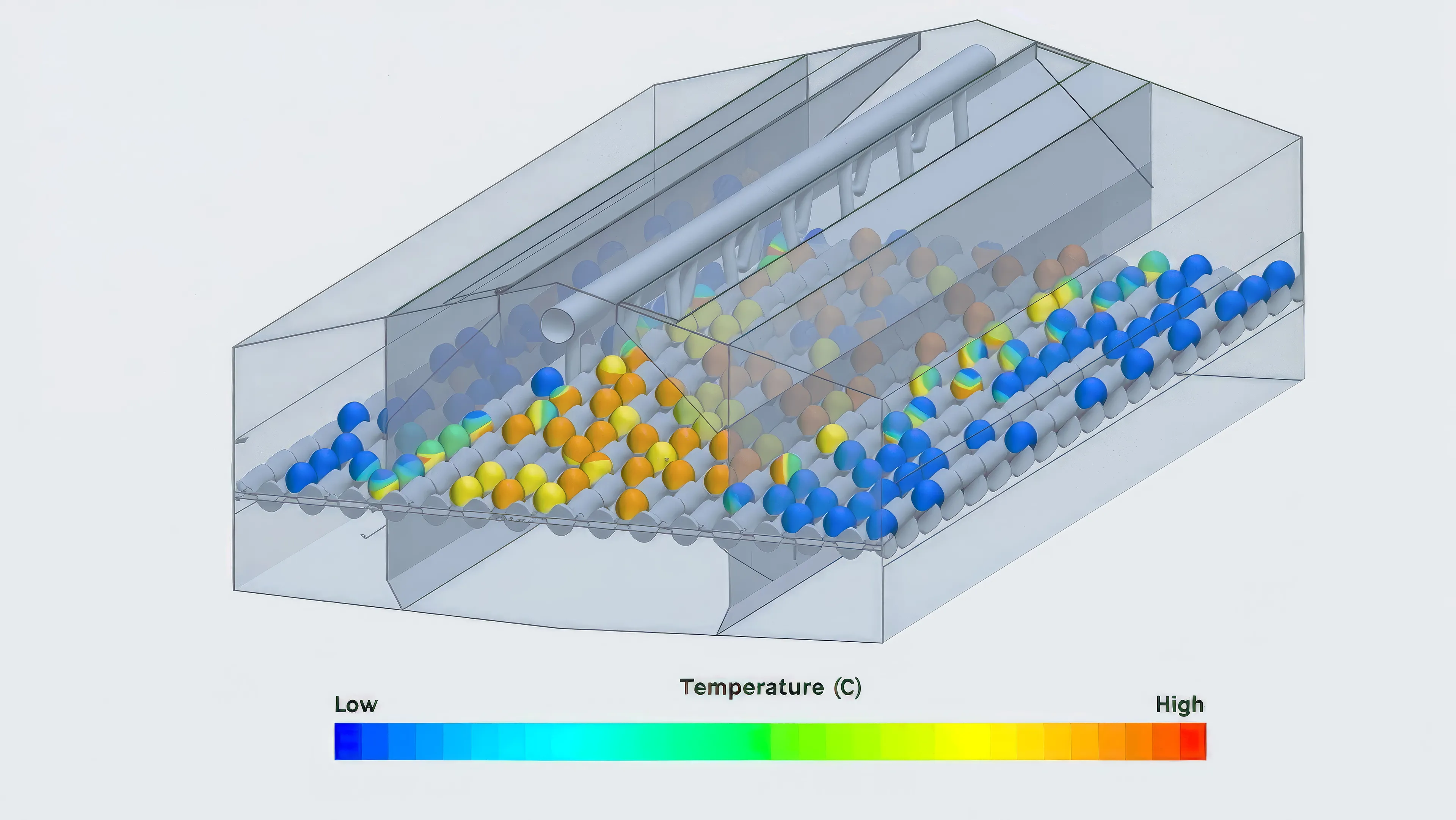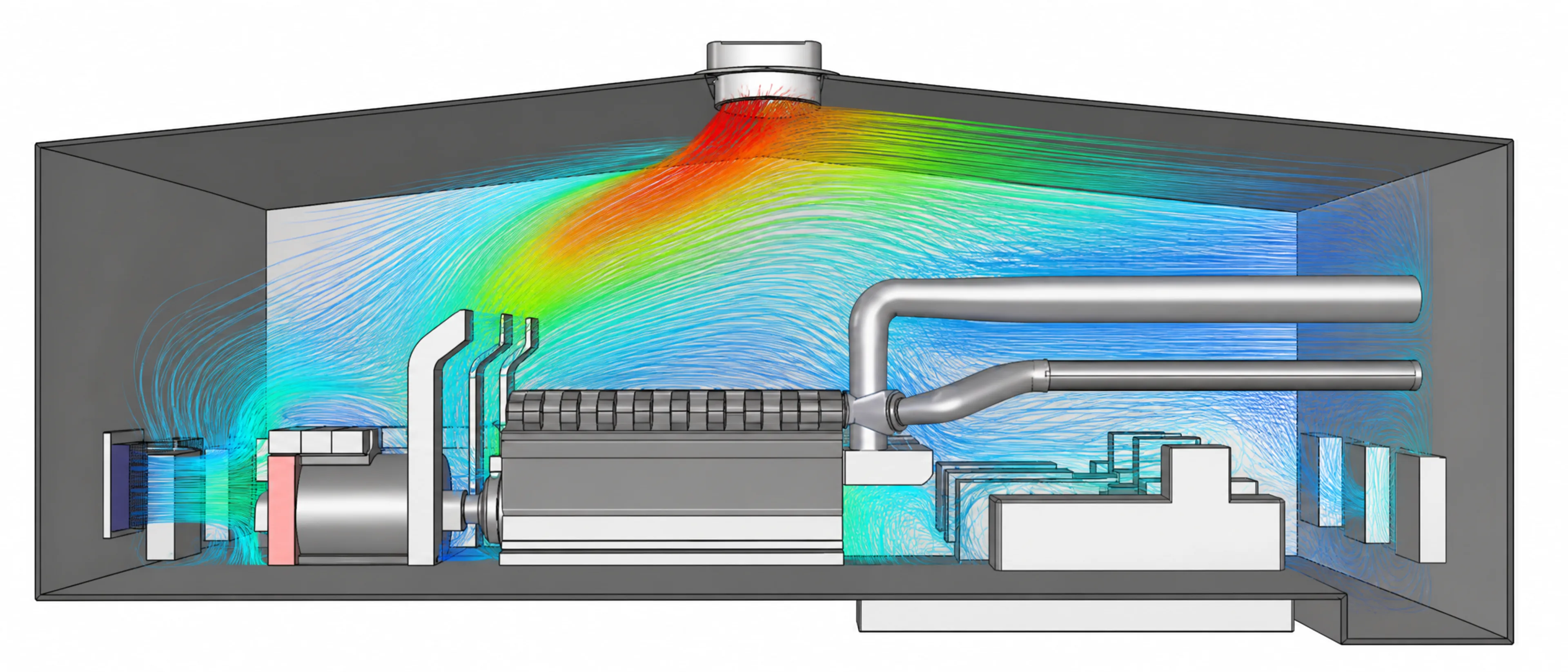
Computational Fluid Dynamics (CFD) is a simulation method used to predict how liquids, gases and heat behave in industrial systems.
By creating a digital representation of a product, process or facility, engineers can analyse flow behaviour, pressure, temperature and heat transfer before implementing changes.
Today, CFD simulation is widely used across industry to support product development, process optimisation and engineering analysis. It provides insight into complex physical processes that are often difficult or expensive to investigate solely through measurements.
What is CFD simulation?
CFD simulation predicts how liquids, gases and heat move through a product, process or facility. Using a digital model, engineers can simulate how a system will behave under different operating conditions before making changes in the real world.
The simulation provides insight into flow, pressure, temperature and mixing throughout a system. This helps engineers compare design options, investigate potential issues and better understand how a proposed solution is likely to perform before it is built or modified
How does a CFD simulator work?
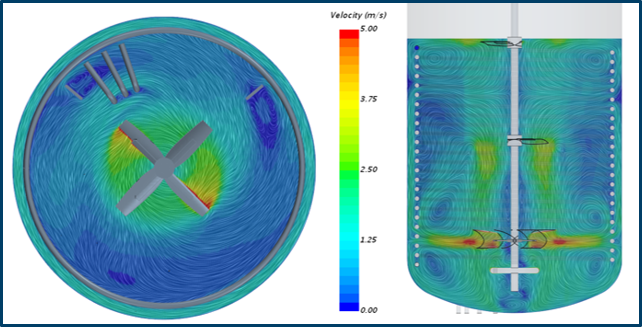
A CFD simulator starts with a digital model of a system and simulates how fluids, gases and heat behave under different operating conditions. Through software calculations, it presents the results as visualisations that make complex flow patterns easier to understand.
Simulation results are typically presented as visualisations that illustrate:
- Flow patterns
- Pressure distribution
- Temperature distribution
- Mixing behaviour
- Particle or gas dispersion
- Velocity fields.
These results support engineering analysis by making complex flow phenomena easier to understand and communicate.
Where is CFD used in industry?
Simulation in industry is used wherever fluid flow, heat transfer or ventilation influences performance, safety or energy efficiency.
Typical applications include:
- Process and production systems
- Thermal energy storage
- District heating and cooling systems
- Industrial ventilation and indoor climate
- Energy and utility systems
- Product and equipment design
- Flow optimisation in piping systems.
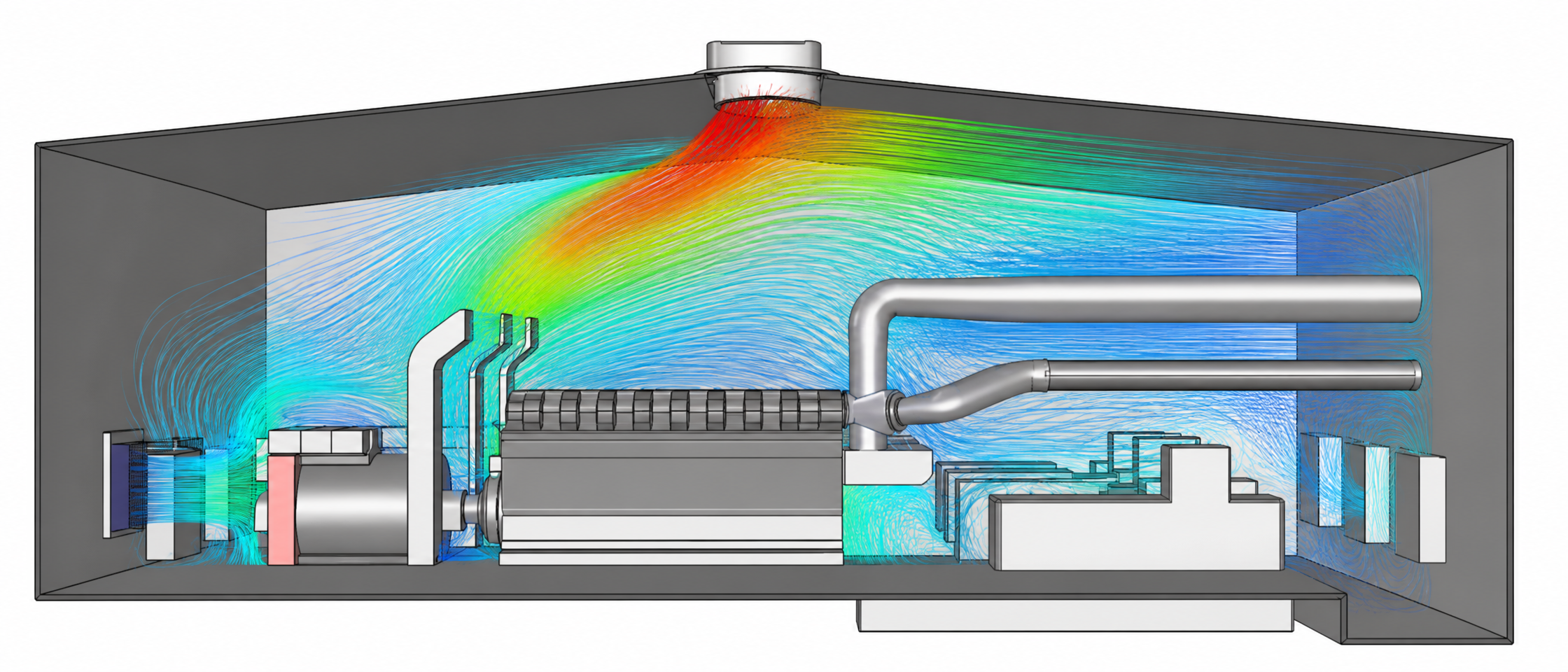
Because every application has different operating conditions, CFD simulations are normally tailored to the specific engineering challenge.
What can CFD help investigate?
CFD simulation can be used to investigate questions such as:
- How will a design change affect flow distribution?
- Where do pressure losses occur?
- Is ventilation sufficient throughout a building?
- How efficiently is heat transferred?
- How will gases or particles disperse?
- Can energy consumption be reduced?
By answering these questions early in a project, simulation provides a stronger technical basis for engineering decisions and further development.
CFD simulation and physical testing
CFD simulation does not replace physical testing in every situation. Instead, the two methods are often used together.
Simulation helps evaluate concepts, compare alternatives and identify potential issues or risks before equipment is manufactured or modified. Measurements and physical testing can then be used to verify performance where documentation or validation is required.
Combining simulation with experimental data often provides a more complete understanding of industrial systems than either method alone.
Learn more about CFD applications
Explore our specialist pages to learn more about CFD applications for:
- Processing systems
- Thermal energy storage
- Ventilation systems
- Design and flow consultancy.