
Development, design and test
Aerodynamics and wind engineering
Assess wind effects where aerodynamic behaviour influences compliance, safety or performance for transport, infrastructure and offshore roles.
Wind effects in design and operation
Aerodynamics and wind engineering support situations where wind, turbulence, flow separation, smoke dispersion or environmental loads can affect design choices, operational limits or user conditions. The area is relevant to engineering teams, bridge designers, ship designers, offshore and airport operators, technical managers, QA functions and operational personnel who need documented data before design, construction or operational decisions are made.
Typical triggers and unresolved risks
Wind tunnel testing, model studies, measurements and aerodynamic assessment provide input for evaluating loads, turbulence, flow fields, stability limits, comfort conditions and operational restrictions. Unresolved issues can lead to uncertainty during approach and departure, exposed working areas, smoke or gas exposure, fatigue risks, construction-stage sensitivity, reduced operational windows, incorrect wind data or late design changes with cost impact.
Updates on aerodynamic testing
Receive technical updates on wind tunnel studies, aerodynamic assessment and flow-related issues for infrastructure, aviation, maritime and offshore applications.
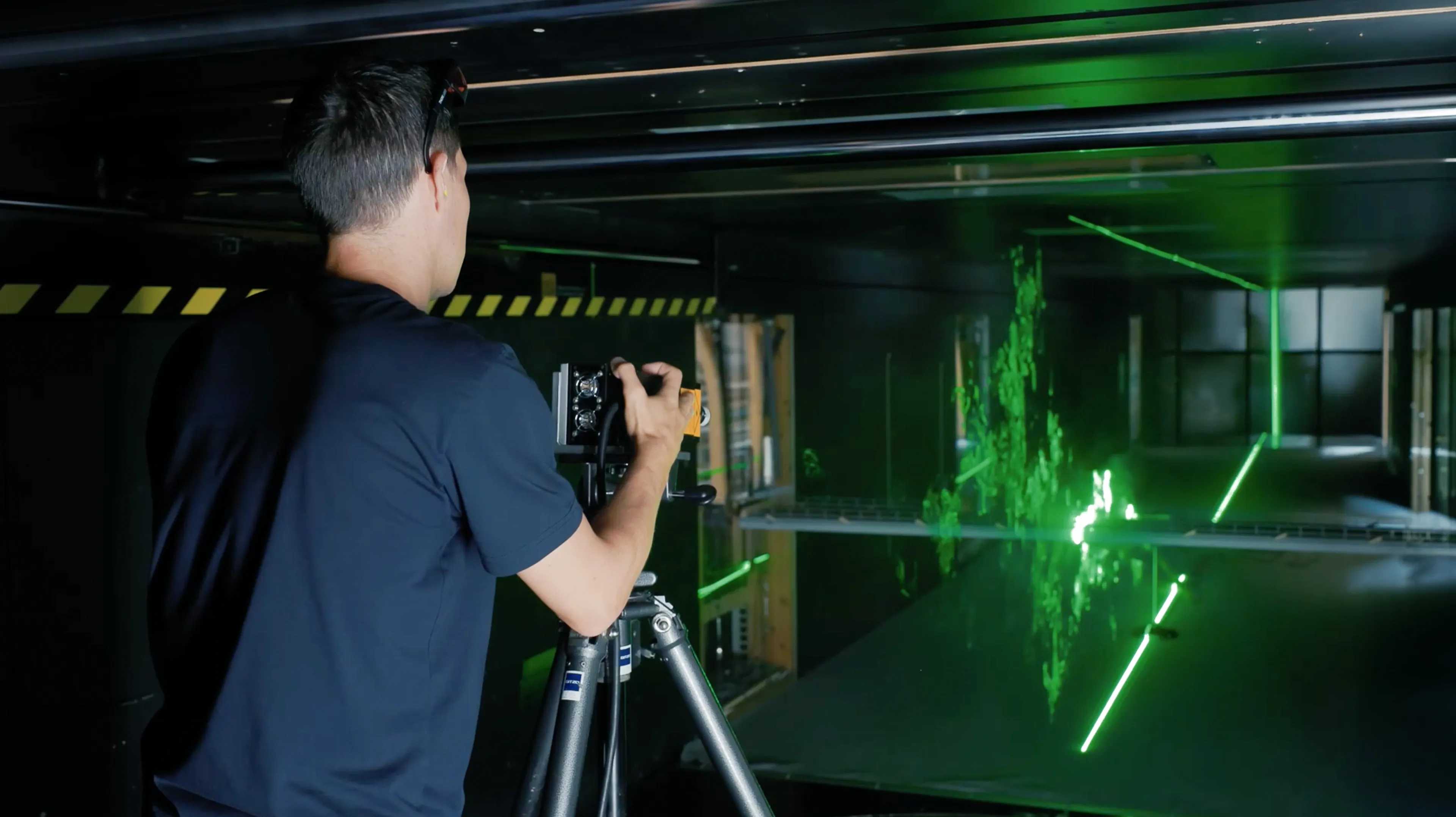
Aerodynamic assessment of bridges
Aerodynamic assessment of bridges
Assess wind response in bridge structures to support bridge design and erection-stage assessment for bridge designers and engineers.
