
Development, design and test
Mechanical and environmental testing of products, materials and structures
Enable safe products and structures by providing teams with a basis for managing risk and making informed product decisions.
Mechanical and climatic testing covers a shared technical field where products, materials, packaging, components and larger structures are exposed to loads, movement and environmental conditions prior to commissioning, transport or installation. There is a common need to understand how an item responds to mechanical stress, fatigue, shock, vibration, pressure, temperature, humidity or corrosive environments, and to document this response against relevant requirements or agreed test methods.
Typical roles and situations
This area is relevant during the design phase, when materials are selected, packaging is assessed, or test documentation is required for market access, project documentation, or internal decision-making. Activities may include development of industrial products and components, assessment of large structures, preparation for transport, evaluation of protective equipment, and work related to type testing or standards-based product testing.
Risks if issues are not clarified
If mechanical or climatic weaknesses are not clarified, this can lead to redesign, lack of approval, transport damage, uncertainty about product properties, or increased project costs.
Stay updated on mechanical and environmental testing
Sign up for updates on testing, documentation and requirements for products, materials, packaging and structures. Get insights that help you manage risk, support compliance and make informed product decisions.
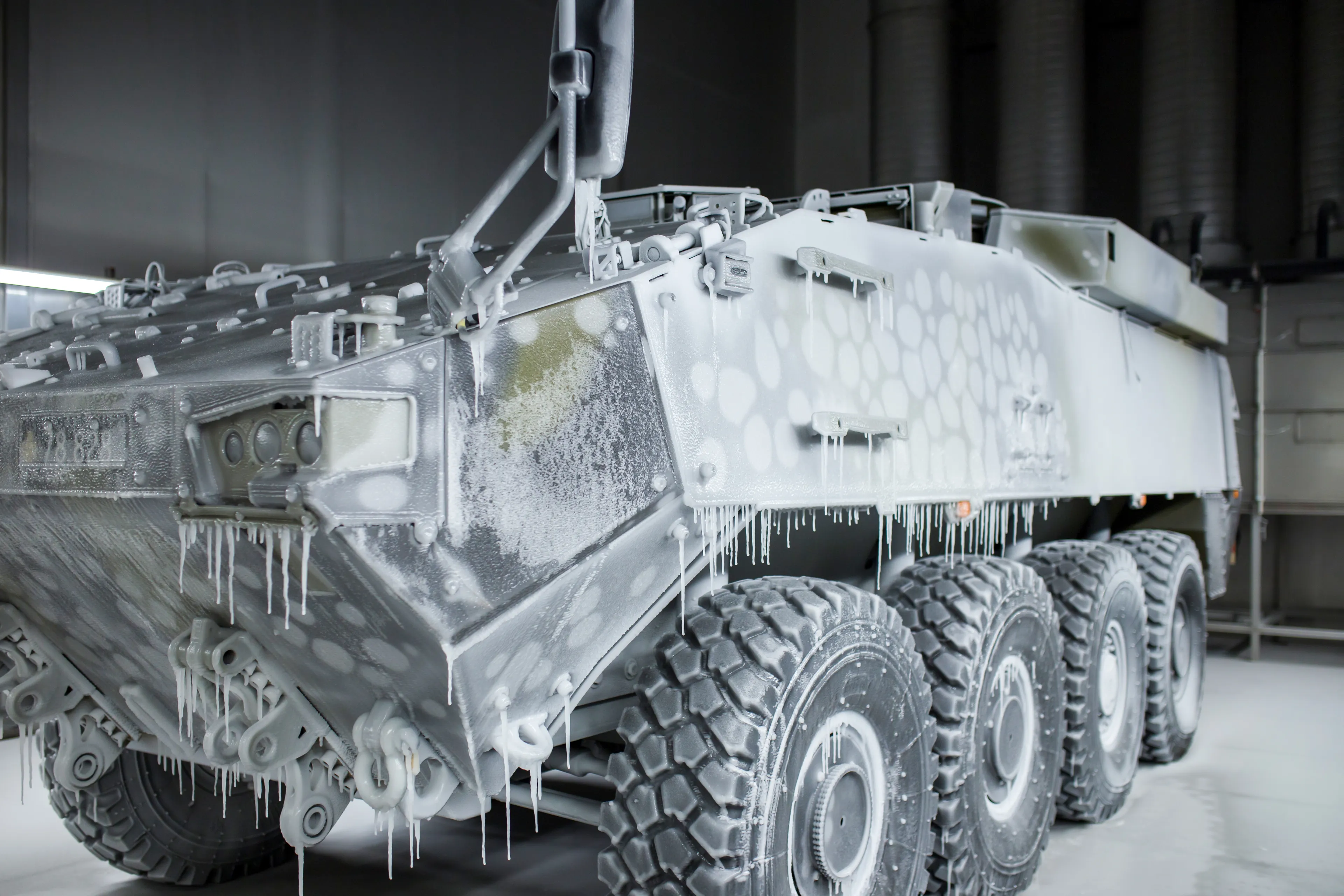
Climatic test of large components
Climatic test of large components
Climatic chamber testing with temperature, moisture, and solar exposure for large components and systems.
