
Aerodynamics and wind engineering
Wind tunnels for testing of ships and structures
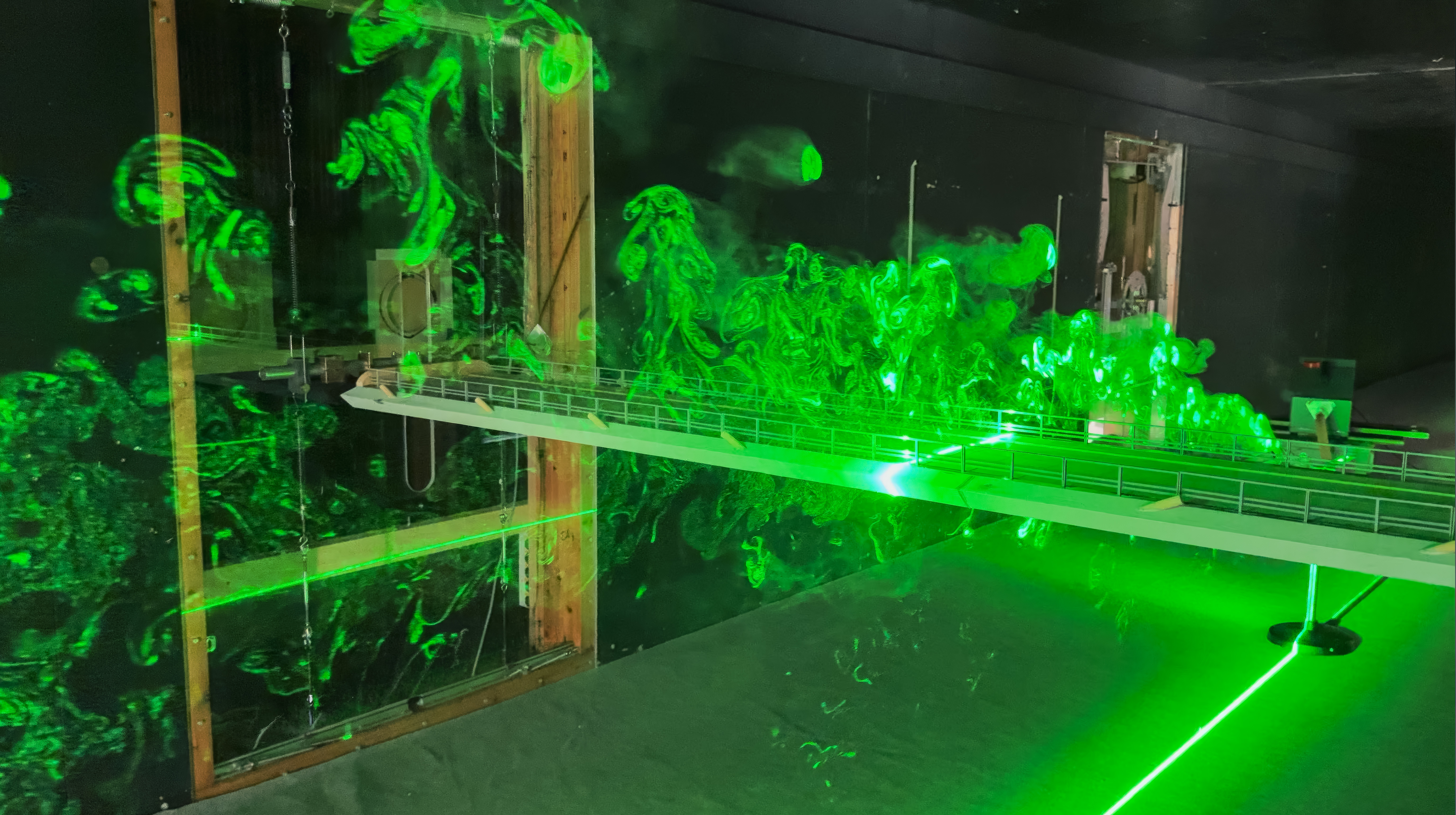
Test structures in a wind tunnel to document aerodynamic behaviour under controlled flow and climatic conditions.
The facility supports engineering teams working with structures exposed to wind and climatic loads. It is relevant when bridges, buildings, ships, maritime structures, wind turbines or offshore installations require physical testing in controlled conditions.
When testing becomes necessary
The need arises when aerodynamic behaviour must be investigated under defined flow conditions, or when climatic effects such as icing must be assessed. Unresolved issues can delay design decisions.
What the facility covers
The wind tunnels support experimental investigations in civil engineering, including aerodynamic testing of bridges, buildings, ships, maritime structures, wind turbines and offshore installations. The climatic wind tunnel can also be used to test bridge cables at low temperatures.
Target group and benefits
Support engineering teams by providing controlled wind tunnel testing for structures that require documented aerodynamic and climatic investigation.
The facility is relevant for engineering teams working with civil structures, maritime projects, offshore installations, wind energy applications and aviation-related planning. It supports users who need physical test results for structures such as bridges, buildings, ships, maritime structures, wind turbines and other offshore installations. The facility is also relevant when examining bridge cable behaviour under climatic conditions.
How results are used in practice
The outcomes are used to investigate aerodynamic behaviour under defined test conditions and to support technical decisions in design and project development. In practice, the value lies in obtaining documented observations from a controlled test environment that can be used in engineering assessments and further project work.
Discuss your wind tunnel test setup
Contact our team to discuss which wind tunnel matches your structure, test scale and climatic or flow conditions.
