Audit basics course shifts the mindset from control to collaboration
An audit basics course gave both an overview and the confidence to be an active part of an audit culture focused on improvement and collaboration.
Challenge
The audit basics course was intended to make it easier to settle into the role and contribute to an audit setting that already worked well.
Solution
The course gave a new perception of audit as something you do together, not against one another, and made it easy to contribute positively.
A thorough start to the role as auditor
HMF Group was founded in 1945 in Højbjerg and has produced truck-mounted cranes since 1952. The company has grown to more than 400 employees. The wide range of cranes can be ordered through a large network of partners distributed across most of the world.
As a company with a quality management system, it is required to conduct audits. HMF Group had recently strengthened the area and re-hired Anders Rahbek Jensen as QMS engineer. Anders needed to be able to carry out both internal and external audits quickly.
"I have carried out audits for HMF Group before, but without really knowing that what I was doing was an audit. Now I needed more professional knowledge of the area," says Anders Rahbek Jensen.
Audit as a development tool instead of control, and raised warning fingers
Anders Rahbek Jensen attended an audit basics course and fundamentally changed his view of audit. He has always seen audit as a task associated with control and raised warning fingers.
"I gained a really good insight into what it means to be an auditor and, not least, what mindset you need. It is always about the process and not the person," explains Anders. He continues: "Audit should be seen as an opportunity to create value in the business. It is something we do together and not something I do to you. On the contrary, we improve the process together."
Anders highlights how the audit basics course gave him tools, strong arguments, and wording to present audits constructively to the organisation, so everyone understands that it is not dangerous but, instead, positive and constructive and, not least, a route to shared improvement.

Audit basics course creates confidence through collaboration and group dynamics
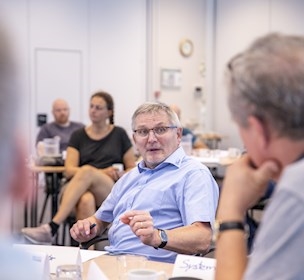
The course was structured like an audit process with cases and group work. This strengthened both learning and collaboration within the group. "We worked in the same groups throughout the audit basics course, and it worked well. The atmosphere became more open, and we increasingly started to speak the same language, just as if we were in an audit team," elaborates Anders Rahbek Jensen.
Even role play, which he normally does not like, proved valuable: "It gave me an insight into how it works in practice. It is something completely different from just reading about it," he points out.
Anders Rahbek Jensen particularly highlights the structured models and tools that make audit work manageable. "I have gained a toolbox that covers everything from annual planning to checklists for the individual audit. It provides structure and makes me confident in the role," he says.
"I could have reinvented the wheel, but now I have the methods and understand the process. It makes a huge difference," concludes Anders Rahbek Jensen, QMS engineer at HMF Group A/S. The audit basics course is also Anders Rahbek Jensen's ticket to the lead auditor specialist module, which he will attend later.
Result
The audit basics course provided both professional skills and confidence in the role, so audits are now structured, calm and valuable to everyone.
Vibeke Kistrup Holm